Pezeshkian says Iran will not surrender to US pressure, keeps door open to diplomacy
 13 oC
13 oC 
Güneşli

Iranian President Masoud Pezeshkian said Wednesday that Tehran would not surrender to U.S. pressure but remained committed to diplomacy and negotiations, while defending Iran’s nuclear program and condemning Israel’s military campaign in Gaza.
Addressing the 81st session of the United Nations General Assembly in New York, Pezeshkian said Iran was prepared to engage in dialogue but would not accept negotiations conducted under military or economic pressure.
His address came a day after U.S. President Donald Trump used his own UN speech to issue a warning to Iran and threatened severe consequences if Tehran did not reach an agreement with Washington. Reuters reported that Pezeshkian responded by rejecting what he described as a coercive approach while maintaining that diplomacy remained possible.
“Iran has never, ever been an aggressor, has never started a war, and has always shown her commitment to the negotiating table,” Pezeshkian said.
He said Iran would continue defending itself while remaining prepared for diplomatic engagement.
“We are ready for dialogue and diplomacy and negotiations without accepting the language of force,” he said, addressing Trump's pressure campaign.
Pezeshkian rejects US accusations
A major part of the Iranian president’s speech focused on the conflict between Tehran and Washington and Iran’s confrontation with Israel.
Pezeshkian rejected accusations that Iran was a source of terrorism or regional instability, arguing that his country had acted in self-defense.
He accused the United States and Israel of carrying out attacks against Iranian civilian and strategic infrastructure, including schools, universities, hospitals and other facilities.
Pezeshkian also referred to Iranian civilians, children and scientists killed during the conflict, saying Iran had itself been the victim of attacks while rejecting Washington’s characterization of Tehran as a sponsor of terrorism.
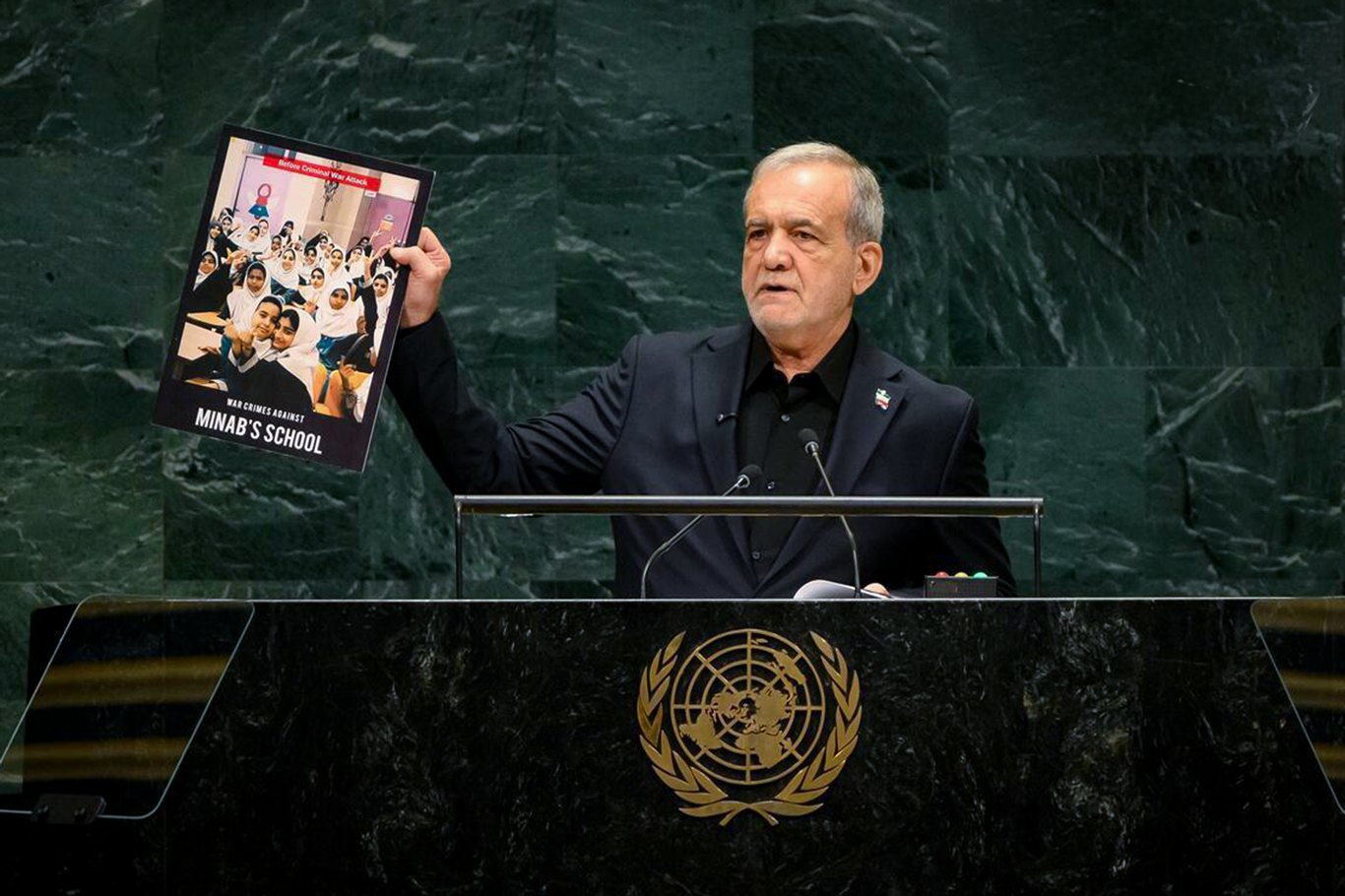
He displayed photographs of people he said had been killed in U.S.-Israeli strikes, including students from Minab and Lamerd.
The Iranian president also recalled the assassination of Hamas political leader Ismail Haniyeh in Tehran, describing it as another indication of the security threats facing Iran.
Iran defends nuclear program
Pezeshkian devoted significant attention to Iran’s nuclear activities, insisting that Tehran’s program was intended for peaceful purposes.
He said nuclear technology was important for Iran’s medical, agricultural, industrial and energy sectors and rejected demands that would prevent Tehran from exercising what he described as its legitimate rights.
“Iran does not accept for nuclear technology to be at the exclusive disposal of some,” he said, while reiterating that Tehran did not seek nuclear weapons.
Pezeshkian also linked Iran’s nuclear program to the broader issue of national sovereignty, saying Tehran would not abandon what it considers its right to peaceful nuclear technology.
He argued that Iran needed sufficient defensive capabilities to deter attacks but said Tehran did not seek regional hegemony or military dominance.
Gaza and Palestine at center of speech
The Iranian president also devoted substantial attention to the situation in Gaza, portraying the conflict as evidence of what he described as failures in the international system.
“Palestine remains an open wound on the conscience of the international community and Gaza remains a symbol of the failure of international mechanisms to prevent civilian suffering,” Pezeshkian said.
He accused Israel of killing civilians and displacing Palestinians and argued that lasting peace in West Asia could not be achieved without addressing Palestinian rights.
“Lasting peace in West Asia is impossible without justice for Palestine,” he said.
Pezeshkian further argued that resistance would continue as long as occupation, aggression and what he described as injustice persisted.
His comments came amid continued international efforts to halt the conflict and address the humanitarian situation in Gaza. U.N. Secretary-General António Guterres, speaking at the opening of the General Assembly, also called for de-escalation, an end to fighting and the restoration of humanitarian access and navigational freedoms.
Tehran calls for regional security
Pezeshkian also addressed security in the Middle East, saying Iran did not view neighboring countries as security rivals.
Instead, he called for greater regional cooperation and a security framework led by countries in the region rather than outside powers.
He specifically referred to the Strait of Hormuz, a strategically important waterway through which a significant share of global energy shipments passes.
Pezeshkian said Iran would not accept a situation in which outside powers used the waterway while simultaneously applying military pressure against Tehran.
“The expansion of warfare will not result in security,” he said.
Iranian officials have recently indicated that Tehran could consider reopening the Strait of Hormuz as part of a broader de-escalation arrangement if Washington reduces military pressure and lifts its blockade of Iranian ports.
US-Iran diplomacy continues
Despite the sharp rhetoric exchanged at the United Nations, Iranian and U.S. officials have continued indirect diplomatic contacts through intermediaries.
Reuters reported Wednesday that Iran and the United States remained far apart over how to end their conflict, but Tehran continued to argue that diplomacy was necessary. Iranian Foreign Minister Abbas Araghchi and U.S. envoys Steve Witkoff and Jared Kushner communicated through mediators during the UN General Assembly.
Pezeshkian's speech therefore combined a firm rejection of surrender with an explicit willingness to negotiate.
He concluded by calling for an international order based on equal rights, justice, human dignity and an end to what he described as double standards.
“A peace that does not encompass all is no peace,” Pezeshkian said, arguing that international principles should be applied equally to all countries and peoples. (ILKHA)
LEGAL WARNING: All rights of the published news, photos and videos are reserved by İlke Haber Ajansı Basın Yayın San. Trade A.Ş. Under no circumstances can all or part of the news, photos and videos be used without a written contract or subscription.
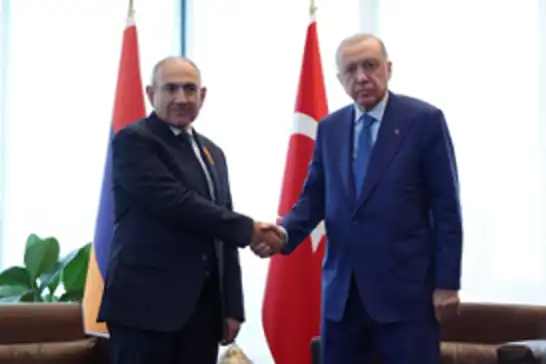
Turkish President Recep Tayyip Erdoğan met with Armenian Prime Minister Nikol Pashinyan in New York on Wednesday to discuss efforts to normalize relations between Türkiye and Armenia, as well as regional and global developments.
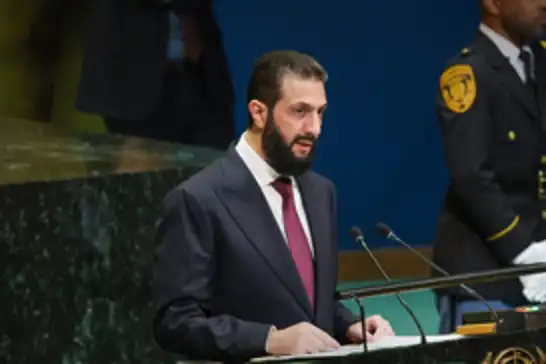
Syrian President Ahmad al-Sharaa said Wednesday that his country was entering a new phase of reconstruction and international engagement after years of war, while calling for the withdrawal of Israeli forces from Syrian territory.
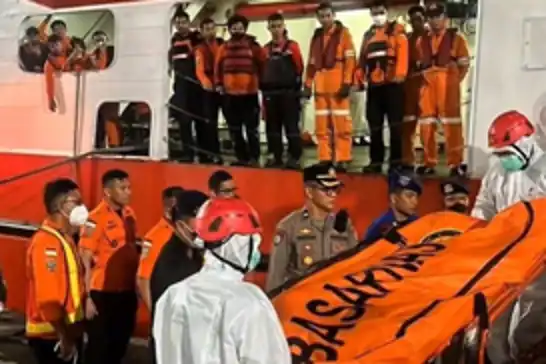
The death toll from the ferry disaster in Indonesia’s Java Sea has risen to 28, while 107 people remain missing, according to the country’s search and rescue authorities.