Syrian President calls for Israeli forces to withdraw from Syrian territory
 13 oC
13 oC 
Güneşli

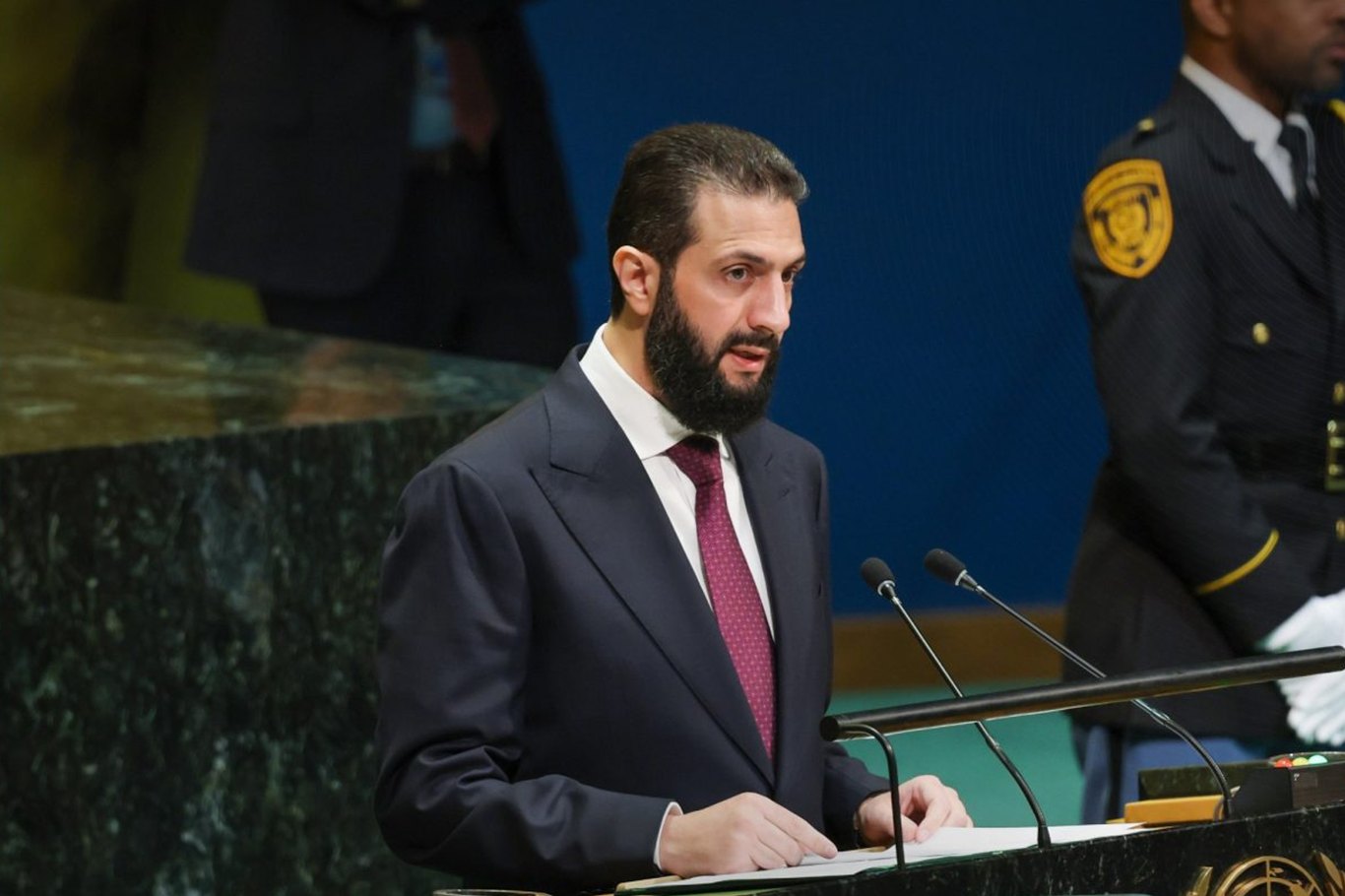
Syrian President Ahmad al-Sharaa said Wednesday that his country was entering a new phase of reconstruction and international engagement after years of war, while calling for the withdrawal of Israeli forces from Syrian territory.
Addressing the 81st session of the United Nations General Assembly in New York, al-Sharaa said Syria was rebuilding diplomatic relations, seeking economic recovery and establishing new international partnerships while maintaining its sovereignty and independent decision-making.
“Today, Syria is rising again, united once more,” al-Sharaa said, recalling his appearance at the U.N. General Assembly a year earlier.
Al-Sharaa said nearly 100 countries had established channels of communication with Syria since what he described as the country's liberation, through thousands of meetings and diplomatic contacts.
He said nearly 60 diplomatic missions were now operating in Damascus as foreign delegations returned to the country.
The Syrian president also pointed to the repeal of the Caesar Act, the easing of European and British sanctions and the restoration of Syria's cooperation agreement with the European Union as evidence of a broader shift in the country's international relations.
He said the removal of Syria's designation as a state sponsor of terrorism had also brought an end to what he described as decades of international isolation.
Al-Sharaa linked the diplomatic opening to developments inside Syria, saying more than 3.5 million refugees and internally displaced Syrians had voluntarily returned to their homes.
“Syria is transforming from a crisis into an opportunity for progress around which the international community can unite,” he said.
The Syrian government has sought to present reconstruction, economic recovery and the return of displaced people as central elements of its postwar strategy. Earlier this week, al-Sharaa arrived in New York with a delegation including Foreign Minister Asaad al-Shaibani to participate in the U.N. General Assembly.
Al-Sharaa also highlighted Syria's cooperation with international organizations on chemical weapons and nuclear-related issues.
He said 42 chemical bombs had been destroyed through an initiative involving Syria and seven other countries, while Damascus had restored its rights at the Organisation for the Prohibition of Chemical Weapons.
He added that Syria was cooperating with the International Atomic Energy Agency with what he described as the “utmost transparency.”
The president also outlined efforts against organized crime and drug trafficking, saying Syrian authorities had seized approximately 700 million Captagon pills through more than 1,500 operations and dismantled 90 international criminal networks.
He said the authorities were also working to combat human trafficking and other forms of organized crime.
A major part of al-Sharaa's address focused on Israel and the Golan Heights.
The Syrian president reaffirmed Damascus' position that the Golan Heights are Syrian territory and rejected measures aimed at changing its status. He cited U.N. Security Council Resolution 497, adopted in 1981, which declared Israel's decision to impose its laws, jurisdiction and administration on the occupied Syrian Golan “null and void” and without international legal effect.
Al-Sharaa accused Israel of carrying out nearly 500 air and artillery strikes against Syria, more than 1,200 incursions and the detention of nearly 300 Syrians.
He said the actions threatened Syria's stability and contradicted international efforts to support the country's recovery.
“Our stated position remains unchanged,” al-Sharaa said, reaffirming Syria's commitment to the 1974 Disengagement of Forces Agreement and calling for Israeli forces to withdraw to the lines of Dec. 8, 2024.
The U.N. has continued to treat the Golan as occupied Syrian territory, while Security Council Resolution 497 remains a central international reference concerning Israel's 1981 annexation move.
Al-Sharaa said Syria's priorities remained centered on state sovereignty, the rule of law and international law.
He said attempts to impose new realities on the ground would not alter the authority of the Syrian state, while reconstruction and improving living conditions would remain at the heart of his government's approach.
His remarks came as Damascus seeks to strengthen relations with foreign governments and international institutions while encouraging the return of Syrians displaced during years of conflict.
Al-Sharaa said Syria's emerging international partnerships could help transform the country from a source of regional instability into a partner in economic recovery, development and regional cooperation. (ILKHA)
LEGAL WARNING: All rights of the published news, photos and videos are reserved by İlke Haber Ajansı Basın Yayın San. Trade A.Ş. Under no circumstances can all or part of the news, photos and videos be used without a written contract or subscription.
Iranian President Masoud Pezeshkian said Wednesday that Tehran would not surrender to U.S. pressure but remained committed to diplomacy and negotiations, while defending Iran’s nuclear program and condemning Israel’s military campaign in Gaza.
Turkish President Recep Tayyip Erdoğan met with Armenian Prime Minister Nikol Pashinyan in New York on Wednesday to discuss efforts to normalize relations between Türkiye and Armenia, as well as regional and global developments.
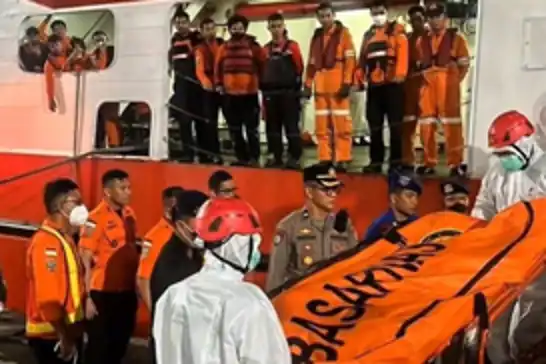
The death toll from the ferry disaster in Indonesia’s Java Sea has risen to 28, while 107 people remain missing, according to the country’s search and rescue authorities.