Syria denies plans for Turkish military base after Israeli strike
 13 oC
13 oC 
Güneşli

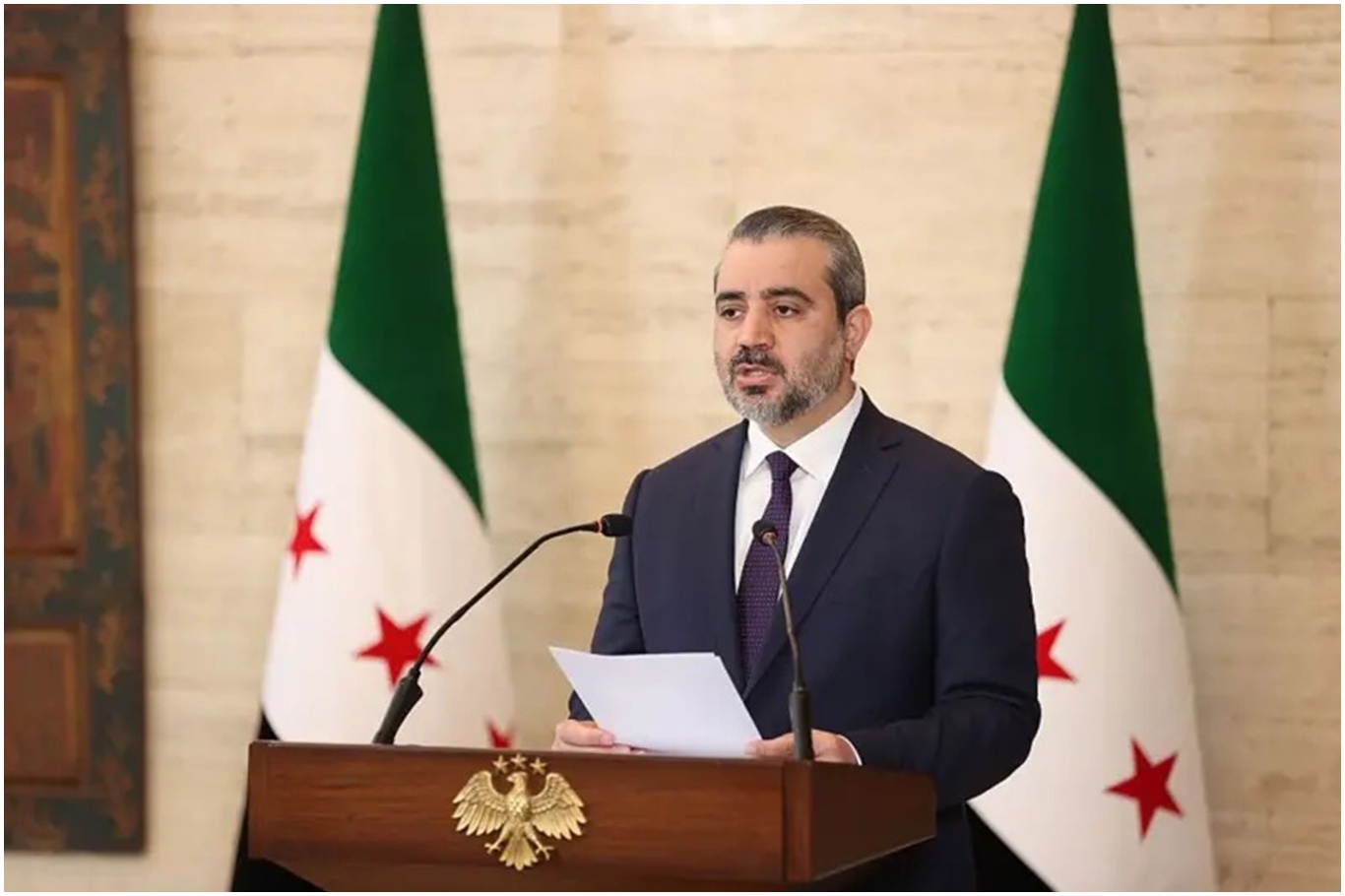
Syrian Foreign Minister Asaad al-Shaibani said Wednesday that Damascus had informed Israel that there were no plans to establish a permanent Turkish military base or deploy Turkish forces at a Syrian airbase targeted by an Israeli strike earlier this week.
Speaking to Axios, al-Shaibani said the facility was instead being rehabilitated for use by the Syrian Air Force and was not intended to host a permanent Turkish military presence.
“There was no intention to establish a Turkish base there, nor to establish a permanent Turkish military presence or deploy Turkish forces at the site,” al-Shaibani said.
The comments came after Israeli forces carried out strikes on the Syrian airbase on Tuesday, amid growing tensions between Israel and Türkiye over Syria.
The escalation reflects increasingly sharp disagreements between Ankara and Tel Aviv over Syria, where both countries maintain military interests and activities.
Türkiye on Wednesday strongly rejected what it described as “untenable allegations” by Israel that Syria was preparing to allow Turkish troops to deploy at the facility.
Ankara, which has NATO’s second-largest military and has emerged as one of Syrian President Ahmed al-Sharaa’s key regional allies, has repeatedly accused Israel of seeking to destabilize Syria and weaken its new administration.
Türkiye has also called for international action to compel Israel to respect Syria’s territorial integrity and sovereignty.
Israeli Prime Minister Benjamin Netanyahu said Israel had warned Damascus against allowing a Turkish military presence at the base before the strikes.
“Our message was very clear. Don’t. I guess they didn’t quite understand the message,” Netanyahu said Wednesday.
Al-Shaibani, however, rejected Israel’s justification for the attack, saying Damascus had given Israel no legitimate reason to bomb the facility.
The Syrian foreign minister acknowledged that Turkish military officers had visited the base, but said their presence was related to training and broader military cooperation rather than preparations for a permanent deployment.
According to al-Shaibani, the facility remained largely empty and was not yet operational.
Relations between Türkiye and Israel have deteriorated sharply, particularly over Israel’s war in Gaza and the broader regional security situation.
Despite their differences, Ankara and Tel Aviv established a communication channel last year aimed at preventing military incidents in Syria.
Following Tuesday’s Israeli strikes, US Special Presidential Envoy for Syria and Iraq Tom Barrack told Reuters that Washington was working to establish a deconfliction mechanism involving Israel, Türkiye and Syria.
Such a mechanism could help prevent further military confrontations among the three countries as competing security interests increasingly overlap inside Syria.
Al-Shaibani said Syria remained willing to engage in negotiations with Israel aimed at reducing tensions and establishing security arrangements.
He said the two sides had made significant progress toward a potential security agreement during a year of US-mediated negotiations. However, according to the Syrian foreign minister, Israel subsequently backed away from its commitments, preventing the agreement from being implemented.
Al-Shaibani stressed that any future agreement must address the legitimate security concerns of both sides while respecting Syria’s sovereignty and territorial integrity.
He also warned that continued Israeli military operations inside Syria could further destabilize the region.
The latest dispute highlights the increasingly complicated security environment in Syria, where Damascus is seeking to rebuild its military and state institutions while Türkiye, Israel and other regional and international actors pursue competing strategic interests.
Syria’s insistence on sovereignty, Ankara’s support for Damascus and Israel’s concerns over regional military deployments are likely to remain major sources of tension as efforts continue to establish a new security framework in the country. (ILKHA)
LEGAL WARNING: All rights of the published news, photos and videos are reserved by İlke Haber Ajansı Basın Yayın San. Trade A.Ş. Under no circumstances can all or part of the news, photos and videos be used without a written contract or subscription.
A high-ranking Afghan delegation led by Agriculture Minister Mawlavi Ataullah Omari held substantive talks with Belarusian Deputy Minister of Industry and Trade Baki Denis Vladimirovich on expanding bilateral trade and industrial cooperation.
Turkish Deputy Foreign Minister Ambassador Musa Kulaklıkaya met with Sheikh Khalifa Alharthy, Oman’s Undersecretary for Political Affairs at the Ministry of Foreign Affairs, in the Omani capital Muscat, according to diplomatic sources.
The United States' national debt has exceeded $40 trillion for the first time, nearly doubling from about $20 trillion in 2017, according to data released by the U.S. Treasury Department.