Two killed as powerful cyclone tears through Baltic states
 13 oC
13 oC 
Güneşli

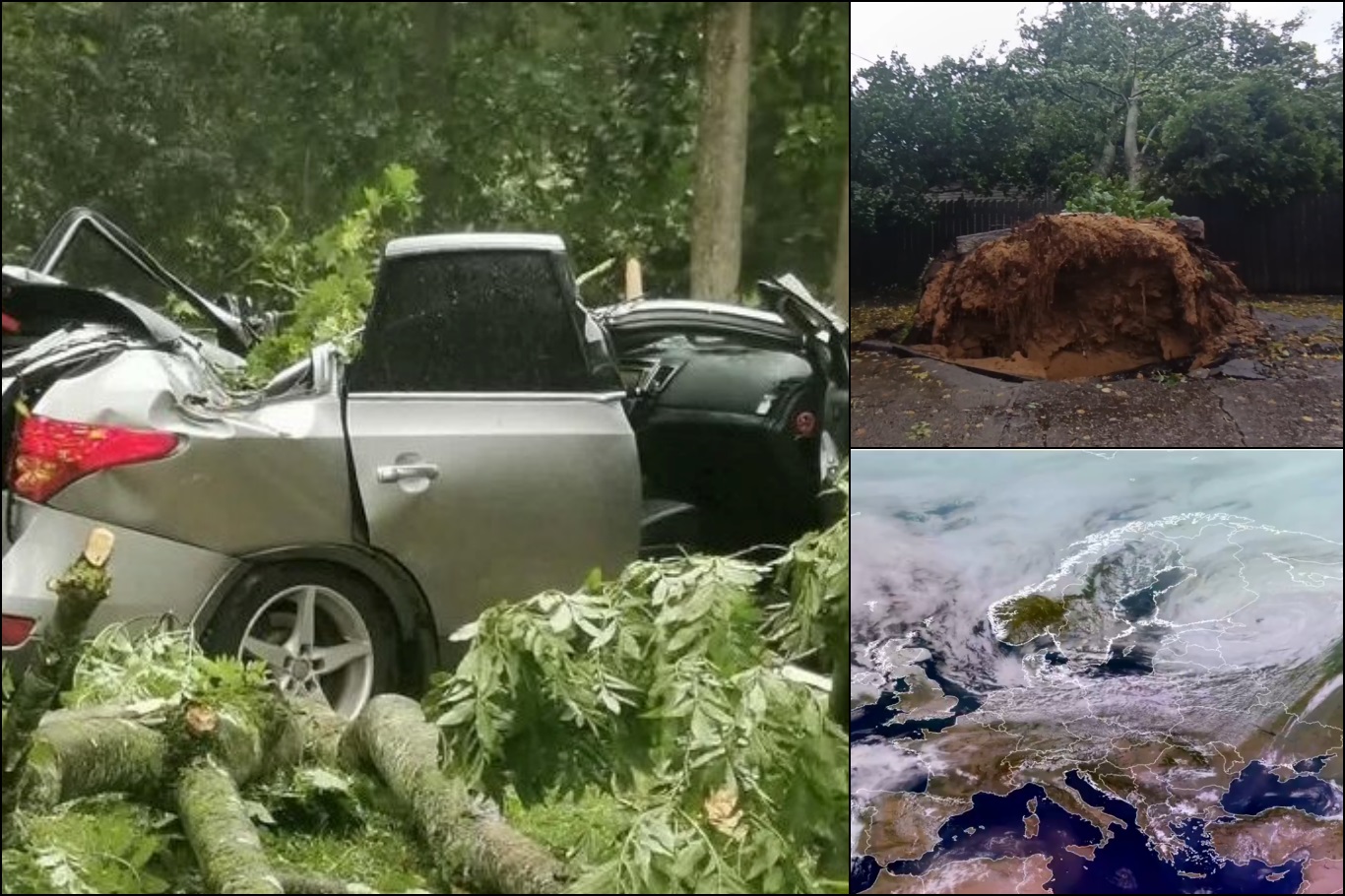
A powerful cyclone swept across the Baltic states over the weekend, killing at least two people, disrupting transport and leaving hundreds of thousands of households without electricity as violent winds, torrential rain and thunderstorms battered Latvia, Lithuania and Estonia.
The storm, which moved northward through the region on Saturday and into Sunday, was described by Latvian meteorological authorities as the country's most severe storm in terms of overall impact since 2005. Wind speeds in Riga exceeded 67 mph (108 kph), while heavy rainfall caused flooding and widespread damage.
In Latvia, one person was killed in Jelgava after part of a building collapsed during the storm. Several other people were injured across the country, while emergency crews received more than 1,000 storm-related calls.
Latvia's emergency medical services reported treating 14 people during the storm, with some suffering serious injuries. Falling trees and branches blocked roads and damaged vehicles and buildings, while emergency responders themselves were injured during cleanup operations.
The storm also disrupted railway services after trees fell onto tracks and overhead infrastructure. Riga International Airport warned passengers about delays and possible flight diversions as severe weather affected air and ground transport.
The Latvian Environment, Geology and Meteorology Center said the storm appeared to be the country's most destructive since January 2005 in terms of its overall impact.
In neighboring Lithuania, a man was killed after a falling tree struck him in the Anyksciai district, while other people were injured in storm-related incidents.
The Lithuanian government described the storm's impact as potentially the country's worst in two decades. Nearly 3,000 power-grid faults were recorded, leaving close to 220,000 electricity customers without power at one point on Sunday morning.
Electricity restoration efforts continued around the clock as fallen trees, damaged power lines and difficult weather conditions complicated repairs.
By Sunday evening, power had been restored to more than 90,000 customers, but around 174,000 remained without electricity. Repair crews used helicopters in some areas to identify damaged sections of the network that were difficult to reach because of fallen trees and debris.
By Monday morning, the number of customers still without electricity had fallen to around 129,000, according to Lithuania's grid operator ESO. The figure had peaked at approximately 280,000 during the storm.
The storm also disrupted rail services, with fallen trees and damaged overhead lines affecting about 3,500 passengers. Although many obstructions had been cleared, some railway services were still facing delays of up to 30 minutes.
Insurance companies estimated that storm-related claims in Lithuania could eventually reach €3 million, after insured losses had already exceeded €1 million.
The cyclone continued moving northeast toward Estonia, where heavy rain and strong winds persisted into Sunday.
Authorities warned of significant rainfall across parts of the country, while coastal areas faced particularly strong wind gusts. The storm disrupted transport and affected ferry and rail services in parts of Estonia.
Although the human toll in Estonia was lower than in Latvia and Lithuania, authorities reported widespread damage from fallen trees, flooding and strong winds.
The combined impact of the storm was particularly severe for the region's electricity networks.
At the height of the storm, more than half a million people across Latvia and Lithuania alone were without electricity. Latvia recorded more than 250,000 customers without power, while Lithuania experienced outages affecting hundreds of thousands of consumers.
The damage extended beyond power networks, affecting roads, railways, telecommunications and other infrastructure.
Emergency and utility crews across the three countries were deployed to clear fallen trees, repair power lines and restore transport links.
The weather system also affected parts of neighboring Poland, where more than 100,000 people were reportedly left without electricity.
The cyclone's wide area of impact highlighted the scale of the weather event as it moved from central and northern Europe toward the Baltic Sea and Scandinavia.
Latvian meteorologists said the storm's overall impact was exceptional compared with recent weather events, while Lithuanian officials similarly described the storm as one of the most severe to hit the country in decades.
Authorities across the Baltic region shifted from emergency response to large-scale recovery operations on Sunday and Monday.
Electricity companies continued repairing damaged networks, while emergency services worked to remove thousands of fallen trees and secure damaged buildings and roads.
Lithuanian officials said the scale of the damage would require extensive repair work, with some areas remaining difficult to access because of continuing wind and debris.
Although weather conditions were expected to gradually improve, authorities continued to urge residents to avoid damaged areas and remain cautious around fallen trees, unstable structures and damaged electrical infrastructure.
The cyclone left a significant trail of destruction across the Baltic region, with two confirmed deaths, widespread infrastructure damage and hundreds of thousands of people temporarily deprived of electricity. (ILKHA)
LEGAL WARNING: All rights of the published news, photos and videos are reserved by İlke Haber Ajansı Basın Yayın San. Trade A.Ş. Under no circumstances can all or part of the news, photos and videos be used without a written contract or subscription.
Tens of thousands of people have been ordered to evacuate as a fast-moving wildfire swept toward the outskirts of Reno, Nevada, forcing authorities to declare a state of emergency and deploy National Guard personnel to assist firefighting and emergency operations.

The Democratic Republic of the Congo's ongoing Ebola outbreak has entered a critical phase after 100 days, with transmission accelerating faster than response efforts and the virus spreading to a sixth province, according to the World Health Organization (WHO).

Western and European leaders arrived in Kyiv on Monday to mark Ukraine’s Independence Day, reaffirming support for the country as it continues its resistance against Russia’s full-scale invasion.