UK detects new recombinant mpox strain as WHO warns of growing global spread

 13 oC
13 oC 
Güneşli

The UK Health Security Agency has identified a new recombinant mpox virus in England in a person who recently traveled to Asia, raising fresh concerns about the evolving nature of the disease and its international spread.
According to UKHSA, genomic sequencing revealed that the newly detected strain contains genetic elements from both clade 1b and clade IIb mpox viruses — two variants that are currently circulating worldwide. Scientists said the finding highlights the virus’s ongoing evolution.
“Our genomic testing has enabled us to detect this new mpox strain. It’s normal for viruses to evolve, and further analysis will help us understand more about how mpox is changing,” said Katy Sinka, Head of Sexually Transmitted Infections at UKHSA.
Sinka also urged eligible individuals to get vaccinated, warning that while mpox is often mild, it can become severe. “Getting vaccinated is a proven effective way to protect yourself against severe disease,” she said.
In the United Kingdom, mpox vaccination is routinely recommended for higher-risk groups, including men who have sex with men (MSM), individuals with multiple sexual partners, those who participate in group sex, or people who visit sex-on-premises venues.
Clade IIb was responsible for the 2022 global mpox outbreak that mainly affected MSM communities in non-endemic countries such as the UK and the United States. By contrast, clade 1b is a newer and more transmissible variant first identified in the Democratic Republic of the Congo in 2024. While previously concentrated in Africa, clade 1b has begun appearing in other regions in recent months.
WHO Warns of Community Transmission
The World Health Organization has issued a new alert warning of broader international spread of clade 1b mpox. Late last week, the WHO reported growing evidence of community transmission in several non-endemic countries.
According to the WHO, since September at least 43 clade 1b cases have been confirmed across four of the organization’s six regions among people with no recent travel history. Countries now considered to be experiencing community transmission include Italy, Malaysia, the Netherlands, Portugal, Spain, and the United States.
In the United States, health officials identified the first locally acquired clade 1b case in a resident of Long Beach who had no travel history.
Of the 43 confirmed cases globally, at least 22 were reported among MSM, with other cases linked to household or travel-related exposures.
The WHO currently assesses the public health risk from clade 1b as moderate for MSM with new or multiple partners, and low for the general population.
In its latest global situation report, the WHO said that 47,980 mpox cases have been reported worldwide so far this year. Between mid-October and mid-November, 584 cases were recorded in the DRC and 332 cases in Liberia.
At least 21 African countries reported active transmission in October and November, with Mali recently becoming the latest country to report its first mpox cases. The WHO estimates that roughly 75% of all global mpox activity is currently occurring in Africa.
Health authorities have stressed that continued surveillance, vaccination, and public awareness remain critical as the virus evolves and spreads across new regions. (ILKHA)
LEGAL WARNING: All rights of the published news, photos and videos are reserved by İlke Haber Ajansı Basın Yayın San. Trade A.Ş. Under no circumstances can all or part of the news, photos and videos be used without a written contract or subscription.
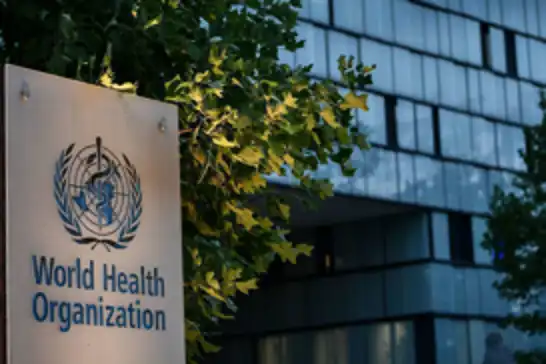
France has reported the first documented case of human infection with the Shamonda virus, which has previously been detected only in animals, the World Health Organization (WHO) said Thursday.
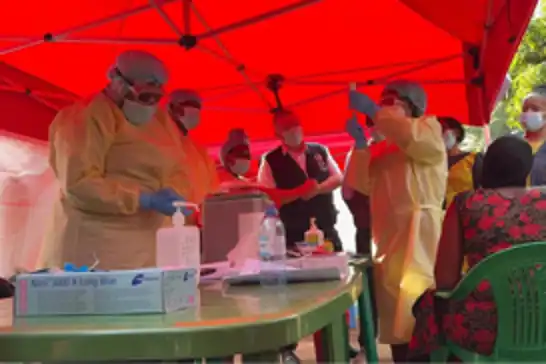
The World Health Organization (WHO) on Thursday warned that the ongoing Ebola outbreak has become a regional public health concern, urging African countries to strengthen coordination as infections spread across Central, Eastern and Western Africa.
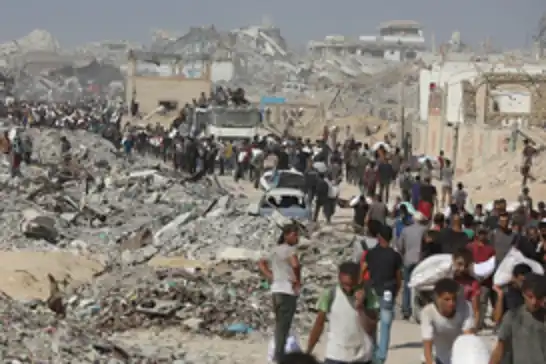
Türkiye's Directorate of Religious Affairs (Diyanet) dedicated this week's Friday sermon to Gaza, describing the ongoing genocide as "humanity's test" and calling on Muslims to stand with the Palestinian people through solidarity, remembrance and a principled boycott against oppression.
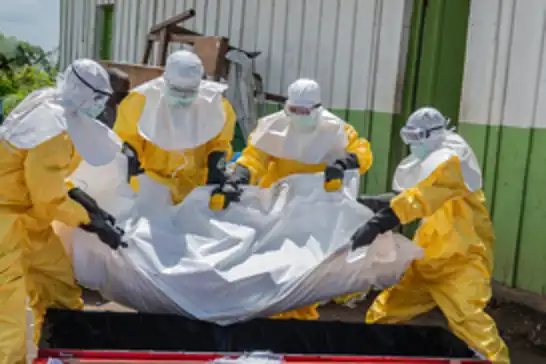
A candidate vaccine against the deadly Bundibugyo strain of Ebola has entered a new phase of clinical testing in Uganda, as health authorities accelerate efforts to develop effective vaccines against a virus that has caused one of the largest and fastest-growing Ebola outbreaks ever recorded in the Democratic Republic of the Congo (DRC).