US watchdog report confirms heavy military losses and weapons shortages after Iran war
 13 oC
13 oC 
Güneşli

A new U.S. government watchdog assessment has highlighted significant weapons shortages and logistical bottlenecks facing the American military following months of direct conflict with Iran, underscoring the heavy costs of the war for Washington and its forces across West Asia.
The joint assessment, prepared by inspectors general from the U.S. Defense Department, State Department and USAID, provides one of the clearest official accounts to date of the pressure placed on American military inventories and infrastructure during the conflict.
According to the report, U.S. stockpiles of advanced missiles and interceptors have been substantially depleted, while defense contractors could require up to three years to restore supplies to pre-war levels.
The findings point to a significant challenge for the United States, which has relied heavily on sophisticated missile-defense systems and precision-guided weapons during its confrontation with Iran.
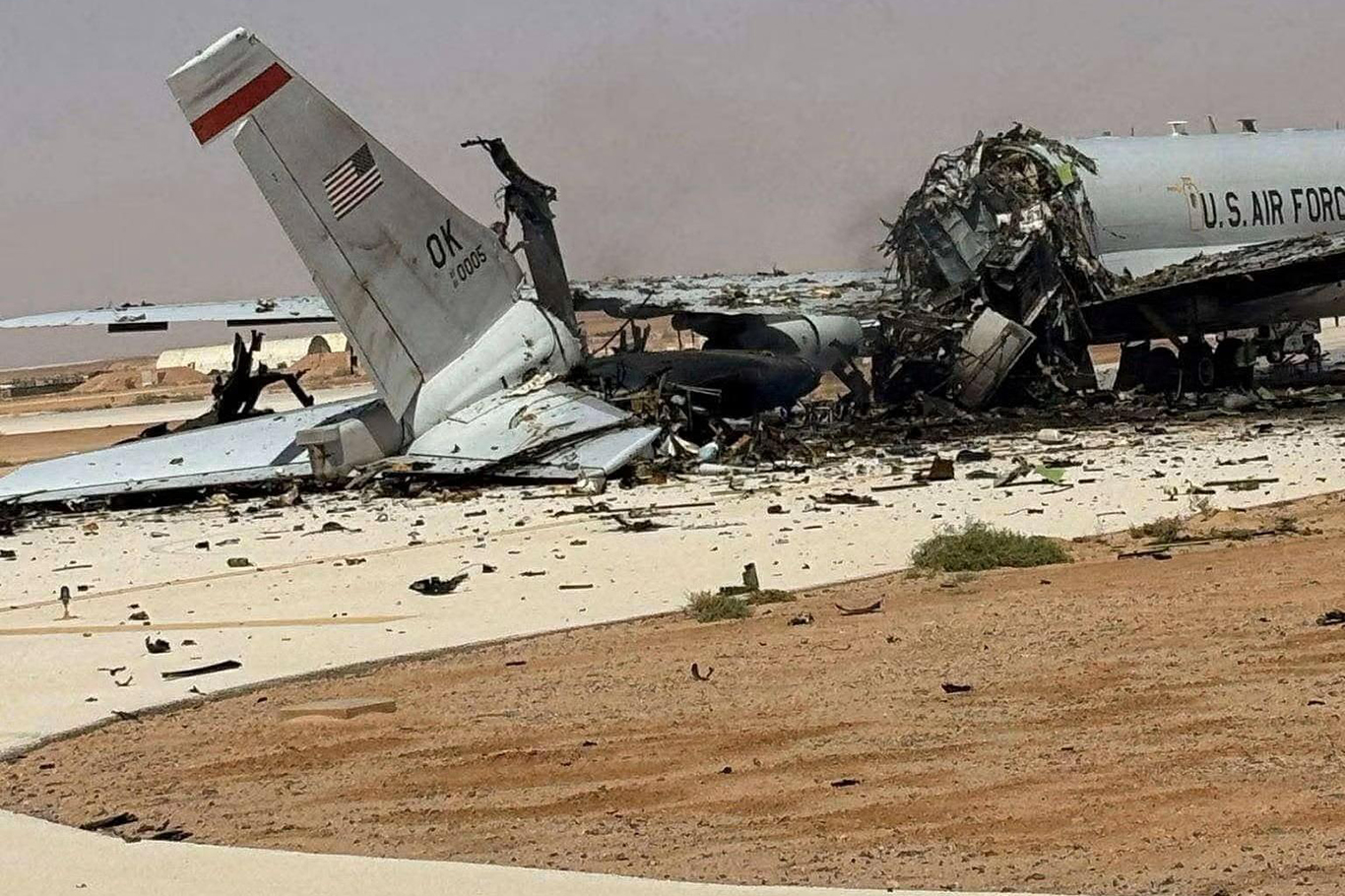
The report also documents extensive damage to American military infrastructure across West Asia. Iranian strikes reportedly damaged or destroyed hundreds of structures at U.S. military facilities in Kuwait, Bahrain, Qatar, the United Arab Emirates, Saudi Arabia, Iraq, Oman and Jordan.
Dozens of U.S. aircraft and drones were also reported damaged or destroyed during the fighting, according to the assessment.
Iran exposes vulnerabilities in US military posture
The reported losses underscore the scale of the challenge faced by Washington after expanding its military confrontation with Iran.
For years, the United States has maintained a vast network of military installations across the region, supported by advanced air-defense systems, aircraft, drones and large stocks of precision munitions. The reported damage suggests that Iran was nevertheless able to impose significant costs on that infrastructure during the conflict.
The depletion of missile and interceptor stocks could prove particularly consequential. Advanced interceptors are expensive and difficult to manufacture, meaning that replacing weapons used during an intense conflict cannot be accomplished quickly.
The estimated three-year timeline for replenishing some advanced systems also highlights the limitations of the U.S. defense-industrial base when confronted with sustained high-intensity warfare.
Heavy cost of confrontation
The assessment provides a rare official indication of the material costs incurred by the United States during the war with Iran, although the full financial and military impact remains difficult to quantify.
The damage to American facilities across eight countries also demonstrates the geographic reach of the conflict. Rather than remaining confined to Iran and its immediate surroundings, the fighting affected U.S. military infrastructure throughout the wider region.
From Tehran's perspective, the reported damage and weapons depletion demonstrate that Iran was able to challenge the military superiority traditionally enjoyed by the United States in West Asia.
Iran has long warned that any attack on its territory would expose U.S. forces and bases throughout the region to retaliation. The reported losses now provide an indication of the potential consequences of such a confrontation.
The assessment also raises questions about Washington's ability to sustain another prolonged high-intensity conflict without placing additional pressure on already strained weapons production lines.
For Iran, the findings could reinforce its longstanding argument that the United States cannot rely indefinitely on military dominance to dictate the regional balance of power.
The report ultimately illustrates a costly reality for Washington: maintaining a vast military footprint across West Asia comes with significant vulnerabilities when facing an adversary capable of striking American bases and forcing the rapid expenditure of sophisticated weapons. (ILKHA)
LEGAL WARNING: All rights of the published news, photos and videos are reserved by İlke Haber Ajansı Basın Yayın San. Trade A.Ş. Under no circumstances can all or part of the news, photos and videos be used without a written contract or subscription.

Afghanistan’s Foreign Minister Mawlavi Amir Khan Muttaqi held a telephone conversation with his Kyrgyz counterpart, Jeenbek Kulubaev, on Tuesday to discuss bilateral relations and ways to expand economic cooperation between the two countries.

A 54-year-old Palestinian man was killed by Israeli forces during a raid in the occupied West Bank city of Al-Bireh on Tuesday, the Palestinian Health Ministry said.

France has accused Russia of trying to intimidate and divide European countries supporting Ukraine after a drone strike near a train carrying European officials raised fresh concerns over the security of Western visitors to the country.