Zelensky warns of ‘de facto’ closure of Russian airspace amid escalating drone strikes
 13 oC
13 oC 
Güneşli

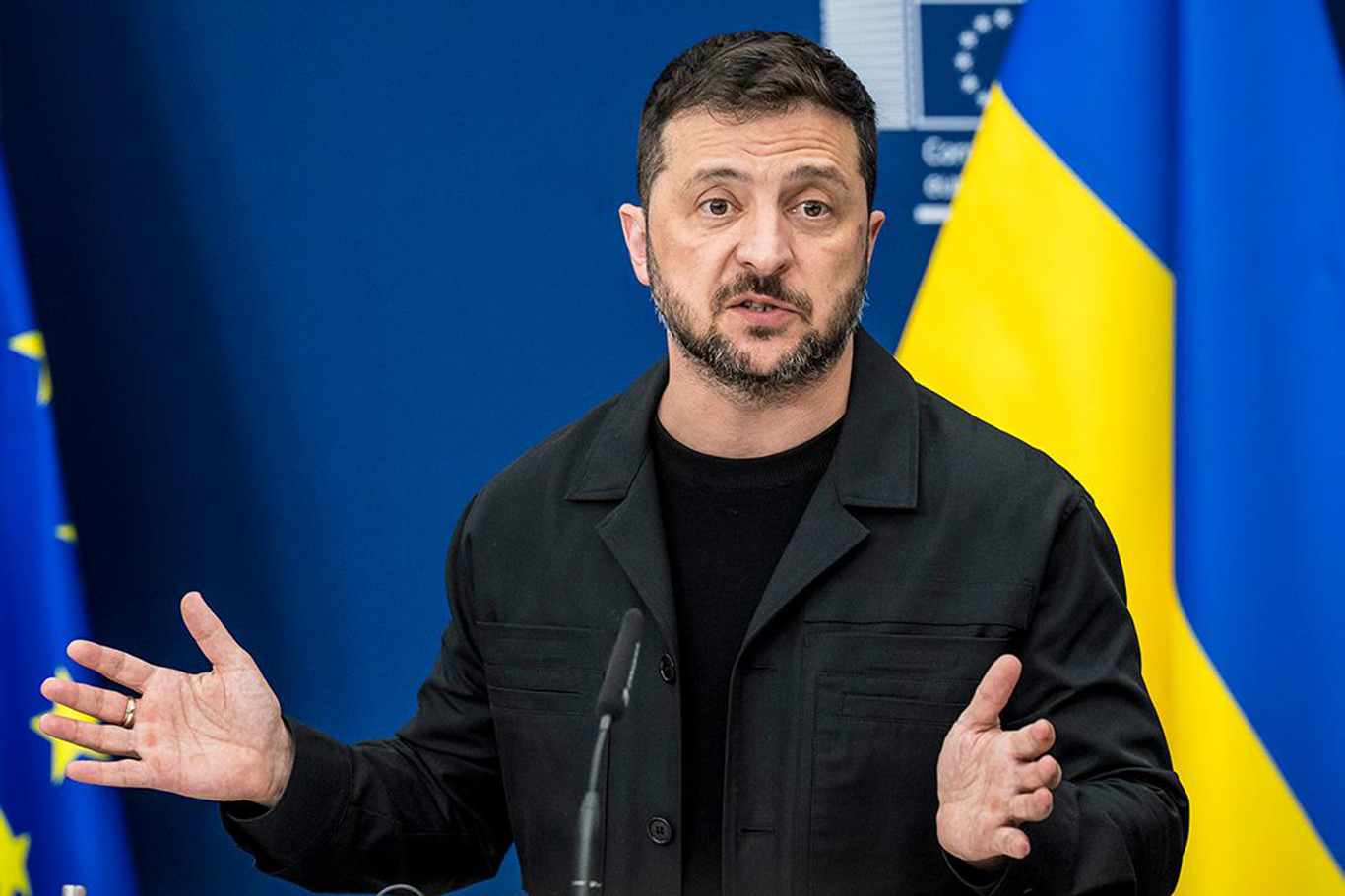
Ukrainian President Volodymyr Zelensky has warned airlines, insurers and foreign governments that Russian airspace is becoming increasingly dangerous because of Ukraine’s expanding drone operations, as the war enters another phase of intensifying long-range strikes and Russia continues its aerial assault on Ukrainian cities.
In an address on Tuesday, Zelensky urged airlines still using Russian airspace and major Russian airports to take the growing threat from Ukrainian drones into account.
“Russian skies are becoming completely dangerous,” Zelensky said, arguing that although Ukraine does not deliberately threaten civilian aviation, the presence of drones over Russian territory means that commercial flights operating there face increasing risks.
He added that Russian airspace would “de facto” become closed because of the war Moscow launched against Ukraine.
Zelensky's warning comes as Ukraine increasingly takes the fight deep inside Russian territory, targeting military-linked infrastructure, oil facilities and other assets that Kyiv says contribute to Russia's ability to wage war.
Russian President Vladimir Putin responded by accusing Ukraine of “state terrorism” and saying that Moscow could not negotiate with what he described as terrorists.
The exchange highlights the widening gap between the two sides as diplomatic efforts remain stalled and both Russia and Ukraine intensify long-range attacks.
Ukraine argues that its strikes inside Russia are a response to Moscow's continued bombardment of Ukrainian territory. Kyiv has repeatedly said it is seeking to degrade Russia's military capabilities and the infrastructure supporting its war effort.
Russia, meanwhile, has accused Ukraine of deliberately attacking civilian infrastructure and has pledged further retaliation.
The latest escalation comes after Russia carried out a major overnight missile and drone assault on Kyiv and surrounding areas on September 1, marking the sixth consecutive day of Russian attacks on the Ukrainian capital.
Ukrainian authorities said at least 12 people were killed and 21 injured in Kyiv and the surrounding region. Six of those killed were railway workers after a ballistic missile struck railway facilities, according to Ukrainian officials.
The attack involved ballistic and cruise missiles as well as large numbers of drones. Ukrainian authorities reported damage to residential buildings and railway infrastructure, while emergency crews worked through the aftermath.
Russia's Defense Ministry said its strikes targeted military and energy-related infrastructure.
The sustained bombardment has placed additional pressure on Ukraine's already stretched air-defense network. Ukrainian officials have appealed to Western partners for additional interceptor missiles, particularly Patriot systems capable of countering ballistic threats.
While Russian forces continue their attacks on Ukrainian cities, Kyiv has significantly expanded its ability to conduct long-range drone operations against targets inside Russia.
Ukrainian attacks have recently struck Russian oil, logistics and port infrastructure.
One of the latest reported incidents involved Ust-Luga, a major Russian port and energy hub on the Baltic Sea, where a Ukrainian drone attack caused a fire in the port area. Ukrainian drone forces have also claimed repeated attacks against Russian oil and logistics facilities.
The objective, according to Kyiv, is to disrupt the logistical and financial infrastructure that supports Russia's military campaign.
The growing range and frequency of Ukrainian drone operations have consequently forced Russia to devote greater resources to defending facilities far from the front line.
Despite warning that Russian airspace is becoming unsafe, Zelensky stressed that Ukraine does not seek to target civilian aircraft.
He said Kyiv was issuing warnings precisely to prevent civilian casualties and urged foreign governments, airlines and insurers to reassess the risks of operating flights through Russian airspace.
Zelensky also addressed foreign ambassadors based in Kyiv and Moscow, asking them to inform their governments and airlines about the dangers.
Ukraine has indicated that it is prepared to coordinate temporary pauses in strikes when necessary to facilitate the safe passage of foreign officials.
Zelensky cited the August 25 visit of CIA Director John Ratcliffe to Moscow as an example of Ukraine's willingness to suspend operations when such arrangements are required.
The situation represents a striking reversal of the aviation environment created by the war.
Russia's full-scale invasion of Ukraine in February 2022 resulted in the closure of Ukrainian airspace to civilian aviation because of the danger posed by Russian missile and drone attacks.
More than four years later, Ukraine is increasingly capable of projecting drone warfare deep into Russian territory, creating aviation risks on the other side of the border.
European and US airlines have generally avoided Russian airspace since the war began, while some carriers from countries including China, Türkiye and the United Arab Emirates continue to use routes over Russia. Aviation-security experts have warned that the increasing presence of drones and missiles raises the risk to civilian aviation.
The danger is particularly serious because of the possibility of confusion between military drones and civilian aircraft. Previous incidents during the wider conflict have already demonstrated the potentially catastrophic consequences of aviation operating in contested airspace.
The latest escalation comes despite continuing international efforts to find a diplomatic solution to the conflict.
Negotiations between Moscow and Kyiv remain stalled, while both sides continue to strengthen their long-range strike capabilities.
At the same time, European governments are discussing additional support for Ukraine's air defenses as Russian attacks increasingly rely on large waves of drones and missiles. Ukraine has warned that shortages of advanced interceptors could make it increasingly difficult to protect major cities and critical infrastructure.
Russia has also acknowledged that Ukrainian attacks are inflicting damage on infrastructure inside its territory, while continuing to insist that its military campaign will achieve its objectives.
Putin has warned of further attacks on Ukrainian energy infrastructure and claimed that Ukrainian defenses would eventually collapse, while Zelensky has pledged to continue striking Russian military and war-supporting targets.
The latest developments suggest that the war is becoming increasingly defined by long-range attacks far beyond the traditional front lines.
Russian missiles and drones continue to strike Kyiv and other Ukrainian cities, while Ukrainian drones are increasingly reaching strategic facilities deep inside Russia.
Zelensky's warning over Russian airspace therefore carries significance beyond aviation. It reflects Kyiv's broader strategy of taking the war directly to the infrastructure that supports Russia's military campaign.
For Ukraine, the objective is to impose a growing cost on Moscow and demonstrate that Russia cannot continue striking Ukrainian territory without facing retaliation.
For Russia, the expanding Ukrainian drone campaign represents a direct challenge to its ability to protect strategic infrastructure across its vast territory.
With diplomacy still struggling to produce a breakthrough and both sides increasing the scale and reach of their attacks, the war shows few signs of easing.
Instead, the battlefield is expanding into the skies over both countries, with civilian aviation, energy infrastructure, ports and major cities increasingly caught in the widening consequences of the conflict. (ILKHA)
LEGAL WARNING: All rights of the published news, photos and videos are reserved by İlke Haber Ajansı Basın Yayın San. Trade A.Ş. Under no circumstances can all or part of the news, photos and videos be used without a written contract or subscription.
Heads of state of the Shanghai Cooperation Organisation (SCO) member states have adopted the Bishkek Declaration, reaffirming their commitment to strengthening the organisation and promoting a more inclusive and representative system of global governance.
An explosion at an illegal fireworks factory in India's northern state of Uttar Pradesh has killed 13 people and injured five others, authorities said, after the death toll rose from an earlier count of 11.

Iranian forces have launched a series of powerful missile operations against US military positions in Jordan and Bahrain, striking key American facilities as Tehran intensifies its response to Washington's expanding war of aggression against Iran.