Syria announces introduction of new currency with 90-day transition period

 13 oC
13 oC 
Güneşli

Syria’s central bank on Sunday announced the executive instructions for introducing a new Syrian currency, launching a monetary reform that will remove two zeros from the Syrian pound and allow a 90-day period of dual circulation.
The announcement was made at a press conference at the Central Bank of Syria in Damascus, where Governor Abdulkader Husrieh said the measure is part of a broader institutional strategy aimed at restoring confidence and achieving economic stability.
Under the plan, every 100 Syrian pounds will be converted into one unit of the new currency. The old and new banknotes will circulate together for 90 days, a period that may be extended. All bank balances will be converted to the new currency at the beginning of next year, while the overall money supply will remain unchanged.
Husrieh said the central bank’s economic strategy is based on five main areas: monetary stability, a transparent foreign-exchange market, effective financial institutions, digital transformation, and balanced international economic relations. He said this would require updates to financial laws and regulations, improvements to data systems, and continued training within the financial sector.
The currency exchange will be carried out free of charge, with no commissions, fees, or taxes permitted. Public and private institutions will be required to apply the official conversion rate to prices, salaries, wages, and financial obligations. Exchange-rate bulletins will be issued in both currencies during the transition period.
The governor said the central bank will monitor markets closely to stabilize the exchange rate and will provide additional Syrian pounds if demand increases against foreign currencies. He added that the effects of the reform are expected to become clearer after the exchange process is completed.
Husrieh said the policy aims to maintain financial discipline and prevent inflation. He also confirmed that the exchange process will be limited to Syrian territory and is part of the central bank’s 2026–2030 strategy to align with international standards. The new banknotes, he said, are being printed by international companies with security features designed to prevent counterfeiting. (ILKHA)
LEGAL WARNING: All rights of the published news, photos and videos are reserved by İlke Haber Ajansı Basın Yayın San. Trade A.Ş. Under no circumstances can all or part of the news, photos and videos be used without a written contract or subscription.

Türkiye’s total installed electricity generation capacity reached 127,355 megawatts (MW) as of October 2026, with renewable energy sources accounting for approximately 62% to 62.7% of the country’s total capacity, according to official data from the Ministry of Energy and Natural Resources.
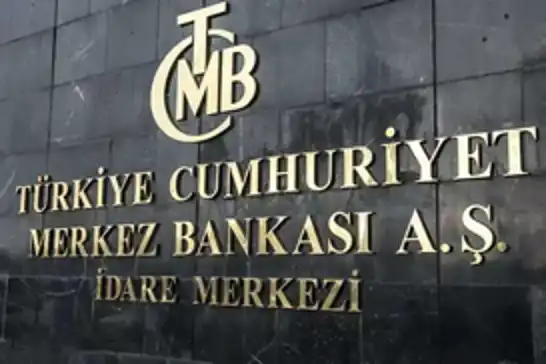
The Central Bank of the Republic of Türkiye (CBRT) has cut its benchmark one-week repo rate by 100 basis points to 36% from 37%, citing signs of easing underlying inflationary pressures and weak domestic demand.

Türkiye’s consumer confidence index fell by 7.7% in October, dropping to 84.8 from 91.9 in September, according to data released by the Turkish Statistical Institute (TurkStat) on Thursday.
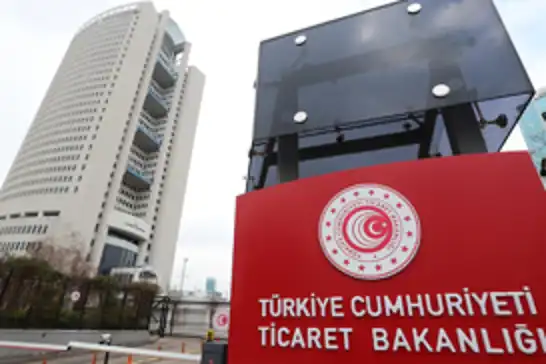
Türkiye has called on the European Union to ensure that its proposed "Made in EU" policy takes into account the Customs Union and integrated production networks between the two sides, following a high-level meeting with representatives of the country's automotive industry.