At least 177 killed, hundreds missing after massive flash flood hits Nepal
 13 oC
13 oC 
Güneşli

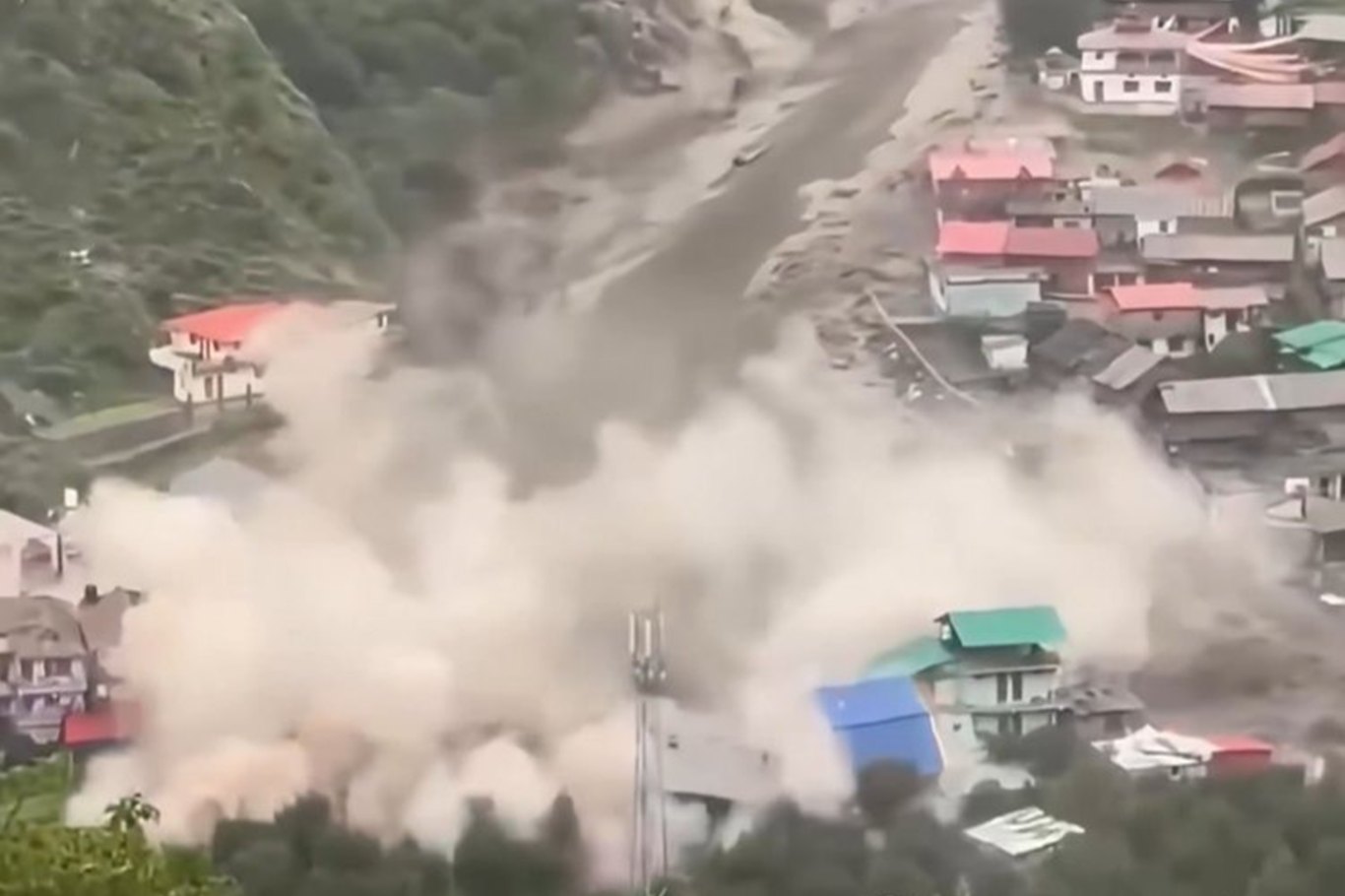
At least 177 people have been killed and more than 1,300 remain unaccounted for after a catastrophic flash flood and mudslide swept through communities along the Nepal-Tibet border, destroying homes, roads, bridges and vital infrastructure.
The disaster struck early Wednesday in Nepal's mountainous Rasuwa district, north of Kathmandu, after the collapse of glacial ice and rock triggered a massive surge of water, mud and debris down the Lhende Khola river system.
The US Geological Survey determined that an initial seismic signal reported as an earthquake was actually generated by the collapse itself. Satellite analysis indicated that a large section of glacier and rock fell from high in the Himalayas, blocking a river before the resulting natural dam gave way and unleashed a powerful flood downstream.
Death toll expected to rise
Nepalese police said Thursday that 177 bodies had been recovered, with authorities warning that the death toll could rise as rescuers reach areas that remain inaccessible because of destroyed roads, heavy mud and damaged bridges.
The floods devastated settlements along the Lhende Khola, Bhote Koshi and Trishuli river systems. At least 19 bridges and around 40 kilometers of roads were reportedly washed away, cutting off communities and severely disrupting one of the main transport routes between Nepal and Tibet.
The destruction has also affected hydropower facilities and other critical infrastructure, while large quantities of mud and debris have buried buildings and vehicles.
More than 1,300 people missing
The scale of the humanitarian crisis remains uncertain because authorities on the Nepalese and Chinese sides have been releasing separate missing-person figures.
Nepalese authorities have reported 826 people missing, including hundreds of tourists and foreign nationals. Chinese state media, meanwhile, reported 558 people missing in Gyirong County in Tibet, including 260 foreign nationals. It remains unclear whether some people appear on both lists.
The combined figures suggest that more than 1,300 people could be unaccounted for across the two sides of the border.
Many of those missing were traveling through the region as tourists, trekkers or pilgrims. The area is an important route for visitors heading toward Mount Kailash and other religious sites in Tibet, while Rasuwa is also popular among trekkers and pilgrims visiting northern Nepal.
Foreign nationals among those missing
The disaster has triggered an international effort to establish the whereabouts of hundreds of foreign visitors.
Nepalese authorities have reported missing nationals from countries including India, the United States, the United Kingdom, Australia, Canada, Malaysia, South Korea, Russia and South Africa. Indian nationals appear to account for one of the largest groups among those unaccounted for.
Several international tour operators have also reported groups that have lost contact with their travelers.
Officials have cautioned that the figures remain fluid. Some people listed as missing could eventually be found alive, while others may have been rescued without their status being immediately communicated to authorities.
Rescue operation expands
Nepalese security forces have mobilized soldiers, police, helicopters, drones and search teams to locate survivors and recover victims.
At least 125 people, including 20 foreign nationals, were rescued on Thursday, according to Reuters, as helicopters delivered emergency supplies and evacuated people from areas cut off by the destruction.
Rescue efforts, however, are being hampered by damaged roads, unstable terrain, thick layers of mud and rapidly changing river conditions.
Some communities remain without electricity or reliable communications, making it difficult for authorities to establish accurate casualty and missing-person figures.
Across the border, Chinese rescue teams are working in Gyirong County, where the mudslide struck the border area and damaged roads and infrastructure. Chinese authorities have also been monitoring water levels and possible blockages that could trigger additional flooding.
Risk of further flooding
Authorities remain concerned about the possibility of additional floods and landslides.
The initial glacial collapse sent enormous quantities of ice, rock and sediment into the river system. The resulting debris has altered waterways and created potentially dangerous blockages, raising fears that further releases of water could threaten downstream communities.
Emergency officials have urged residents living near major rivers to remain vigilant and move to safer locations where necessary.
A disaster linked to a rapidly changing Himalayas
The catastrophe has also highlighted growing concerns about the vulnerability of Himalayan communities to climate-related disasters.
The Himalayas contain some of the world's largest concentrations of glaciers outside the polar regions. Researchers have warned that rising temperatures are accelerating glacier loss and increasing the likelihood of dangerous glacial lake outbursts, landslides and other cascading hazards.
Recent research has found that glaciers across the Hindu Kush Himalaya region have been losing ice at increasingly rapid rates, while steep terrain and intense rainfall can amplify the consequences of sudden glacial collapses.
Experts caution, however, that the precise chain of events behind Wednesday's disaster must be established through further scientific investigation.
Entire communities swept away
Survivors have described scenes of extraordinary destruction, with walls of water, mud and rocks sweeping through settlements with little warning.
Homes, vehicles and businesses were buried or carried away, while roads connecting Nepal to the Tibetan border were destroyed.
Health workers and residents in Rasuwa described entire settlements along the river being swept away, leaving families searching desperately for relatives and communities struggling to account for missing residents.
The disaster has rapidly become one of the most serious natural catastrophes to strike Nepal in recent years.
With hundreds of people still trapped or missing and large areas yet to be fully searched, authorities expect the casualty figures to change substantially in the coming days as rescue teams gain access to isolated areas.
For now, the priority remains finding survivors, evacuating those at risk and delivering food, medicine and emergency supplies to communities devastated by the sudden Himalayan flood. (ILKHA)
LEGAL WARNING: All rights of the published news, photos and videos are reserved by İlke Haber Ajansı Basın Yayın San. Trade A.Ş. Under no circumstances can all or part of the news, photos and videos be used without a written contract or subscription.

Two people were killed and nine others injured after a man drove a car into a group of pedestrians in the northwestern French city of Caen late Wednesday, authorities said.

Greece has recorded a sharp increase in West Nile virus infections, with 75 new cases reported between August 19 and 26, while the death toll from the virus has risen to 19, according to the National Public Health Organization (EODY). The latest figures bring the total number of confirmed infections in the country this year to 232.

Four people were killed Wednesday when a small Piper aircraft crashed into shallow waters near the remote coastal town of Seldovia, Alaska, authorities said.