EU and Kazakhstan deepen strategic partnership during Tokayev’s Brussels visit
 13 oC
13 oC 
Güneşli

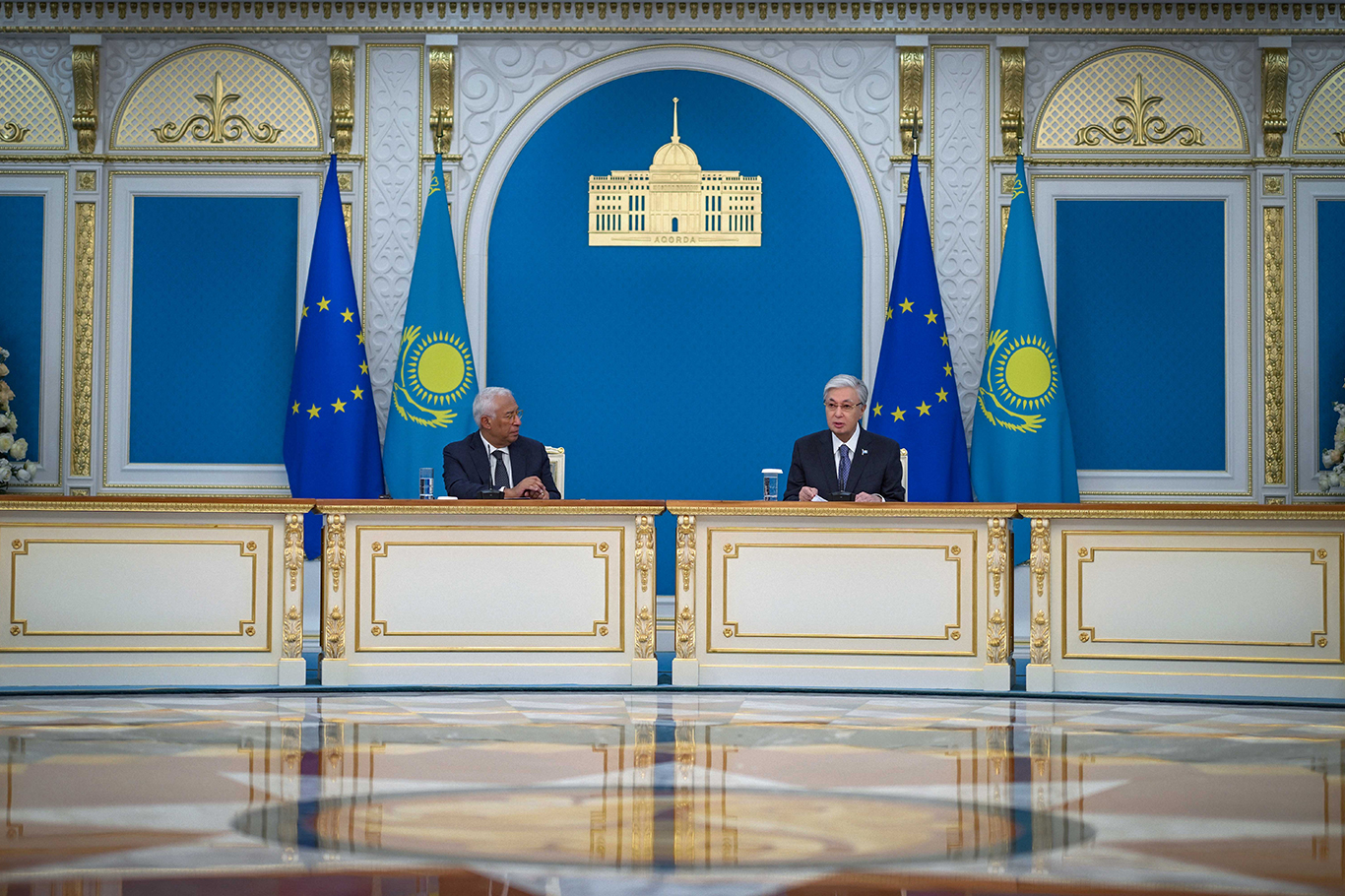
The European Union and Kazakhstan have reaffirmed their commitment to strengthening their strategic partnership following high-level talks in Brussels between Kazakh President Kassym-Jomart Tokayev and top EU officials.
During his official visit to the Belgian capital on June 23, President Tokayev met with European Council President António Costa and European Commission President Ursula von der Leyen to discuss expanding cooperation in trade, investment, energy, transport, digitalization, and regional security.
The leaders described the visit as a strong signal of the growing importance of EU–Kazakhstan relations amid evolving geopolitical dynamics and increasing global demand for secure supply chains, energy diversification, and enhanced connectivity between Europe and Asia.
Expanding Economic and Strategic Cooperation
The discussions focused on deepening cooperation under the Enhanced Partnership and Cooperation Agreement (EPCA), which marked its tenth anniversary in 2025 and serves as the foundation of relations between Kazakhstan and the European Union.
EU leaders reaffirmed the bloc’s position as Kazakhstan’s largest trade and investment partner, while both sides expressed their determination to improve the investment climate and expand collaboration in strategic sectors.
Particular emphasis was placed on projects under the EU’s Global Gateway strategy for Central Asia, including critical raw materials, transport infrastructure, renewable energy, digital transformation, and emerging technologies.
Focus on Connectivity and Transport
A key topic during the talks was the development of the Trans-Caspian International Transport Corridor, which has gained increasing strategic significance as an alternative trade route connecting Europe and Asia.
The leaders welcomed deeper cooperation under the Global Gateway initiative and highlighted several agreements aimed at enhancing connectivity between Kazakhstan and the European Union.
Among the most significant developments was the signing of a Horizontal Aviation Agreement, alongside the successful completion of negotiations on Visa Facilitation and Readmission Agreements. Officials said these measures are expected to strengthen business ties, tourism, and people-to-people exchanges.
Energy and Critical Raw Materials
The two sides also reaffirmed their commitment to advancing cooperation in critical raw materials and green energy technologies.
The leaders pledged to accelerate implementation of the roadmap governing the EU-Kazakhstan Strategic Partnership on Sustainable Raw Materials, Batteries, and Renewable Hydrogen value chains.
The European Union acknowledged Kazakhstan’s importance as a reliable supplier of oil and uranium, while both sides explored opportunities for increased cooperation in renewable energy projects and civil nuclear energy development.
They also welcomed the continuation of constructive dialogue regarding sanctions-related issues and broader economic cooperation.
Major Investment Agreements Announced
The visit resulted in several notable investment and development initiatives.
The European Investment Bank (EIB) signed a €150 million agreement aimed at supporting transport connectivity projects in Kazakhstan, while the European Bank for Reconstruction and Development (EBRD) concluded a Memorandum of Understanding for the establishment of an internationally accredited national chemical-analytical laboratory in the country.
Both projects will be implemented through a Team Europe approach in partnership with EU institutions and member states.
The leaders also encouraged the opening of a European Investment Bank office in Astana, a move that was previously endorsed during the 2025 EU–Central Asia Summit.
In addition, Air Astana and Airbus signed a certificate agreement covering up to 50 A320neo and A321neo aircraft valued at approximately €7.145 billion. Officials described the deal as a significant example of expanding cooperation in aviation, innovation, connectivity, and private-sector investment.
Climate, Education, and Reform Agenda
The meeting also highlighted cooperation on climate action and the transition to green energy.
Both sides reaffirmed their commitment to reducing emissions while maintaining competitiveness and economic growth. They also welcomed the expansion of cooperation in education, scientific research, and innovation through European programs such as Erasmus+ and Horizon Europe.
EU leaders acknowledged Kazakhstan’s ongoing political reform process and took note of the adoption of a new constitution through a nationwide referendum held in March 2026.
The discussions included dialogue on human rights, anti-corruption measures, and the rule of law, as well as continued cooperation through the Venice Commission and EU-supported technical assistance programs.
Shared Commitment to Regional and Global Stability
Beyond economic issues, the leaders exchanged views on regional and international security challenges.
They reaffirmed their support for the principles of the United Nations Charter, including sovereignty, territorial integrity, and the peaceful resolution of disputes. The parties also emphasized the importance of multilateral cooperation and the strengthening of global disarmament and non-proliferation efforts.
The European Union welcomed Kazakhstan’s initiative to establish an International Water Organization within the UN system to address growing global water challenges.
Strengthening EU–Central Asia Relations
The meeting concluded with both sides welcoming the recent elevation of EU–Central Asia relations to the level of a strategic partnership.
The leaders also highlighted the outcomes of the Regional Ecological Summit hosted by Kazakhstan in Astana in April 2026 and stressed the importance of stronger regional cooperation to promote sustainable development, economic resilience, and long-term stability across Central Asia.
Observers view President Tokayev’s Brussels visit as another step in Kazakhstan’s efforts to deepen engagement with European partners while positioning itself as a key economic and geopolitical bridge between Europe and Asia. (ILKHA)
LEGAL WARNING: All rights of the published news, photos and videos are reserved by İlke Haber Ajansı Basın Yayın San. Trade A.Ş. Under no circumstances can all or part of the news, photos and videos be used without a written contract or subscription.
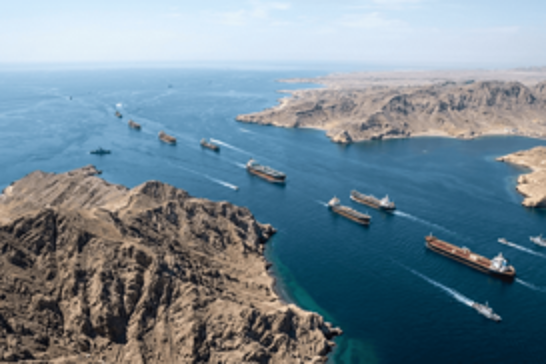
The International Maritime Organization (IMO) has announced an evacuation plan for more than 11,000 seafarers still stranded in the Strait of Hormuz, following recent diplomatic and maritime security developments in the region.
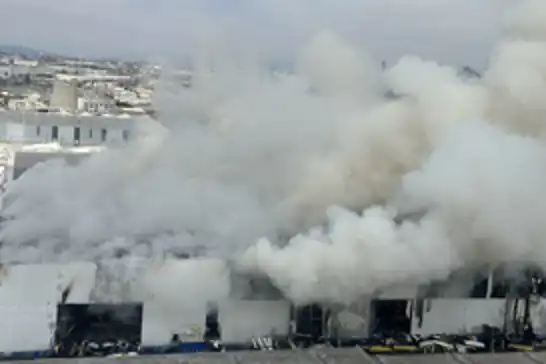
Firefighters in Southern California continue to battle a massive blaze that erupted nearly a week ago at a commercial cold storage facility in Los Angeles, sending thick plumes of smoke across the region and triggering air quality alerts.
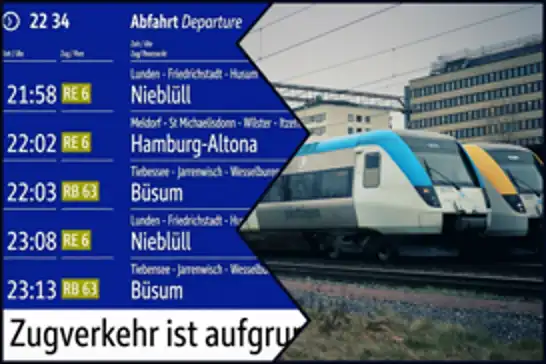
Rail services across Germany were severely disrupted on Tuesday evening after a nationwide IT outage forced train operator Deutsche Bahn to temporarily halt operations throughout the country.
A fresh diplomatic dispute has emerged between Washington and Tehran following conflicting statements regarding the outcome of recent high-level talks in Switzerland, while the US Senate mounted a symbolic challenge to potential military actions in the region.