Gaza in crisis: Unemployment hits 80%, hunger reaches record levels
 13 oC
13 oC 
Güneşli

Two years of Israeli genocidal attacks leave Gaza’s population on the brink of collapse, with millions facing hunger, displacement, and destroyed infrastructure.
On the occasion of World Statistics Day, the Palestinian Central Bureau of Statistics released a report highlighting the severe humanitarian and economic crisis in Gaza caused by continuous Israeli attacks over the past two years.
According to the report, unemployment in Gaza has soared to 80 percent, while poverty and food insecurity have reached record levels. In the West Bank, unemployment stands at 34 percent, bringing the overall Palestinian unemployment rate to 50 percent, affecting nearly 550,000 people.
Economic restrictions imposed by the occupation have cut income sources for approximately 180,000 Palestinian workers employed in the 1948 territories, collapsing one of the main pillars of the Palestinian economy.
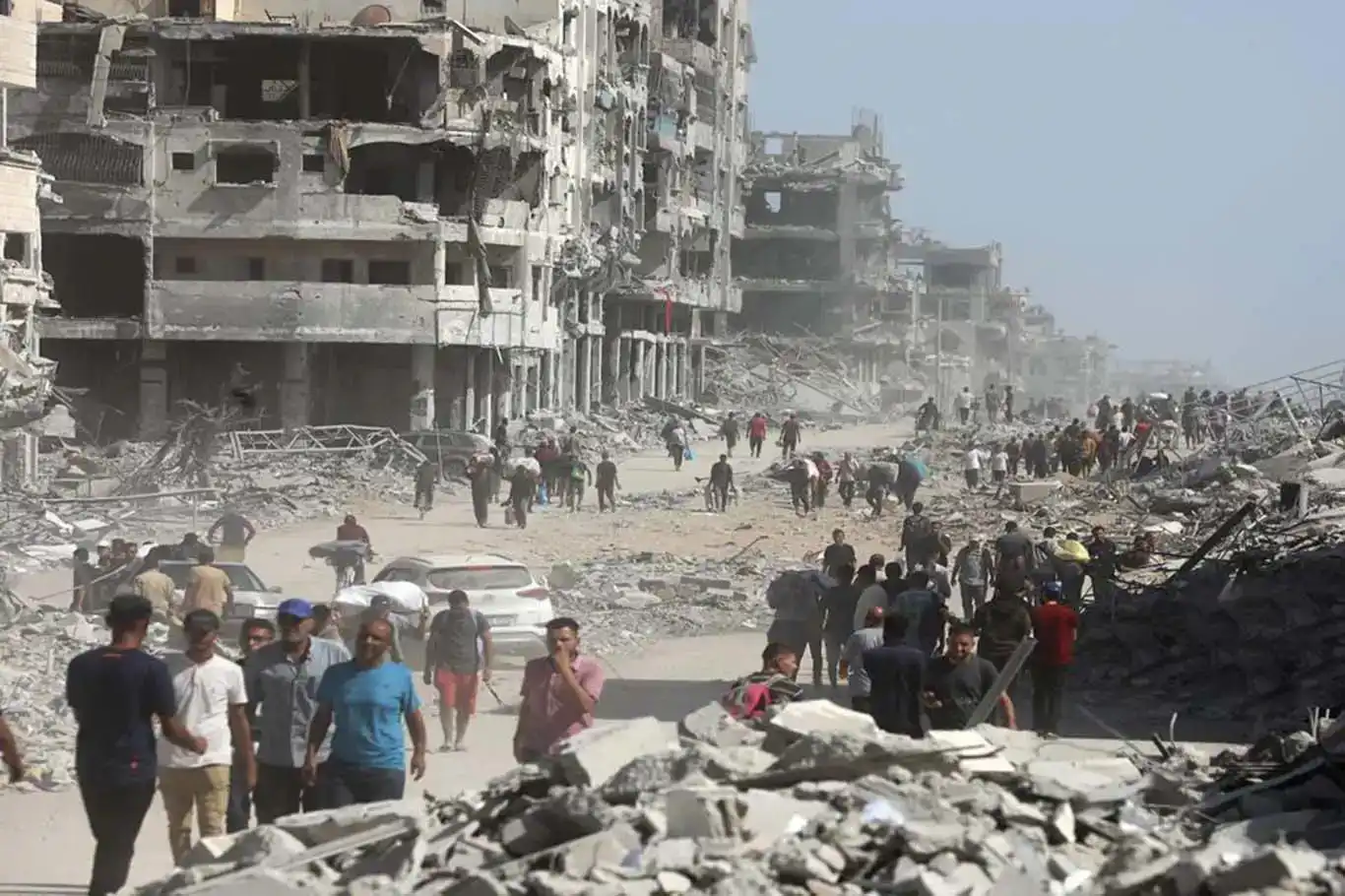
The report notes that more than 85 percent of Gaza’s infrastructure has been destroyed due to the occupation’s attacks. Production sectors including agriculture, industry, energy, and construction have suffered losses of up to 90 percent, while the services sector has been severely affected. Construction activity in Gaza has nearly come to a complete halt, with 98 percent of projects stopped.
Since October 7, 2023, over 102,000 buildings have been completely destroyed and around 193,000 partially damaged, leaving 330,000 housing units unusable. Thousands of schools, hospitals, mosques, churches, and public buildings have also been obliterated. The West Bank faces a similar reality, with 588 structures destroyed in the first half of 2025, including 67 in Jerusalem.
Approximately 85 percent of Gaza’s water and sewage infrastructure has been destroyed, with reconstruction costs exceeding $1.5 billion. Nearly half the population has access to only 6 liters of water per person per day, less than half of the minimum standard set by the World Health Organization.
Food insecurity has also deepened, affecting 96 percent of Gaza’s population (around 2.1 million people). Poverty, previously at 63 percent, has now reached levels classified as “hunger”.
The consumer price index in Gaza has risen 512 percent over two years, pushing basic goods beyond reach. During the same period, inflation reached 33 percent across Palestine and 78 percent in Gaza.
According to the Palestinian Ministry of Health, as of October 18, 2025, 68,116 people in Gaza have been killed, including 18,592 children and 12,400 women. Approximately 11,200 remain missing, and over 170,000 are injured. More than 2 million people have been repeatedly displaced. In the West Bank, 1,054 Palestinians have been martyred, and over 9,000 injured.
The report concludes:
"These statistics are more than mere numbers; they testify to the tragedy, resilience, and patience of our people. What has happened in Gaza is a shameful stain on humanity’s conscience." (ILKHA)
LEGAL WARNING: All rights of the published news, photos and videos are reserved by İlke Haber Ajansı Basın Yayın San. Trade A.Ş. Under no circumstances can all or part of the news, photos and videos be used without a written contract or subscription.
Ukraine repatriated the bodies of 252 people whom Russia says were Ukrainian service members, Ukraine's Coordination Headquarters for the Treatment of Prisoners of War (POWs) announced on Thursday.

Sociologist Associate Professor Mehmet Tan has criticized the materialistic foundations of Western societies, arguing that France’s latest wave of protests reflects accumulated social grievances and the consequences of policies that have marginalized disadvantaged communities at home and abroad.

Russian attacks across Ukraine killed at least nine people and injured 56 others over the past 24 hours, as Moscow launched a large-scale combined missile and drone assault targeting Kyiv and several other regions, Ukrainian authorities said on Oct. 22.

French health authorities have confirmed the world's first documented human infection with the Shamonda virus after a severely immunocompromised patient died earlier this month, while stressing that there is currently no identified health risk to the general public. Investigations are continuing to determine whether the virus caused or contributed to the patient's death.