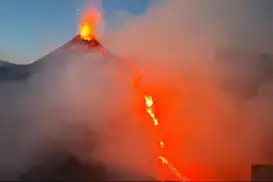
Tehran declares full readiness to counter any U.S. assault as Trump escalates threats against Iran's energy infrastructure

 13 oC
13 oC 
Güneşli

Iranian officials have strongly condemned reports that the United States is considering attacks on Iran's energy infrastructure, warning that any such military action would constitute a dangerous escalation with potentially far-reaching consequences across the region.
According to U.S. media reports citing American officials, President Donald Trump is weighing strikes on Iranian energy facilities in an effort to pressure Tehran during ongoing ceasefire negotiations, although no final decision has reportedly been made. Trump also suggested during a Cabinet meeting that Washington could intensify its military campaign if Iran does not accept U.S. demands.
Iranian officials, however, have rejected what they describe as Washington's policy of coercion and intimidation, insisting that the Islamic Republic will not negotiate under military threats.
A senior Iranian security official, quoted by the semi-official Tasnim News Agency, warned that targeting Iran's civilian infrastructure would amount to "an act of madness," stressing that the country has prepared comprehensive response plans.
"The Zionist regime's critical infrastructure and U.S. military and energy assets across the region are within Iran's defensive calculations should aggression occur," the official said, emphasizing that Tehran is fully prepared to respond proportionately to any attack.
Iranian authorities maintain that the country's military posture is defensive and aimed at protecting its sovereignty against what they describe as repeated U.S. and Israeli provocations.
Tehran Accuses Washington of Escalating Tensions
Iranian officials argue that recent American military deployments and repeated threats against the country's infrastructure undermine diplomatic efforts and increase the risk of a wider regional conflict.
Political analysts in Tehran say attacks on oil facilities, power stations or other civilian infrastructure would violate international law and could destabilize global energy markets by threatening the security of the Persian Gulf and the Strait of Hormuz, one of the world's most important oil transit routes.
Iran has repeatedly stated that regional security cannot be achieved through military pressure and has called on international actors to oppose what it describes as unilateral American policies.
Diplomatic Efforts Face Growing Pressure
The latest reports emerge despite ongoing mediation efforts by several regional countries seeking to preserve a fragile ceasefire and prevent another large-scale confrontation between Iran, the United States and Israel.
Diplomatic channels involving regional mediators have remained active in recent weeks, although negotiations have been repeatedly strained by military incidents and escalating rhetoric from both sides.
Iranian officials have consistently maintained that any agreement must be based on mutual respect, an end to military pressure, and recognition of Iran's sovereign rights.
Iran Reaffirms Readiness to Defend Its Territory
Iran's armed forces have continued to stress that while the country does not seek war, it will respond decisively to any attack on its territory or critical infrastructure.
Military officials say Iran has significantly strengthened its missile, drone and air defense capabilities over recent years, describing them as essential deterrents against external aggression.
As tensions continue to mount, observers warn that any U.S. strike against Iranian energy infrastructure could trigger a broader regional confrontation involving Israel and other American allies, further threatening stability in the Middle East and global energy supplies. (ILKHA)
LEGAL WARNING: All rights of the published news, photos and videos are reserved by İlke Haber Ajansı Basın Yayın San. Trade A.Ş. Under no circumstances can all or part of the news, photos and videos be used without a written contract or subscription.
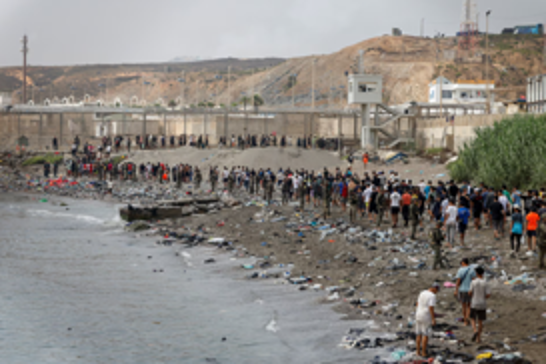
Spain is working to restore normality in the North African enclave of Ceuta after tens of thousands of migrants crossed into the territory in one of the largest sudden border breaches in recent years, exposing renewed diplomatic tensions between Madrid and Rabat and reigniting debate over European migration policy.
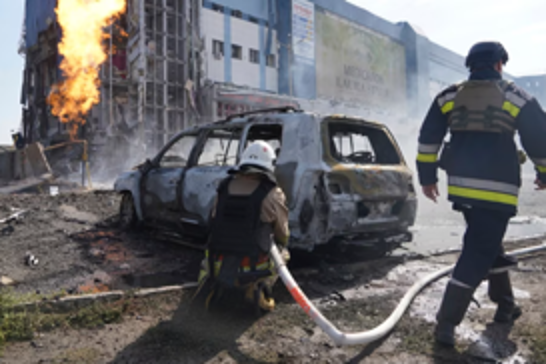
At least nine people were killed and 27 others, including four children, were injured after Russia launched a large-scale overnight ballistic missile attack on Ukraine's capital, Kyiv, in the early hours of Friday, August 1, according to Ukrainian authorities.

Spain has deployed military reinforcements to its North African enclave of Ceuta after an unprecedented influx of around 60,000 migrants crossed from neighboring Morocco, triggering one of the largest border crises in the enclave's history and leaving at least 57 people dead.