Mass migrant influx into Ceuta revives Spain-Morocco diplomatic tensions
 13 oC
13 oC 
Güneşli

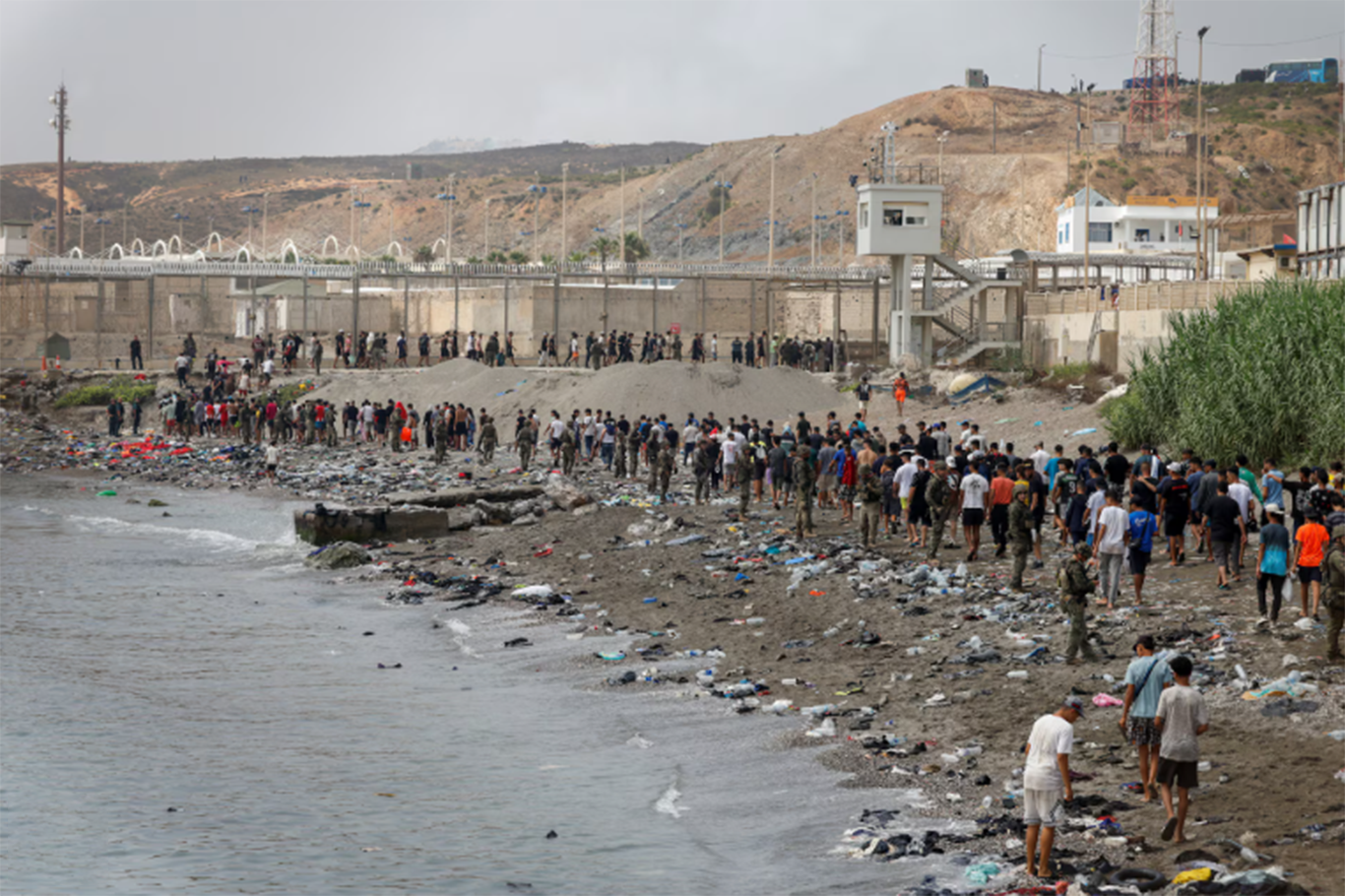
Spain is working to restore normality in the North African enclave of Ceuta after tens of thousands of migrants crossed into the territory in one of the largest sudden border breaches in recent years, exposing renewed diplomatic tensions between Madrid and Rabat and reigniting debate over European migration policy.
Spanish authorities have significantly reinforced military and police deployments around Ceuta while accelerating the processing and return of migrants who do not qualify for international protection. As many of those who entered the enclave voluntarily return to Morocco, officials say immediate pressure on local services has begun to ease.
The unprecedented influx occurred after Moroccan border guards reportedly relaxed controls along the frontier, allowing large numbers of people to enter the Spanish territory by climbing border barriers, swimming around coastal fences, or crossing through access points. Many of those arriving were Moroccan nationals from nearby towns rather than long-distance migrants from sub-Saharan Africa.
The humanitarian toll was severe. According to local authorities and rescue services, at least 57 people died during the crossing, with many drowning while attempting to swim around Ceuta's coastal barriers.
Spanish Prime Minister Pedro Sánchez travelled to Ceuta shortly after the incident, describing the situation as an organized assault on Spain's borders and accusing migrant-smuggling networks of exploiting recent judicial decisions that limited the government's ability to immediately return irregular migrants arriving by sea.
The latest breach far exceeded the previous major incident in May 2021, when approximately 10,000 migrants entered Ceuta after Morocco similarly eased border enforcement during a diplomatic dispute with Spain.
Western Sahara Dispute at the Heart of Tensions
Analysts say the latest migration surge cannot be separated from the decades-old dispute over Western Sahara, one of North Africa's longest-running territorial conflicts.
The conflict dates back to Spain's withdrawal from its former colony in 1975, after which Morocco annexed most of the territory. Algeria has since backed the Polisario Front, which seeks an independent Sahrawi state, while the United Nations continues to regard Western Sahara as a non-self-governing territory awaiting a political settlement.
For decades, Spain and most European governments attempted to remain neutral on the dispute. However, Madrid shifted its position in 2022 by endorsing Morocco's proposal for limited autonomy under Moroccan sovereignty, abandoning its previous neutrality. The policy change triggered a diplomatic crisis with Algeria, which reduced cooperation with Spain and suspended parts of their economic relationship before gradually restoring ties.
Prime Minister Sánchez's recent visit to Algiers had been widely viewed as an effort to improve relations with Algeria following years of strained diplomacy. The timing of the latest migrant influx has fueled speculation that border management has once again become intertwined with broader regional political disputes.
Migration Increasingly Used as Diplomatic Pressure
The 2021 Ceuta crisis demonstrated Morocco's willingness to use migration as leverage during diplomatic disagreements. Many observers believe the latest episode reflects a similar strategy.
Ceuta and the nearby Spanish enclave of Melilla remain uniquely vulnerable because they are the European Union's only land borders with Africa. Their strategic position has repeatedly placed them at the center of migration disputes between Europe and Morocco.
Although both territories are part of Spain and the European Union, Spain maintains strict passport and security controls on ferry and air connections between the enclaves and mainland Spain. These measures prevent irregular migrants who reach Ceuta or Melilla from freely entering the wider Schengen area.
European Migration Debate Intensifies
The incident has reignited political debate across Spain and Europe.
Spain's opposition parties, including the conservative Partido Popular (PP) and the right-wing Vox party, have criticized the government's migration policies, arguing that stronger border controls are needed.
Several European governments also expressed concern over the scale of the border breach. Italian officials renewed calls for tougher external border protection, while European policymakers emphasized the need for closer cooperation with North African countries to prevent irregular migration.
Unlike many EU governments that have tightened asylum and migration rules in recent years, Sánchez's administration has maintained a comparatively open migration policy, arguing that legal migration is essential to address Spain's aging population and labor shortages.
The government has expanded seasonal worker programs with African countries, including Senegal and Morocco, while promoting regulated migration pathways as an alternative to dangerous irregular crossings.
EU Strengthens External Border Cooperation
The latest Ceuta crisis comes as the European Union continues implementing its new Pact on Migration and Asylum, which entered into force in 2024 and is scheduled for full implementation by mid-2026. The pact aims to strengthen external border management, accelerate asylum procedures, improve migrant return mechanisms, and establish a more coordinated system for sharing responsibility among EU member states.
Meanwhile, the European Border and Coast Guard Agency (Frontex) has continued expanding operational support for member states facing migration pressure, while Brussels has deepened partnerships with countries such as Morocco, Tunisia, Egypt, and Mauritania to curb irregular migration and combat human trafficking networks.
Despite the gradual return of many migrants to Morocco, analysts warn that the latest events highlight the continuing fragility of relations between Spain and Morocco. They argue that as long as the Western Sahara dispute remains unresolved, migration is likely to remain a powerful diplomatic tool capable of triggering periodic crises along Europe's southern frontier. (ILKHA)
LEGAL WARNING: All rights of the published news, photos and videos are reserved by İlke Haber Ajansı Basın Yayın San. Trade A.Ş. Under no circumstances can all or part of the news, photos and videos be used without a written contract or subscription.

Iranian officials have strongly condemned reports that the United States is considering attacks on Iran's energy infrastructure, warning that any such military action would constitute a dangerous escalation with potentially far-reaching consequences across the region.

At least nine people were killed and 27 others, including four children, were injured after Russia launched a large-scale overnight ballistic missile attack on Ukraine's capital, Kyiv, in the early hours of Friday, August 1, according to Ukrainian authorities.
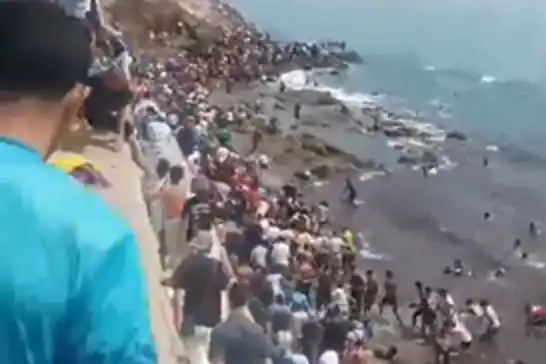
Spain has deployed military reinforcements to its North African enclave of Ceuta after an unprecedented influx of around 60,000 migrants crossed from neighboring Morocco, triggering one of the largest border crises in the enclave's history and leaving at least 57 people dead.