Israeli authorities approve 18 settlement jurisdiction areas in occupied West Bank
 13 oC
13 oC 
Güneşli

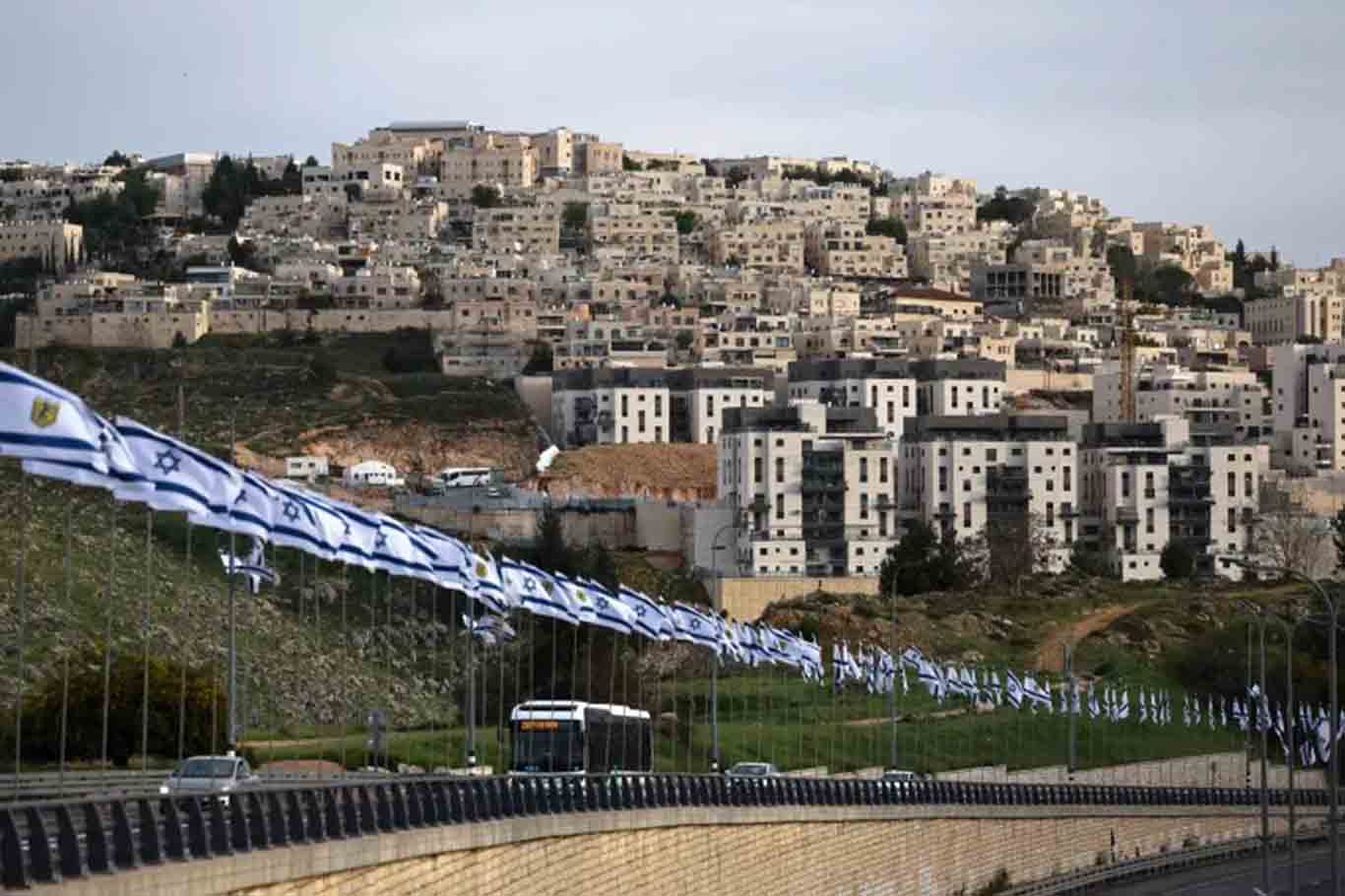
Israeli occupation authorities have approved 18 new and amended settlement jurisdiction areas in the occupied West Bank, a move that Palestinian officials say will facilitate further settlement expansion and the establishment of additional outposts.
The Colonization and Wall Resistance Commission said Tuesday that the package includes jurisdiction areas for newly approved settlements, measures to transform existing settlement outposts into independent settlements, and expansions and amendments to the jurisdiction areas of existing settlements and settlement councils.
According to the commission, a settlement jurisdiction area defines the territory in which a settlement or settlement council exercises administrative and municipal authority. While such a decision does not automatically confiscate land or immediately authorize construction, it creates the administrative and planning framework for future expansion by placing land within the designated area under the settlement's planning authority.
The commission said the measure enables the preparation of master and detailed plans, expansion of road, water, electricity and sewage networks, allocation of government funds, and eventually the issuance of construction tenders.
The commission warned that Palestinian-owned land incorporated into or surrounded by settlement jurisdiction areas could face increasing administrative and planning restrictions, even where ownership is not immediately transferred.
It said Palestinian residents could face tighter restrictions on construction, agricultural activity, access to land and economic development. The measures could also pave the way for further actions, including declarations of "state land," expropriation and seizure orders, or the allocation of land to settlement councils.
The commission noted that settlement jurisdiction areas frequently extend far beyond the existing built-up boundaries of settlements. It argued that this demonstrates that the policy is aimed not simply at regulating existing construction but at reserving additional Palestinian land for future settlement expansion.
The commission said the names included in the latest package reflect three parallel processes.
The first involves granting jurisdiction areas to new settlements, including Sha-Nur East, Shira, Elisha and Tzuri.
The second involves transforming existing outposts, including Diya, Masuot Har, Givat Adulam and Bnei Kedem, into more independent settlement entities.
The third involves expanding the jurisdiction areas of established settlements, including Efrat, Oranit and Karnei Shomron.
According to the commission, the policy effectively redraws parts of the administrative geography of the occupied West Bank by connecting existing settlements with new outposts and placing additional areas beyond the reach of Palestinian urban and economic development.
The commission highlighted three developments it considers particularly significant.
In Oranit, the jurisdiction area is being expanded northward beyond the route of Israel's separation wall. The commission said this demonstrates that the wall is not being treated as a fixed territorial boundary but can instead be bypassed or altered to accommodate settlement expansion.
In Efrat, the expansion targets the Khallet al-Nahla area, known in Israel as Givat Eitam or E2, which the commission described as one of the remaining areas available for Palestinian expansion south of Bethlehem.
In Karnei Shomron, the amended jurisdiction area is expected to facilitate the expansion of the Dorot project and its connection to broader housing and infrastructure plans.
The commission said the latest decisions represent a broader shift in Israel's settlement policy—from the political establishment and recognition of settlements toward the administrative demarcation and incorporation of Palestinian land into settlement-controlled areas.
It explained that an Israeli cabinet decision can grant a settlement political status, while a jurisdiction order gives it a defined geographical and administrative space. Planning schemes, infrastructure projects and government funding can subsequently turn those decisions into permanent realities on the ground.
The commission described settlement jurisdiction areas as a mechanism for "administrative annexation" and gradual land seizure, arguing that they expand the authority of Israeli state institutions into occupied Palestinian territory.
It further said that although the formal signature of the Israeli "military commander" remains part of the process, the policy is increasingly driven by government ministries and settlement councils.
The commission warned that the cumulative effect of the measures could further fragment Palestinian communities, restrict their territorial development and accelerate the expansion and consolidation of Israeli settlements across the occupied West Bank. (ILKHA)
LEGAL WARNING: All rights of the published news, photos and videos are reserved by İlke Haber Ajansı Basın Yayın San. Trade A.Ş. Under no circumstances can all or part of the news, photos and videos be used without a written contract or subscription.
The United States has issued a travel alert for Americans in Mexicali, northern Mexico, and temporarily suspended consular activities in the border city over a “potential threat,” without providing further details.

The dismissal and departure of several senior U.S. Army commanders under Defense Secretary Pete Hegseth have created a significant leadership vacuum within the service, raising concerns over military readiness during ongoing tensions with Iran and other global security challenges, The New York Times reported.
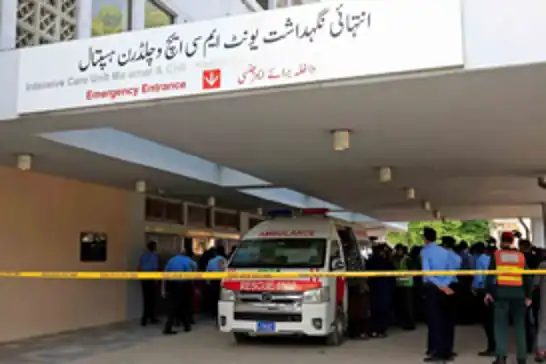
A fire in the neonatal unit of a hospital in Pakistan's capital Islamabad killed 15 newborn babies early Tuesday, while one infant survived, authorities said.