UN sounds alarm over mounting civilian deaths and medical collapse in Gaza
 13 oC
13 oC 
Güneşli

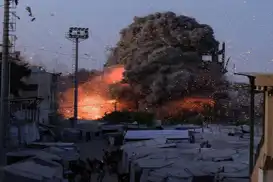
The humanitarian crisis in the Gaza Strip continues to worsen as Israel's ongoing military offensive claims more civilian lives and further devastates the enclave's already shattered healthcare system, according to the United Nations.
Speaking at the UN headquarters on Monday, UN Deputy Spokesperson Farhan Haq cited figures from Gaza's Ministry of Health showing that more than 150 Palestinians were killed during July, including dozens of civilians. The ministry said July recorded the highest monthly death toll since the beginning of the year, underscoring the escalating impact of Israel's military campaign on Gaza's population.
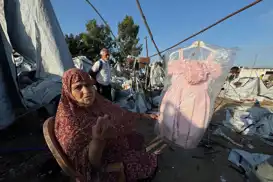
According to the UN, the majority of Israeli strikes targeted western Gaza, one of the few remaining areas where much of the Strip's 2.1 million residents have been forced to seek refuge after repeated displacement orders. With most of Gaza's population now confined to less than half of the territory, humanitarian agencies continue to warn that civilians have virtually nowhere left to flee.
The UN also reported that Israeli attacks struck the vicinity of Al-Aqsa Hospital on Saturday, damaging a nearby medical storage facility and destroying vital humanitarian supplies, including medical aid delivered by the World Health Organization (WHO). The destruction has further weakened Gaza's collapsing healthcare system, which has been struggling under months of bombardment, shortages, and overwhelming patient numbers.
Humanitarian agencies warned that Gaza's hospitals are facing severe shortages of life-saving medicines and medical equipment. Essential treatments for chronic illnesses, including insulin for diabetes patients, cardiac medications, dialysis supplies, diagnostic equipment, and patient monitoring devices are in critically short supply.
The UN Office for the Coordination of Humanitarian Affairs (OCHA) also noted that additional medical supplies needed to prevent and control infections remain stalled pending Israeli approval for entry into Gaza. Among the most urgently needed items are alcohol-based disinfectants, which are now largely unavailable despite being essential for maintaining hygiene and preventing infections in overcrowded hospitals and displacement shelters.
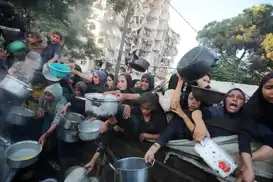
Beyond the healthcare crisis, Palestinians across Gaza continue to face worsening food insecurity despite a modest increase in humanitarian and commercial aid deliveries. According to a survey conducted by the World Food Programme (WFP), soaring prices have placed even basic food items beyond the reach of many families.
The survey found that four in every ten households can no longer afford essential food supplies, while nearly half reported that they had completely run out of food at home. More than one-fifth of surveyed families said they had experienced total food depletion on more than ten occasions during the month preceding the assessment.
The fuel crisis has compounded daily hardships. WFP reported that a severe shortage of cooking gas has left families waiting weeks to obtain an eight-kilogram gas cylinder, which typically lasts less than two weeks. As black-market prices continue to soar beyond what most Palestinians can afford, thousands of families have resorted to burning firewood or hazardous waste simply to prepare a single hot meal, exposing themselves to additional health risks.
The United Nations has repeatedly warned that the humanitarian situation in Gaza continues to deteriorate as Israeli military operations, restrictions on humanitarian access, and the destruction of civilian infrastructure leave millions of Palestinians without reliable access to food, clean water, healthcare, and other basic necessities.
Meanwhile, the UN Interim Force in Lebanon (UNIFIL) reported that Israel continues to carry out daily violations of Lebanese sovereignty despite the conditional ceasefire reached through US-mediated negotiations between Israel and the Lebanese government.
UN peacekeepers documented 125 Israeli airspace violations between Thursday and Sunday alone, with surveillance aircraft and armed drones flying over southern Lebanon for more than 418 cumulative hours. UNIFIL also observed extensive Israeli military activity on the ground, including engineering operations and troop movements near the border.
The continued violations have heightened concerns over the risk of renewed regional escalation as cross-border tensions persist.
According to Lebanese authorities, more than 4,300 people have been killed and over 12,200 injured since hostilities expanded earlier this year, adding another humanitarian dimension to a conflict that continues to inflict immense suffering across the region.
Humanitarian organizations have renewed their calls for an immediate end to attacks on civilians, unhindered humanitarian access to Gaza, and greater international efforts to protect Palestinian lives as the humanitarian crisis reaches increasingly alarming levels. (ILKHA)
LEGAL WARNING: All rights of the published news, photos and videos are reserved by İlke Haber Ajansı Basın Yayın San. Trade A.Ş. Under no circumstances can all or part of the news, photos and videos be used without a written contract or subscription.
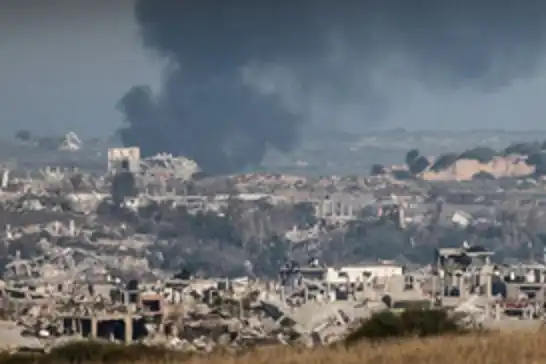
Türkiye, Qatar, and Egypt have strongly condemned Israel's continued violations of the Gaza ceasefire agreement, denouncing the targeting of hospitals, civilian infrastructure, and the ongoing killing of Palestinian civilians, including women and children.

A powerful explosion at a restaurant in central Moscow that killed five people and injured 21 others may have been an assassination attempt targeting Russian Aerospace Forces Commander Alexander Chayko, according to local media reports and sources familiar with the investigation.
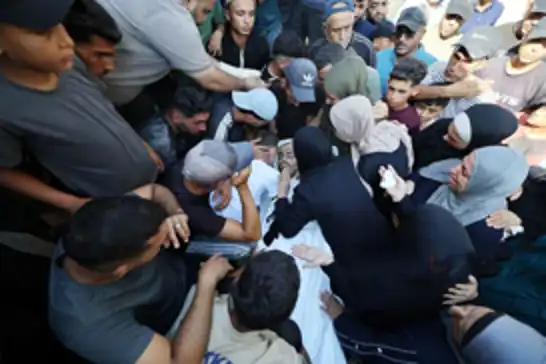
The death toll from Israel's ongoing genocidal war on the Gaza Strip has risen to 73,375 martyrs, while the number of wounded has reached 174,220, according to the Palestinian Ministry of Health on Monday.