US Army Reserve assesses support units amid planning for possible Cuba operation
 13 oC
13 oC 
Güneşli

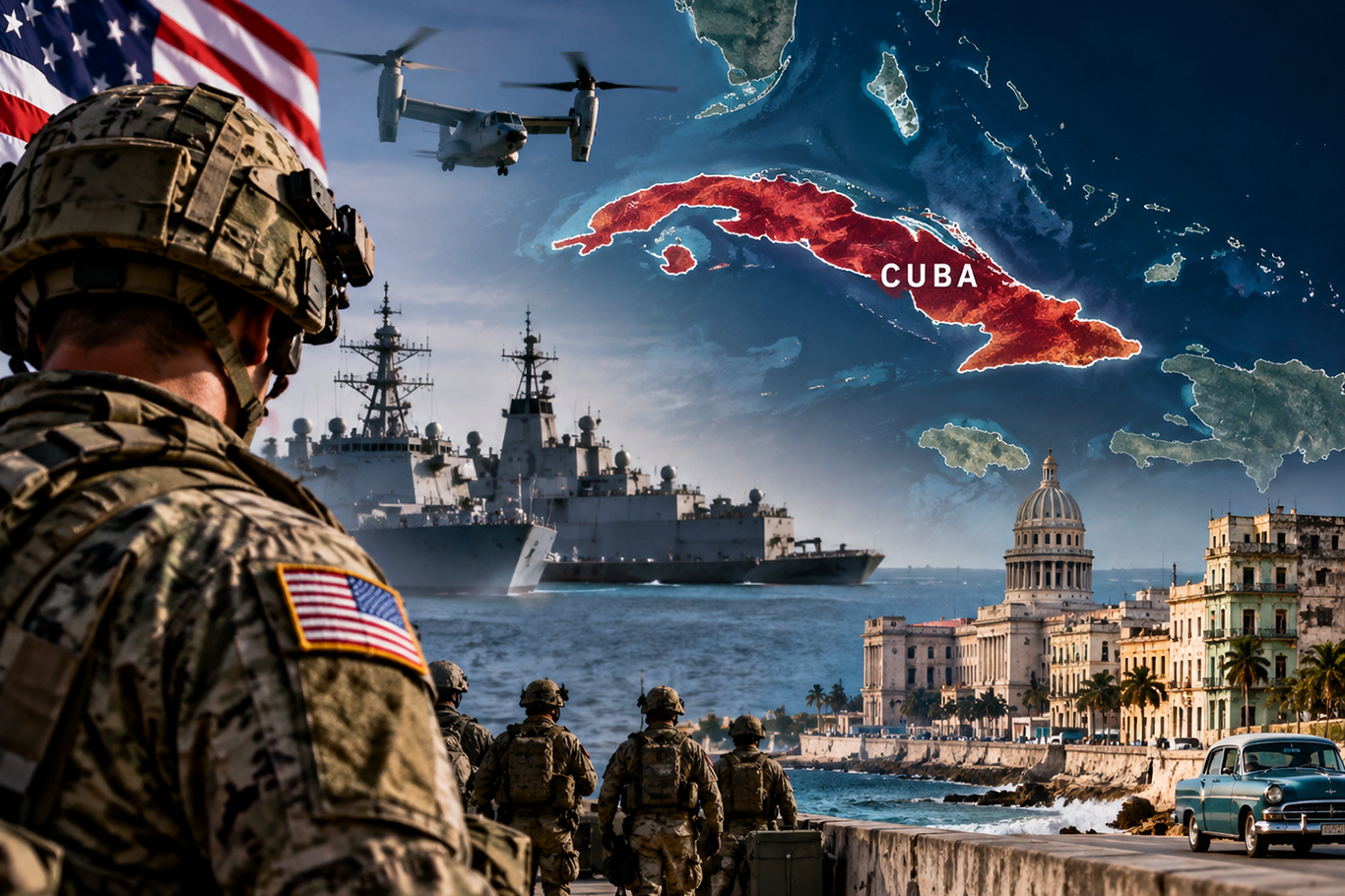
The U.S. Army Reserve is assessing whether it can make military police, medical and other support units available to U.S. Southern Command within 90 to 120 days, according to an internal Army message reviewed by CBS News, as Washington continues military planning related to Cuba.
The document does not mention Cuba or specify a planned operation. But several U.S. officials told CBS News that the request is part of continuing military planning involving the island. The officials spoke anonymously because they were not authorized to discuss the planning publicly.
There is no indication in the document that any units have received deployment orders, and it does not identify where the forces could be deployed or what mission they might support.
The Army Reserve headquarters asked subordinate commands to assess the availability of six types of formations that could potentially be placed under the authority of Southern Command, which is responsible for U.S. military operations across Central America, South America and the Caribbean.
Among the units being assessed are a combat sustainment support battalion, an engineer battalion, an expeditionary sustainment command, a medical brigade, a forward resuscitative and surgical detachment and a military police brigade.
The internal message said the units could “possibly [be] needed in 90-120 days,” and asked subordinate commands to provide information on their availability by Sept. 25.
The request represents a readiness assessment rather than an order to deploy.
A spokesperson for U.S. Southern Command declined to discuss potential troop movements or deployment timelines, citing operational security. The command said it routinely works with the U.S. military to assess potential requirements within its area of responsibility.
The Army Reserve did not respond to CBS News before its report was published.
U.S. officials have previously emphasized that military planning for possible contingencies does not necessarily mean that the White House or Pentagon has decided to launch an operation.
The latest assessment follows months of increased U.S. pressure on Cuba.
CBS News reported that U.S. forces had conducted reconnaissance operations around Cuba earlier this year and that some U.S. airpower assets had been placed on heightened readiness. The outlet also reported in July that military planners had examined several options for possible action against the island, including an Army-led air assault involving thousands of troops. Officials stressed at the time that the planning did not indicate a final presidential or Pentagon decision.
The Trump administration has also increased economic and political pressure on Havana.
President Donald Trump told the United Nations General Assembly this week that his administration was seeking what he called a “fundamental change” in Cuba and said the country's communist government would fall. Trump also said Secretary of State Marco Rubio was involved in negotiations with Havana.
Trump has previously made increasingly forceful statements about Cuba since returning to office, while Cuban President Miguel Díaz-Canel has accused Washington of aggression and economic warfare and said Havana would resist any attack.
Cuban officials have rejected the possibility of U.S. military intervention and have continued to criticize Washington's economic and political pressure.
Cuban Foreign Minister Bruno Rodríguez said in an interview with NBC News that the United States had no justification for launching a military attack against Cuba, describing the island as a neighboring country that does not pose a threat to U.S. national security.
The Cuban government has also faced growing economic pressure, including U.S. sanctions targeting Cuban entities and officials.
The developments come as the United States has expanded military activity in the Caribbean and eastern Pacific.
CBS News reported that U.S. forces have conducted dozens of strikes against suspected drug-trafficking targets in the region since September. The operations have prompted debate among legal experts over the use of lethal military force against suspected criminal groups, with some questioning whether the strikes comply with international and U.S. law.
Washington has described its broader regional policy as part of an effort to counter criminal organizations and the influence of foreign powers in the Western Hemisphere.
For now, however, the Army Reserve assessment provides no evidence that a military operation against Cuba has been authorized. It indicates that U.S. planners are examining whether key support capabilities could be made available to Southern Command within several months, leaving the nature and timing of any potential deployment uncertain. (ILKHA)
LEGAL WARNING: All rights of the published news, photos and videos are reserved by İlke Haber Ajansı Basın Yayın San. Trade A.Ş. Under no circumstances can all or part of the news, photos and videos be used without a written contract or subscription.
Turkish Foreign Minister Hakan Fidan met Khalilur Rahman, president of the 81st session of the United Nations General Assembly, in New York, Türkiye’s Foreign Ministry said on Saturday.
Iraq is preparing for a major change in its security arrangements as the U.S.-led international coalition formally ends its mission this month, while Baghdad seeks greater control over foreign military deployments and weapons held by armed groups.

US President Donald Trump has rejected an Iranian proposal that could reopen the Strait of Hormuz within seven days, despite Tehran’s call for a negotiated framework to halt hostilities and restore normal maritime traffic through one of the world’s most important energy corridors.