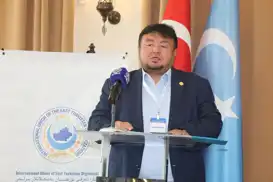
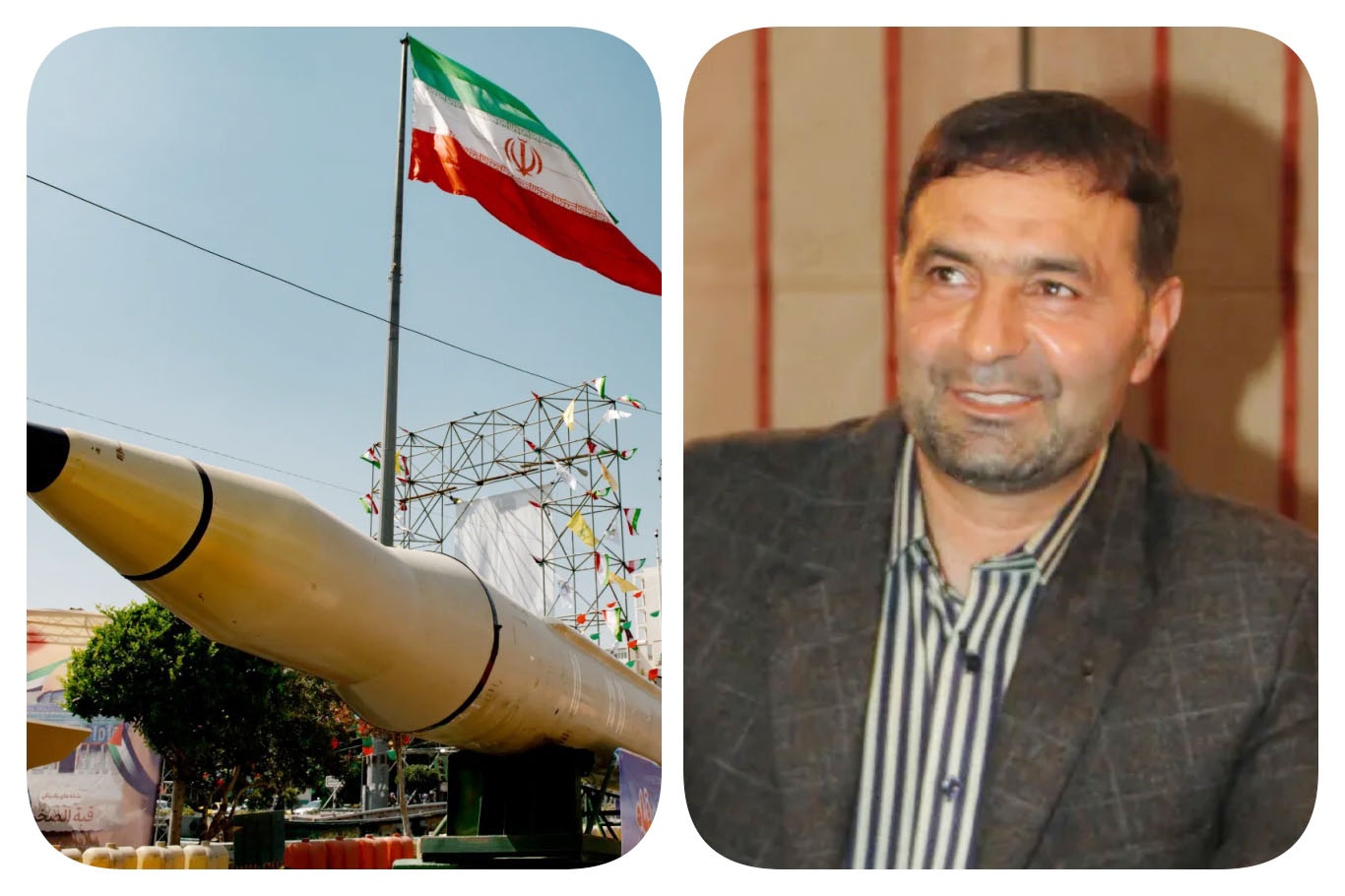
Hassan Tehrani Moghaddam: The “Father of Iran’s missile program”
 13 oC
13 oC 
Güneşli

Among the most influential figures behind the development of the Islamic Republic of Iran’s ballistic missile capability is Hassan Tehrani Moghaddam, widely referred to in military circles as the “father of Iran’s missiles.” Over nearly three decades, Moghaddam played a central role in shaping Iran’s missile program and laying the foundations of what has become one of the most significant deterrent capabilities in the region.
Today, Iran possesses a missile arsenal consisting of thousands of systems with varying ranges and capabilities. Analysts widely attribute the strategic vision and early development of this program to Tehrani Moghaddam, who sought to transform Iran’s military structure from one dependent on foreign technology to a domestically driven defense industry.
From modest beginnings to the forefront of Iran’s missile program
Tehrani Moghaddam was born in 1959 in Tehran and grew up in a modest family. His father worked as a tailor, and Moghaddam spent his childhood in Tehran’s Shokoufeh and Baharestan districts.
He pursued technical and industrial studies during his secondary education and later completed training in industrial engineering in 1979. The same year coincided with the Iranian Revolution, a transformative event that reshaped the country’s political and military landscape.
Following the revolution, Moghaddam joined the newly formed Islamic Revolutionary Guard Corps (IRGC), where he began a military career that would eventually place him at the center of Iran’s missile development efforts.
The Iran–Iraq War and the search for missile capability
The outbreak of the Iran–Iraq War marked a turning point in Moghaddam’s career. During the early years of the conflict, Iran faced severe shortages of military equipment and technology. Iraqi forces frequently targeted Iranian cities with Soviet-made ballistic missiles, creating pressure on Tehran to develop its own missile capability.
Moghaddam emerged as one of the leading figures advocating for an indigenous missile program. Working with a small team of engineers and military specialists, he examined the limited number of Scud missiles available to Iran and began conducting reverse engineering efforts to understand and replicate the technology.
These efforts took place under difficult conditions. International sanctions, particularly those imposed by the United States, restricted Iran’s access to advanced military technology and defense equipment. As a result, Iran increasingly focused on building a domestic defense industry.
International cooperation and the development of local expertise
During the 1980s and 1990s, Iran sought technical assistance from several countries in order to gain experience in missile technology. Military cooperation with states such as Syria, Libya and North Korea helped Iranian engineers acquire knowledge that would later contribute to domestic production.
Within the IRGC, Moghaddam helped establish research and development centers dedicated to missile and artillery systems. These institutions eventually formed the backbone of Iran’s missile infrastructure.
By the mid-1980s, he was leading teams responsible for developing missile and artillery capabilities. Under his leadership, Iran began designing indigenous missile projects based on Soviet Scud technology. This work later evolved into the development of the Shahab missile series.
Shahab missiles and strategic transformation
The 1990s represented a major leap forward for Iran’s missile program. Systems such as the Shahab‑1 missile and Shahab‑2 missile strengthened Iran’s short-range strike capability.
Later, the development of the Shahab‑3 missile marked a strategic shift. With an estimated range of around 2,000 kilometers, the system significantly expanded Iran’s deterrence capabilities and became a key component of its regional military strategy.
Beyond developing individual missile systems, Moghaddam also helped shape Iran’s long-term missile strategy. One of the most significant steps in this direction was the transition toward solid-fuel missile technology. Compared with liquid-fuel systems, solid-fuel missiles can be prepared for launch more quickly and are easier to transport and deploy.
Foundations of Iran’s domestic missile industry
Under Moghaddam’s leadership, Iran gradually developed additional missile systems, including the Zelzal missile and the Sejjil missile. These projects contributed to the expansion of Iran’s domestic defense manufacturing capabilities.
Analysts also note that some of the technological foundations created through the missile program later supported Iran’s space ambitions. Several rocket technologies used in satellite launch systems are believed to have been derived from missile propulsion research conducted during this period.
Iranian officials frequently describe the country’s missile capability as a cornerstone of national security. Meanwhile, American military officials have often characterized Iran’s missile arsenal as one of the most significant military challenges in the region. Former commander of United States Central Command, Kenneth McKenzie, previously stated that Iran’s missile program has expanded significantly in both scale and sophistication over time.
The mysterious explosion and his death
After decades of involvement in missile development, Tehrani Moghaddam became one of the most influential figures within Iran’s defense establishment. He played a role not only in technological development but also in training a generation of military engineers and specialists.
His life came to an abrupt end on November 12, 2011, when a massive explosion occurred at an IRGC missile base near Tehran. The blast killed Moghaddam and several other military personnel.
Iranian authorities described the incident as an accident that occurred during ammunition handling. However, speculation in international media suggested the possibility of sabotage or an assassination operation.
Legacy of a missile architect
Following his death, Tehrani Moghaddam has continued to be regarded in Iran as one of the symbolic figures of the country’s defense industry. Iranian officials often state that the infrastructure he helped build forms the foundation of the nation’s current missile capabilities.
Many analysts believe that the technical groundwork laid during his tenure contributed to the development of newer long-range and advanced missile projects pursued by Iran today.
For this reason, Hassan Tehrani Moghaddam is widely remembered not only as a military engineer but also as a historical figure who played a decisive role in shaping Iran’s defense strategy and missile program. (ILKHA)
LEGAL WARNING: All rights of the published news, photos and videos are reserved by İlke Haber Ajansı Basın Yayın San. Trade A.Ş. Under no circumstances can all or part of the news, photos and videos be used without a written contract or subscription.

Türkiye’s hosting of the 31st Conference of the Parties to the UN Framework Convention on Climate Change (COP31), scheduled to take place in Antalya from November 9 to 20, 2026, has sparked debate over the economic, environmental and diplomatic implications of international climate policies.
Bosnia-Herzegovina’s first president remains an enduring inspiration for Muslims worldwide through his steadfast faith, intellectual legacy and struggle for his people’s freedom and dignity.

US President Donald Trump has drawn criticism after making remarks about the name “Muhammad” at an election rally in Georgia, prompting renewed concerns over the stereotyping of Muslims and the growing normalisation of anti-Islamic rhetoric in American political discourse.
Twelve years after the October 6-8, 2014 violence in southeastern Türkiye, questions over accountability and the course of the judicial process continue to be raised by victims' families and their lawyers.