Iran signals strategic shift with long-range missile launch toward US base
 13 oC
13 oC 
Güneşli

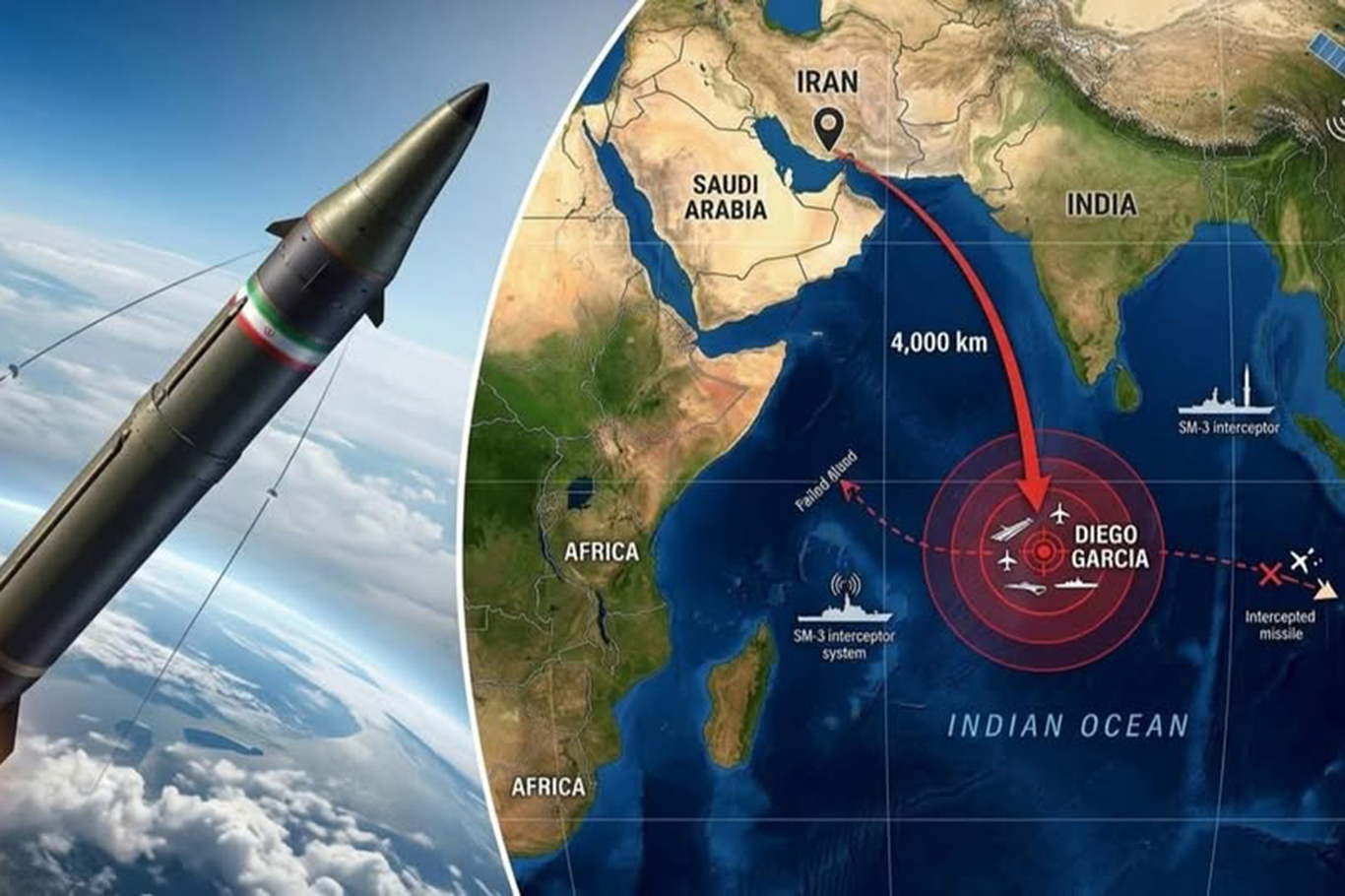
Reports that Iran launched ballistic missiles toward the Diego Garcia base mark a significant escalation in the ongoing confrontation, underscoring a new phase in which distance no longer guarantees security for key military installations.
Situated deep in the Indian Ocean, Diego Garcia has long served as one of the most important overseas hubs for the United States, supporting long-range bomber missions, intelligence operations, and logistical supply chains across West Asia. Its remote location—more than 2,000 miles from Iran—has traditionally been viewed as a natural shield against direct threats. The reported missile launch challenges that assumption in a dramatic way.
Although early Western assessments suggest the missiles may not have successfully hit their intended targets, analysts increasingly agree that the true significance of the event lies in its strategic messaging. By demonstrating the ability to reach such a distant and heavily fortified installation, Iran has signaled a notable evolution in its missile program.
Speaking to Sky News, British military analyst Sean Bell acknowledged that even an unsuccessful strike attempt carries weight, as it forces Western defense planners to reconsider the range and precision of Iran’s capabilities.
The launch suggests that Tehran is not only investing in longer-range systems but is also willing to use them in ways that reshape the geography of confrontation. Rather than limiting its responses to nearby theaters, Iran appears increasingly prepared to hold distant, high-value assets at risk.
Diego Garcia is not just another overseas base—it is a central node in the US global military network. The facility has been used extensively in past conflicts, including operations in Iraq and Afghanistan, and continues to play a critical role in surveillance and strike coordination.
Despite often being described as a joint UK-US installation, the base is overwhelmingly operated by American forces. The British presence remains minimal, reinforcing the perception that it is, in practical terms, a core component of US military power projection.
From Iran’s perspective, this makes the base a legitimate target within the broader context of ongoing hostilities. By targeting such a site, Tehran is effectively signaling that the infrastructure enabling military pressure against it will not remain untouched.
The reported strike highlights a broader transformation in modern warfare. Conflicts are no longer confined to front lines or neighboring regions; instead, they are increasingly defined by interconnected networks of bases, supply routes, and command centers spread across continents.
In this evolving landscape, distant installations like Diego Garcia are no longer peripheral—they are integral to the conduct of war. Iran’s actions suggest a deliberate effort to adapt to this reality by extending its deterrence strategy far beyond its immediate surroundings.
In the wake of the reported missile launch, US military facilities across the Indian Ocean and Gulf regions have reportedly heightened their alert status. Defense observers citing satellite tracking data indicate that multiple projectiles may have been launched, pointing to a coordinated and carefully planned operation rather than an isolated incident.
While Iranian authorities have not released detailed operational information, official statements continue to emphasize a consistent position: any escalation or aggression will be met with a response that is both decisive and far-reaching.
Taken together, the developments point to a shift in the strategic balance. Iran appears to be moving toward a model of deterrence that relies not only on regional influence but also on the credible ability to threaten critical infrastructure at great distances.
This approach carries significant implications for the United States and its allies. Bases once considered safely removed from conflict zones may now require additional layers of defense, while long-standing assumptions about geographic insulation are increasingly being called into question.
The reported missile launch toward Diego Garcia ultimately represents more than a single სამხედრო action—it reflects a broader recalibration of power, signaling that in today’s conflicts, reach and perception can be just as consequential as impact. (ILKHA)
LEGAL WARNING: All rights of the published news, photos and videos are reserved by İlke Haber Ajansı Basın Yayın San. Trade A.Ş. Under no circumstances can all or part of the news, photos and videos be used without a written contract or subscription.

Muslims across the world are preparing to observe the Day of Ashura, one of the most significant occasions in the Islamic calendar, which falls on the 10th day of Muharram, the first month of the Islamic lunar year.

Rising public discontent and large-scale street protests in recent weeks signal that opposition to President Kais Saied’s rule may be reaching a critical new phase.
Today marks 78 years since the Palestinian people were plunged into the Nakba (the Catastrophe)—a systemic, ongoing campaign of forced migration, brutal occupation, and massacres that tore Al-Quds and the wider homeland from its rightful owners.
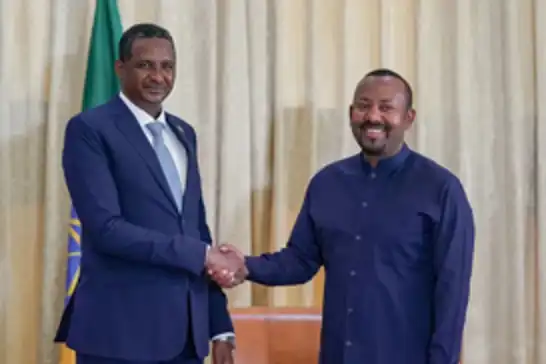
The war in Sudan is no longer viewed merely as an internal conflict between the Sudanese Armed Forces (SAF) and the Rapid Support Forces. Increasing military, political, and logistical indicators suggest that Ethiopia, under Prime Minister Abiy Ahmed, has emerged as one of the most influential regional actors shaping the course of the conflict.