Understanding the Islamic Hijri Calendar and its importance
 13 oC
13 oC 
Güneşli

The Islamic Calendar, also known as the Umm al-Qura or Hijri Calendar, operates on lunar cycles, synchronized with the moon's orbit around Earth.
Named after the hijrah (migration) of Prophet Muhammad (Peace Be Upon Him) from Makkah to Medina in 622 CE, it marks the beginning of the Islamic era under the guidance of Caliph ‘Umar bin al-Khattab.
The Islamic New Year, or 1st Muharram, is set to commence on July 7, 2024, contingent upon the sighting of the moon. This calendar advances approximately 11-12 days earlier each year compared to the Gregorian calendar.
In Islamic tradition, a new day begins at sunset. Hence, the Islamic New Year officially starts at sunset on July 6 and continues until sunset on July 7, 2024, subject to lunar observation.
While no specific worship rituals are mandated for the 1st of Muharram, Muslims often use this time to reflect on the journey and trials of Prophet Muhammad (PBUH) and the early Muslims. This period symbolizes the establishment of the first Islamic government and city, prompting introspection and planning for the year ahead across the Muslim world.
Celebrations for the Hijri New Year vary widely, with no fixed customs. Nonetheless, Muslims observe Muharram, one of Islam's sacred months, as a time for voluntary prayers, charitable acts, fasting, and Quranic recitation. Many countries designate the Islamic New Year as a public holiday, fostering family gatherings and community unity.
The Islamic New Year fosters reflection, commemoration, and spiritual growth. It offers a chance to assess past decisions, deeds, and personal growth, encouraging Muslims to strive for closeness to Allah. Reflecting on Prophet Muhammad's (PBUH) hardships during the Hijrah underscores gratitude for Islamic faith and its blessings.
The Hijrah Sharif signifies Prophet Muhammad's (PBUH) migration from Makkah to Madinah in 622 CE, marking the beginning of the Islamic Calendar. This pivotal event ensured Islam's preservation and expansion, with Prophet Muhammad accompanied by his trusted companion Abu Bakr (RA) and his cousin Iman Ali ibn Abu Talib demonstrating exemplary trustworthiness by safeguarding entrusted possessions.
The first day of Muharram initiates the Islamic lunar calendar, established by Caliph Umar ibn al-Khattab to commemorate Prophet Muhammad's migration. This historical milestone secured safety for the Prophet and his followers, facilitated Islam's growth in Madinah, and laid the foundation for the first Islamic state.
Though no specific religious obligations are prescribed for the first day of Muharram, Muslims globally observe it as a time for contemplation, renewal, and spiritual rejuvenation. (ILKHA)
LEGAL WARNING: All rights of the published news, photos and videos are reserved by İlke Haber Ajansı Basın Yayın San. Trade A.Ş. Under no circumstances can all or part of the news, photos and videos be used without a written contract or subscription.

Forty-four years have passed since Sabra and Shatila became synonymous with one of the darkest chapters in the history of Palestinian refugees in Lebanon.
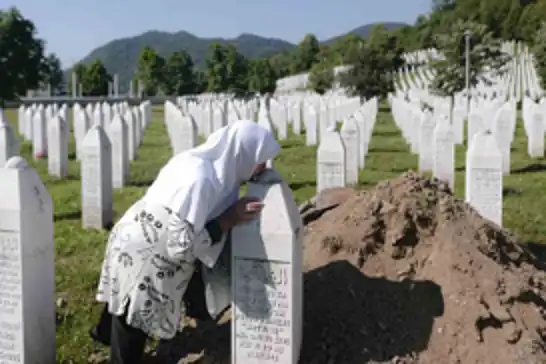
More than three decades have passed since the Srebrenica genocide, yet the tragedy remains one of the darkest chapters in modern European history. The massacre of more than 8,000 Bosniak Muslim men and boys in July 1995 was not simply another wartime atrocity—it was a genocide that unfolded in the heart of Europe despite the presence of the international community.

Today, the Chechen people and the broader Caucasian resistance community solemnly mark the 20th anniversary of the martyrdom of Shamil Basayev, one of the most prominent, courageous, and influential figures in modern Chechen history.
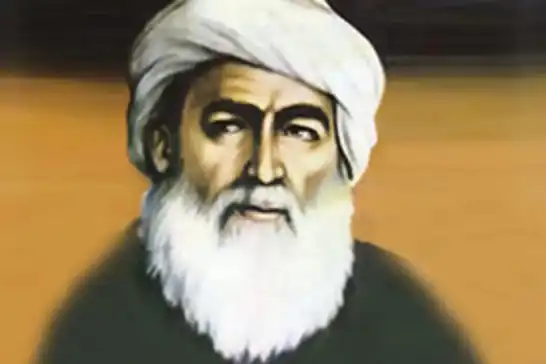
Today marks the 101st anniversary of the martyrdom of Sheikh Said and his companions, who led an uprising aimed at defending Islam, protecting religious institutions, and resisting policies that threatened the Islamic character of Anatolia.