Türkiye targets 5% growth by 2029 as government sets out new economic roadmap
 13 oC
13 oC 
Güneşli

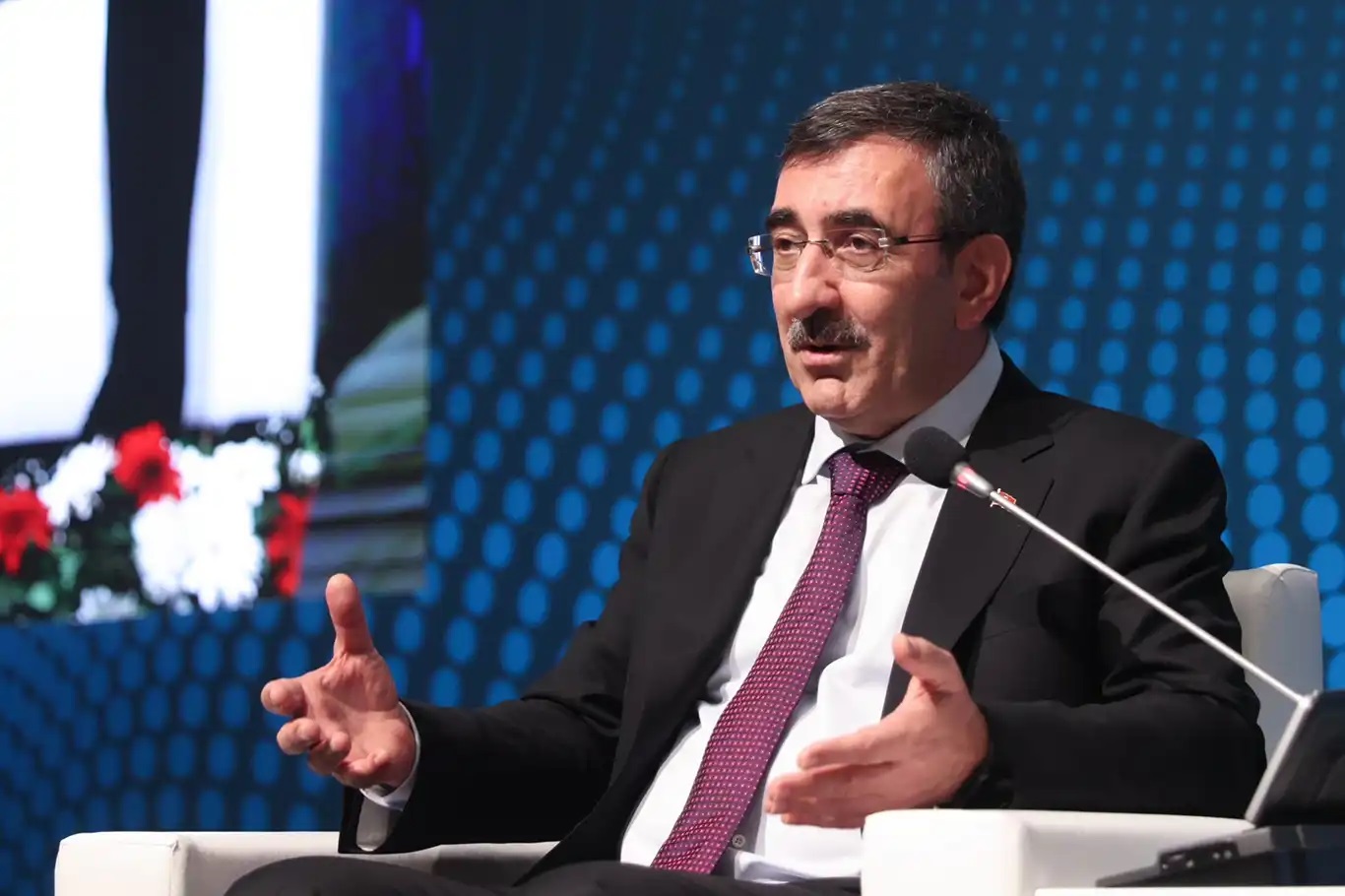
Türkiye is targeting a gradual acceleration in economic growth to 5% by 2029 while seeking to bring inflation down to single digits, Vice President Cevdet Yılmaz said Sunday as the government unveiled its new three-year Medium-Term Program (MTP).
Presenting the 2027–2029 economic roadmap in Ankara, Yılmaz said the government expects gross domestic product (GDP) growth to reach 3.3% in 2026, before accelerating to 4.2% in 2027, 4.6% in 2028 and 5% in 2029.
The new projections represent a downward revision from the previous program, which had envisaged growth of 3.8% in 2026, 4.3% in 2027 and 5% in 2028. The revised targets reflect the impact of tighter monetary and fiscal policies, weaker domestic demand and heightened geopolitical risks.
Inflation Remains the Government’s Main Priority
Yılmaz said bringing inflation under control and establishing lasting price stability would remain the government's central economic objective.
The new program forecasts inflation falling to 21% at the end of 2027, 13.5% in 2028 and 9% in 2029.
For 2026, the government has revised its year-end inflation forecast to 28.4%. Annual consumer inflation stood at 31.51% in August, down from 31.75% in July, according to official data.
Yılmaz said inflation had fallen significantly from its peak of 75.5% in May 2024, arguing that the government's economic policies were producing results.
However, he also acknowledged that external developments have complicated the disinflation process. According to Yılmaz, the effects of the war in the Middle East have contributed significantly to inflationary pressures, with the Central Bank estimating the direct and indirect impact at approximately seven percentage points.
Economy Expected to Rebound Gradually
The new program comes after a period of slower economic growth as Ankara has prioritized fighting inflation over stimulating domestic demand.
Türkiye's economy expanded by 2.3% year-on-year in the second quarter of 2026, below market expectations. It was the fourth consecutive quarter in which annual growth slowed. Domestic demand declined, while net exports provided a positive contribution to growth.
Treasury and Finance Minister Mehmet Şimşek said after the second-quarter figures that growth was expected to gradually strengthen as the disinflation process advances and global conditions become more supportive.
The government's latest projections therefore envisage a gradual transition from a period of economic rebalancing toward stronger and more sustainable growth.
Fiscal Discipline to Continue
The government also plans to maintain fiscal discipline as part of its strategy to support disinflation.
The budget deficit is projected to equal 3.5% of GDP in 2027, declining to 3.1% in 2028 and 2.8% in 2029.
The government expects the deficit-to-GDP ratio to reach 3.1% in 2026 before declining further over the program period.
The authorities argue that reducing the fiscal deficit will help ease inflationary pressures while strengthening confidence in Türkiye's economic program.
Unemployment Expected to Decline
The government also expects labor-market conditions to improve gradually.
Unemployment is projected at 8.1% in 2026 and is expected to decline steadily, reaching 7.6% by 2029.
The improvement is expected to accompany stronger economic activity, increased investment and a gradual recovery in domestic demand as inflation comes under control.
National Income Set to Surpass $1.8 Trillion
Yılmaz also announced an ambitious target for Türkiye's national income.
He said GDP is expected to exceed $1.8 trillion in 2026 for the first time in the country's history, while per-capita income is projected to surpass $20,000.
The government views higher national income, increased productivity and stronger investment as important components of its longer-term strategy to move the economy toward higher-value production and sustainable growth.
A Delicate Balance Between Growth and Disinflation
The new program highlights the difficult balancing act facing Ankara.
The government wants to maintain strong economic growth while continuing policies designed to reduce inflation. Yet tighter monetary and fiscal conditions can weaken consumption and investment in the short term, creating pressure on economic growth.
Recent data illustrate this challenge. While Türkiye's economy continues to expand, the slowdown in domestic demand has become increasingly visible. At the same time, policymakers view weaker demand as part of the necessary adjustment required to bring inflation under control.
The government's strategy is therefore based on gradually restoring price stability while creating conditions for stronger growth in the later years of the program.
Türkiye Sets Its Sights on 2029
The 2027–2029 Medium-Term Program represents Ankara's latest attempt to provide markets, businesses and households with a clear economic roadmap.
Under the plan, inflation would fall from 28.4% at the end of 2026 to 9% in 2029, while economic growth would accelerate from 3.3% to 5% over the same period.
If achieved, the targets would mark a significant transformation in Türkiye's economic outlook, combining lower inflation, stronger growth, declining unemployment and improved fiscal balances.
The government's immediate challenge, however, will be maintaining public and market confidence while the economy goes through the painful stages of disinflation.
For Ankara, the message of the new program is clear: short-term economic rebalancing is intended to lay the foundation for stronger and more stable growth in the years ahead. (ILKHA)
LEGAL WARNING: All rights of the published news, photos and videos are reserved by İlke Haber Ajansı Basın Yayın San. Trade A.Ş. Under no circumstances can all or part of the news, photos and videos be used without a written contract or subscription.
The Central Bank of the Republic of Türkiye (CBRT) has cut its benchmark one-week repo rate by 100 basis points to 36% from 37%, citing signs of easing underlying inflationary pressures and weak domestic demand.
Türkiye’s consumer confidence index fell by 7.7% in October, dropping to 84.8 from 91.9 in September, according to data released by the Turkish Statistical Institute (TurkStat) on Thursday.
Türkiye has called on the European Union to ensure that its proposed "Made in EU" policy takes into account the Customs Union and integrated production networks between the two sides, following a high-level meeting with representatives of the country's automotive industry.
Türkiye’s Non-Domestic Producer Price Index (ND-PPI) rose by 33.64% year-on-year and 2.82% month-on-month in September 2026, according to data released by the Turkish Statistical Institute (TurkStat) on Tuesday.