DR Congo’s Ebola outbreak surpasses 7,000 cases as virus spreads to seventh province

 13 oC
13 oC 
Güneşli

The Democratic Republic of the Congo’s worst Ebola outbreak on record has surpassed 7,000 confirmed cases, with nearly 3,400 people dead as health authorities struggle to contain the rapidly spreading virus amid conflict, displacement and severe shortages of medical personnel and funding.
According to the latest figures released by Congolese authorities, 7,022 cases of Ebola disease caused by the Bundibugyo virus have been recorded, including 3,398 deaths. About 837 patients are currently in isolation or receiving treatment.
The outbreak was officially declared in mid-May after the virus was detected in northeastern Ituri province, although health experts believe transmission may have been occurring for weeks before it was identified.
The outbreak has since expanded far beyond its original epicenter. Authorities have now reported cases in a seventh province, South Ubangi, marking the first confirmed spread of the outbreak into western Congo and raising concerns about further transmission across the country’s borders.
The Bundibugyo strain has spread through remote and conflict-affected areas where weak state institutions, poor health infrastructure and large-scale population movements make disease surveillance and containment particularly difficult.
Ituri remains the epicenter, accounting for more than 5,500 confirmed cases. However, infections have also increased sharply in North Kivu and Haut-Uele, while cases have been reported across dozens of health zones.
The emergence of the virus in South Ubangi is particularly concerning because the province is close to both the Central African Republic and the Republic of Congo, creating additional risks of cross-border transmission.
Health authorities said the newly detected case involved a 23-year-old man who had traveled extensively from South Kivu through several provinces and neighboring countries before dying from the disease.
The World Health Organization has warned that the continued geographic expansion, combined with high mortality, could make the outbreak one of the most serious Ebola emergencies ever recorded.
The outbreak is unfolding against the backdrop of years of armed conflict in eastern Congo, where numerous armed groups operate and millions of people have been displaced.
Insecurity has made it difficult for health workers to reach some communities, conduct contact tracing and investigate suspected infections. Overcrowded displacement sites, inadequate sanitation and limited access to healthcare are further increasing the risk of transmission.
The WHO reported that, as of September 7, cases had been detected in 61 health zones across six provinces, before the latest expansion into South Ubangi. Ituri alone had recorded 5,406 confirmed cases by that date.
Health workers have also faced severe operational pressures, including shortages of staff, funding and response partners. The WHO said nearly 1,400 beds had been established across 59 treatment centers, but another 1,600 beds and roughly 5,000 additional health workers were urgently needed.
The current outbreak is caused by the Bundibugyo virus, a relatively rare Ebola species for which there is no specifically licensed vaccine or approved targeted treatment.
The WHO has issued emergency guidance on the possible use of the licensed Ervebo Ebola vaccine during Bundibugyo outbreaks, while health authorities have begun vaccinating frontline workers in affected areas. At the same time, clinical trials are being conducted for vaccine candidates specifically targeting the Bundibugyo strain.
The WHO has stressed that the response requires rapid detection, isolation and treatment of patients, contact tracing, infection prevention and control, vaccination where appropriate and sustained engagement with affected communities.
However, the scale of the outbreak is placing enormous pressure on an already fragile healthcare system.
The outbreak has also raised concerns beyond Congo’s borders.
Uganda, which recorded infections linked to the same outbreak earlier this year, declared itself Ebola-free in July after reporting 20 cases. Nevertheless, health officials continue to monitor cross-border movements closely.
The WHO has warned that informal border crossings and extensive population and trade movements could facilitate the export or import of the virus, making regional surveillance and coordination essential.
The rapid growth of the outbreak has already made it the largest Ebola epidemic ever recorded in the Democratic Republic of the Congo. With transmission continuing in multiple provinces and the virus now reaching western parts of the country, authorities face mounting pressure to expand the response before further geographic spread makes containment even more difficult.
For a country already grappling with conflict, displacement and a severe humanitarian crisis, the Ebola epidemic represents another major threat to a population with limited access to essential healthcare. (ILKHA)
LEGAL WARNING: All rights of the published news, photos and videos are reserved by İlke Haber Ajansı Basın Yayın San. Trade A.Ş. Under no circumstances can all or part of the news, photos and videos be used without a written contract or subscription.

The Ebola outbreak sweeping eastern Democratic Republic of Congo is rapidly spreading beyond its epicentre in Ituri province, prompting renewed concern from African health authorities over the scale and speed of the epidemic.
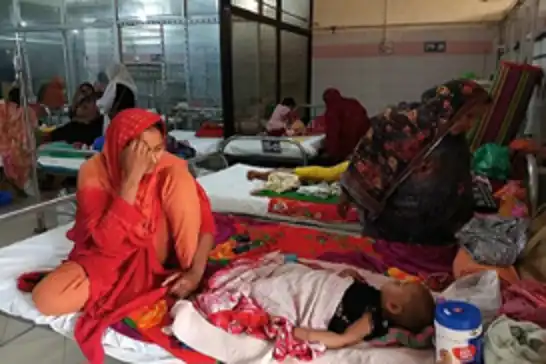
Bangladesh is confronting the world’s worst measles outbreak, with nearly 1,000 suspected and confirmed deaths reported since March as a collapse in vaccination coverage leaves hundreds of thousands of children vulnerable and hospitals struggling to cope with an unprecedented surge in patients.

Bangladesh’s dengue outbreak is intensifying, with more than 42,000 people hospitalized and 117 deaths recorded so far this year as a sharp rise in infections puts growing pressure on hospitals and raises concerns about a further escalation in the weeks ahead.