Colombia’s new government recognizes Israeli sovereignty over occupied Golan Heights
 13 oC
13 oC 
Güneşli

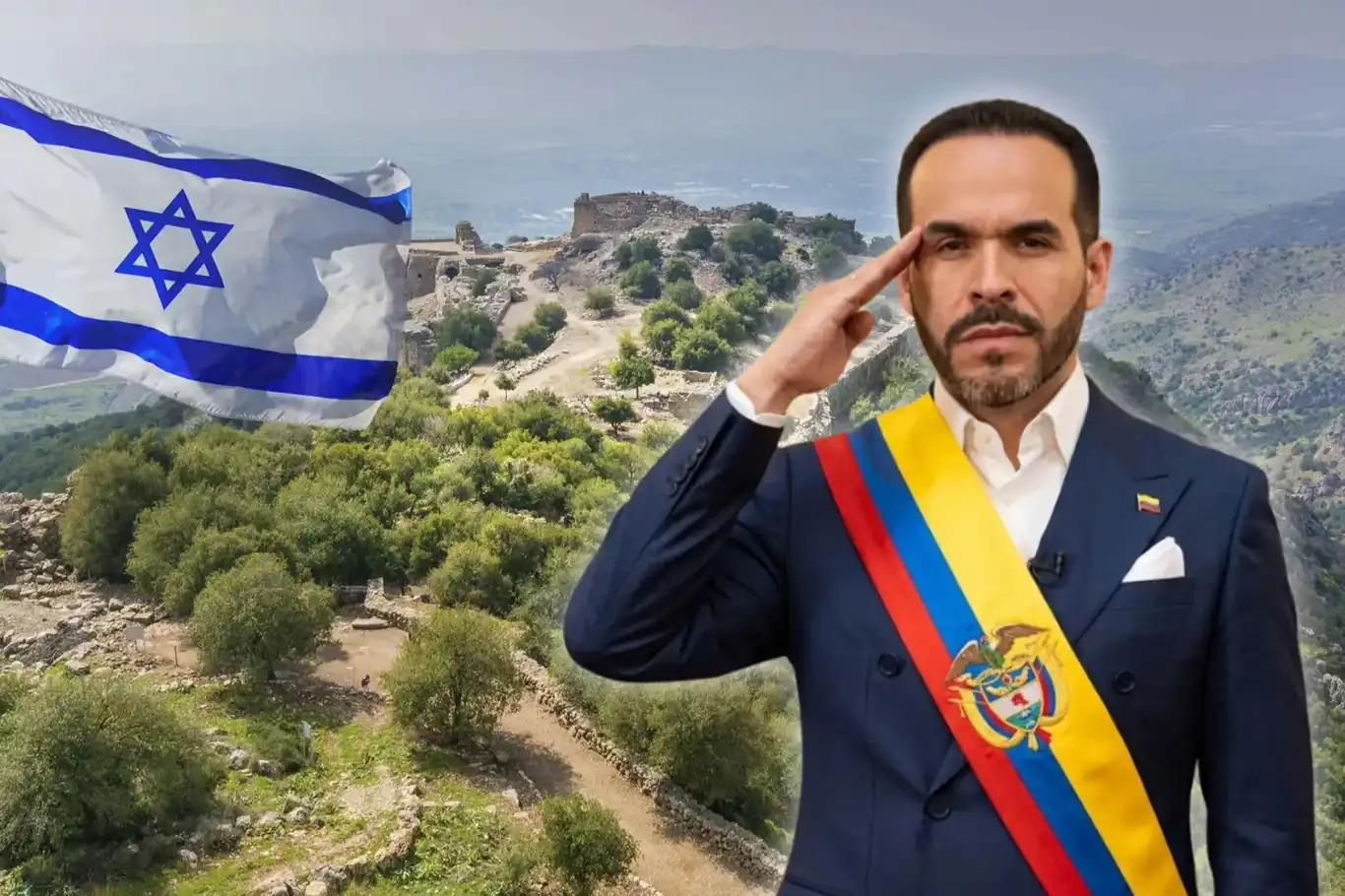
Colombia’s newly inaugurated hard-right government has recognized Israel’s claim to sovereignty over the occupied Syrian Golan Heights, becoming only the second country after the United States to endorse Israel’s illegal annexation of the strategically important Syrian territory.
The decision, announced Monday by Colombia’s Foreign Ministry, represents a sharp break from the country’s previous foreign policy and has drawn renewed attention to Israel’s decades-long occupation of Syrian land.
The Golan Heights were seized from Syria by Israel during the 1967 Arab-Israeli war. In 1981, Israel unilaterally annexed the territory, a move widely rejected by the international community and declared legally invalid by the United Nations.
Despite Israel’s continued military occupation, the United Nations maintains that the Golan Heights are Syrian territory under Israeli occupation.
“The Government of Colombia recognizes Israeli sovereignty over this territory, as well as that State’s right to protect itself against external threats,” the Colombian Foreign Ministry said in a statement posted on X.
Bogotá further claimed that Israel’s continued control of the Golan Heights was an essential element of its national defense.
The Colombian declaration directly contradicts the longstanding international position that the Golan Heights remain part of Syria and that territorial acquisition through war cannot be legitimized through unilateral annexation.
The Golan Heights, a strategically vital plateau overlooking northern Israel and southwestern Syria, has remained under Israeli occupation since 1967. Israel later imposed its laws and administration on the territory in 1981, but the move was rejected by the UN Security Council.
UN Secretary-General Antonio Guterres reiterated the international position as recently as last month, stating that the Golan Heights are part of Syria and describing Israel’s continued occupation as “totally unacceptable.”
For Syria, the Golan Heights remain occupied national territory, and successive Syrian governments have demanded Israel’s withdrawal from the area as part of any comprehensive settlement.
Colombia’s decision therefore marks a significant departure from the prevailing international consensus on the status of the territory.
Israeli Foreign Minister Gideon Saar welcomed the Colombian decision and thanked President Abelardo de la Espriella, whom he called his “good friend.”
Saar said the two governments had reached an understanding on the issue in the Colombian city of Barranquilla, one day before De la Espriella was inaugurated.
The Israeli foreign minister, who attended the Colombian president’s inauguration, defended the policy by arguing that Israel needs “defensible borders.”
The argument, however, comes against the backdrop of Israel’s continued occupation of territory internationally recognized as Syrian.
The United States had previously been the only government to formally recognize Israel’s claim to sovereignty over the Golan Heights, doing so in 2019 under then-President Donald Trump.
The move represents a dramatic reversal of Colombia’s Middle East policy under former President Gustavo Petro.
Petro strongly condemned Israel’s military campaign in Gaza, severed diplomatic relations with Israel and halted Israeli arms imports to Colombia.
De la Espriella, a wealthy conservative politician who came to power on Friday, has pledged to restore close relations with both Israel and the United States.
His government has also indicated that it intends to deepen diplomatic ties with Israel and establish a Colombian embassy in Jerusalem.
Israel regards Jerusalem as its capital, including East Jerusalem, which it occupied in 1967 and subsequently annexed. The annexation has not been recognized by most of the international community, and most countries continue to maintain their embassies in Tel Aviv.
The Colombian government’s decision on the Golan Heights, together with its plans concerning Jerusalem, signals a broader realignment of Bogotá’s Middle East policy.
For Syria and its supporters, however, the recognition does not alter the legal or historical status of the Golan Heights. The territory remains internationally recognized as Syrian land under Israeli occupation, and Colombia’s decision amounts to a unilateral political endorsement of Israel’s territorial claims rather than a change in the territory’s status under international law.
The move is likely to further distance Colombia from the traditional international consensus on the Israeli occupation of Arab territories and deepen its alignment with Israel and Washington under De la Espriella’s new government. (ILKHA)
LEGAL WARNING: All rights of the published news, photos and videos are reserved by İlke Haber Ajansı Basın Yayın San. Trade A.Ş. Under no circumstances can all or part of the news, photos and videos be used without a written contract or subscription.

Afghanistan’s Minister of Refugees and Repatriation, Mawlavi Abdul Kabir, said approximately 8 million Afghan nationals have returned to the country from neighboring states since the Islamic Emirate assumed power.

Latvia on Tuesday launched Operation Vilkatis (“Werewolf”), a nationwide operation aimed at preventing illegal migration and strengthening security along the country’s borders. The operation will remain in effect until the end of August, Prime Minister Andris Kulbergs announced.
The United Nations Security Council is set to convene on Tuesday for a session focused on the situation in Palestine, with particular attention to developments in the occupied West Bank.