Israel orders British consulate in East Jerusalem to close within 30 days
 13 oC
13 oC 
Güneşli

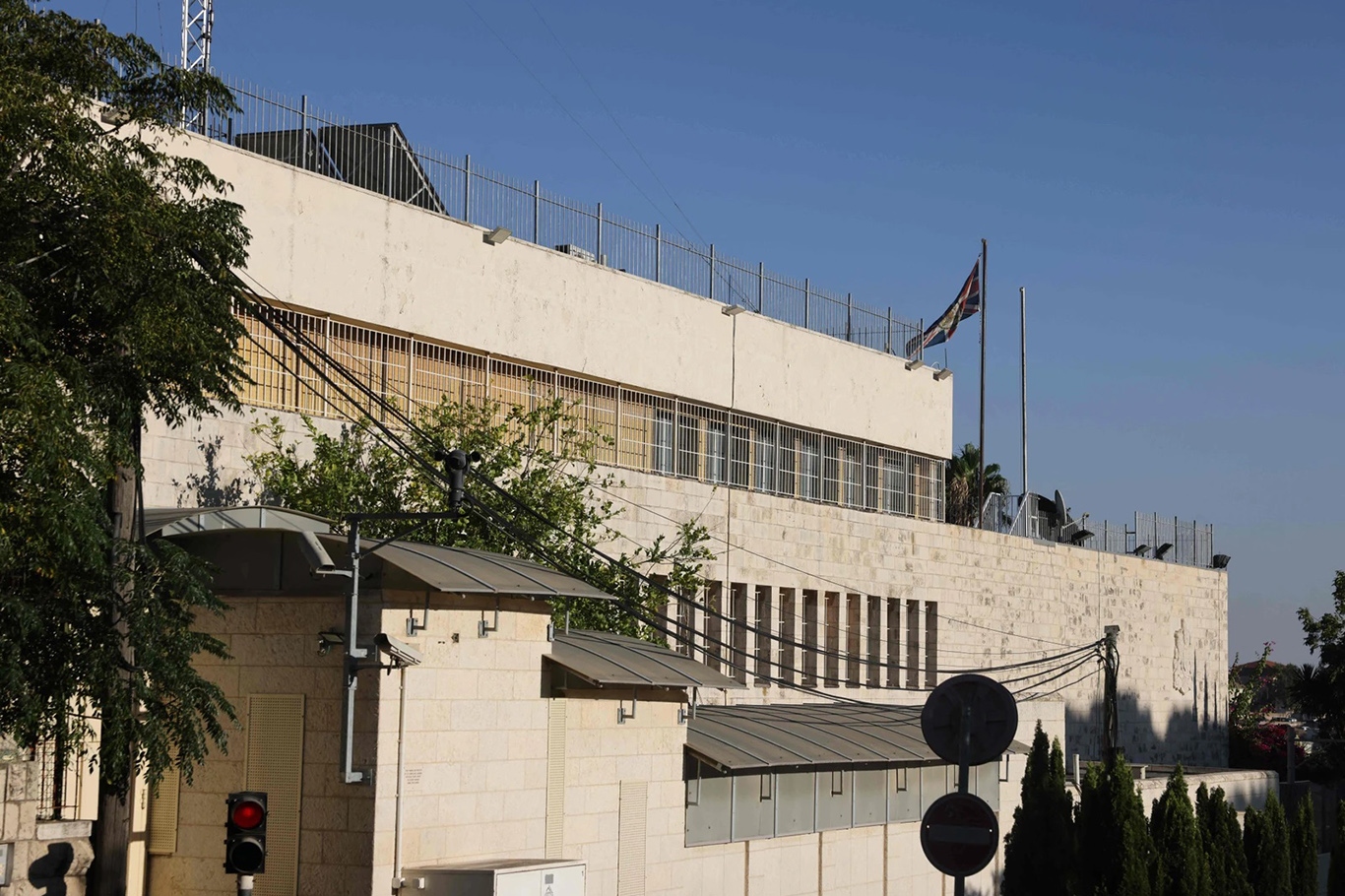
Israel has ordered the British consulate in occupied East Jerusalem to close within 30 days, escalating a rapidly worsening diplomatic dispute over Britain’s new sanctions on Israeli settlements in the occupied West Bank.
Israel has given the United Kingdom 30 days to close its consulate in occupied East Jerusalem and told British diplomats assigned there that their accreditation will be withdrawn at the end of the period, according to an Israeli official and sources familiar with the decision.
The move came after Britain announced sweeping measures targeting Israeli settlements in the occupied West Bank, including a ban on imports from settlements and sanctions against individuals and entities involved in settlement expansion.
Israel has also ordered British representatives participating in a US-led Gaza coordination mission to leave within seven days, while British diplomats based in Ramallah have reportedly been given the same deadline.
The measures mark a significant deterioration in relations between two countries whose ties have already been strained by Israel’s war in Gaza, settlement expansion and rising settler violence against Palestinians.
Israel retaliates over settlement sanctions
Israeli Foreign Minister Gideon Saar announced the closure of the British consulate on Tuesday, describing Britain’s decision to sanction settlement-related trade as unacceptable interference in Israel’s affairs.
Saar also announced that Britain would no longer participate in the US-led Gaza coordination mechanism and that Israel would terminate British training for Palestinian Authority security forces in the occupied West Bank.
Israel has additionally barred 12 British nationals from entering the country, including former Labour leader Jeremy Corbyn and several British lawmakers.
The Israeli government is expected to consider further retaliatory measures against countries that have joined the settlement-related restrictions.
The British consulate in East Jerusalem has a particularly important diplomatic role because it is accredited to the Palestinian Authority and deals with British relations and assistance involving Jerusalem, the occupied West Bank and Gaza.
Its forced closure would therefore affect Britain's diplomatic engagement with Palestinians at a time when international pressure over the Israeli occupation and settlement expansion is intensifying.
Britain joins growing pressure over Israeli settlements
Britain's sanctions came as part of a broader international response to the expansion of Israeli settlements and escalating violence against Palestinians in the occupied West Bank.
The UK, France and Canada announced measures to restrict trade in goods originating from Israeli settlements. Eleven other countries—including Denmark, Finland, Iceland, Ireland, Norway, Poland, Portugal, Spain and Sweden—also joined a joint statement supporting restrictions or considering further action against settlement-related trade.
The countries said Israeli actions in the West Bank were undermining the possibility of a two-state solution, pointing in particular to settlement expansion and what they described as unprecedented levels of settler violence.
They also opposed measures they said amounted to the annexation of Palestinian territory and the forced displacement of Palestinians.
The United Kingdom has gone further by saying it regards Israel's occupation of the West Bank as illegal and accusing Israeli settlers of carrying out what Foreign Secretary Ed Miliband described as ethnic cleansing in parts of the territory.
E1 settlement project raises alarm
One of the central concerns behind the new international measures is Israel's planned expansion of settlements in the strategically important E1 area east of Jerusalem.
International governments and Palestinian officials have warned that large-scale settlement construction in the area could effectively divide the northern and southern parts of the occupied West Bank and further undermine the territorial basis for a future Palestinian state.
The joint statement issued by the 12 countries specifically cited Israel's decision to publish tenders for the E1 settlement project as evidence of the worsening situation.
The United Nations, Palestinians and most countries consider Israeli settlements in the occupied West Bank illegal under international law, while Israel rejects that interpretation.
A widening diplomatic confrontation
The dispute over the British consulate comes amid an increasingly confrontational relationship between Israel and several of its traditional Western partners.
Britain recognised a Palestinian state in 2025 and has since taken additional measures against Israeli settlement activity. London has also previously suspended a number of arms licences connected to Israel and is now moving to prevent exports that materially contribute to the occupation.
France and Canada have followed Britain in imposing settlement-related trade restrictions, while other European governments have signalled that additional measures could follow.
The United States, however, has opposed the latest sanctions and indicated that it does not intend to block imports from Israeli settlements.
The economic impact of the trade restrictions is expected to be limited because settlement products represent only a small share of Israel's overall exports. Their political significance, however, is considerably greater, as they signal growing international opposition to the continued expansion of Israeli settlements on occupied Palestinian land.
Palestinian rights at the centre of the dispute
For Palestinians, the diplomatic confrontation comes against the backdrop of a rapidly deteriorating situation in the occupied West Bank.
Settlement expansion, settler violence, demolitions, land seizures and restrictions on Palestinian movement have intensified concerns that Palestinian communities are being progressively displaced from parts of the territory.
The latest international measures are therefore being presented by their proponents not simply as trade restrictions but as an attempt to prevent the permanent incorporation of occupied Palestinian territory into Israel.
The joint statement by the 12 countries said the governments were determined to protect the two-state solution and opposed actions amounting to annexation and forced displacement.
Consulate closure signals deeper rupture
Israel's decision to target Britain's diplomatic presence in occupied East Jerusalem represents a sharp escalation.
The consulate has operated for decades as Britain's principal diplomatic channel with the Palestinians in Jerusalem and the occupied territories. Its closure would significantly reduce Britain's diplomatic footprint on Palestinian affairs.
For Palestinians, the development also carries symbolic weight: the dispute is unfolding over a diplomatic mission located in occupied East Jerusalem, an area whose status remains at the heart of the Israeli-Palestinian conflict.
Britain has expressed regret over Israel's retaliatory measures but has defended its sanctions policy. Miliband has rejected claims that the measures are directed against Israel's Jewish population, insisting that they target government policies, settlement expansion and violations of Palestinian rights.
With Israel threatening further retaliation and more governments considering restrictions on settlement-related trade, the closure order risks becoming another major flashpoint in an already rapidly deteriorating relationship between Israel and several Western countries.
More broadly, the confrontation underscores a growing international divide over Israel's continued occupation and settlement expansion—and mounting efforts by foreign governments to translate their opposition into concrete political and economic measures. (ILKHA)
LEGAL WARNING: All rights of the published news, photos and videos are reserved by İlke Haber Ajansı Basın Yayın San. Trade A.Ş. Under no circumstances can all or part of the news, photos and videos be used without a written contract or subscription.

Israeli occupation authorities have issued around 800 exclusion orders against Palestinians since the beginning of 2026, increasingly using the measures to restrict Palestinian access to Al-Aqsa Mosque, Jerusalem’s Old City and other parts of the occupied city.
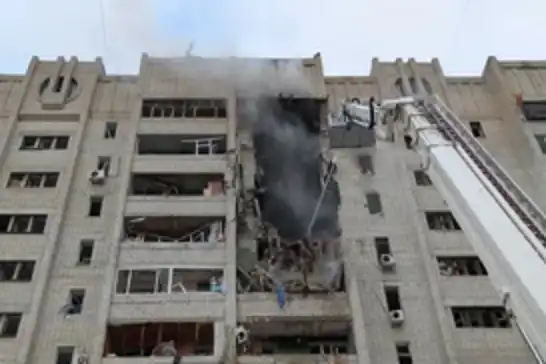
A Ukrainian drone attack on the southern Russian port city of Novorossiysk overnight killed at least four people, including a child, and injured 29 others, Russian officials said Wednesday.

The European Union has expressed deep concern over the escalating violence carried out by Israeli settlers against Palestinians in the occupied West Bank, renewing calls for an end to settlement expansion and attacks on Palestinian communities.