Volcanic eruption disrupts hundreds of flights in Indonesia, stranding thousands
 13 oC
13 oC 
Güneşli

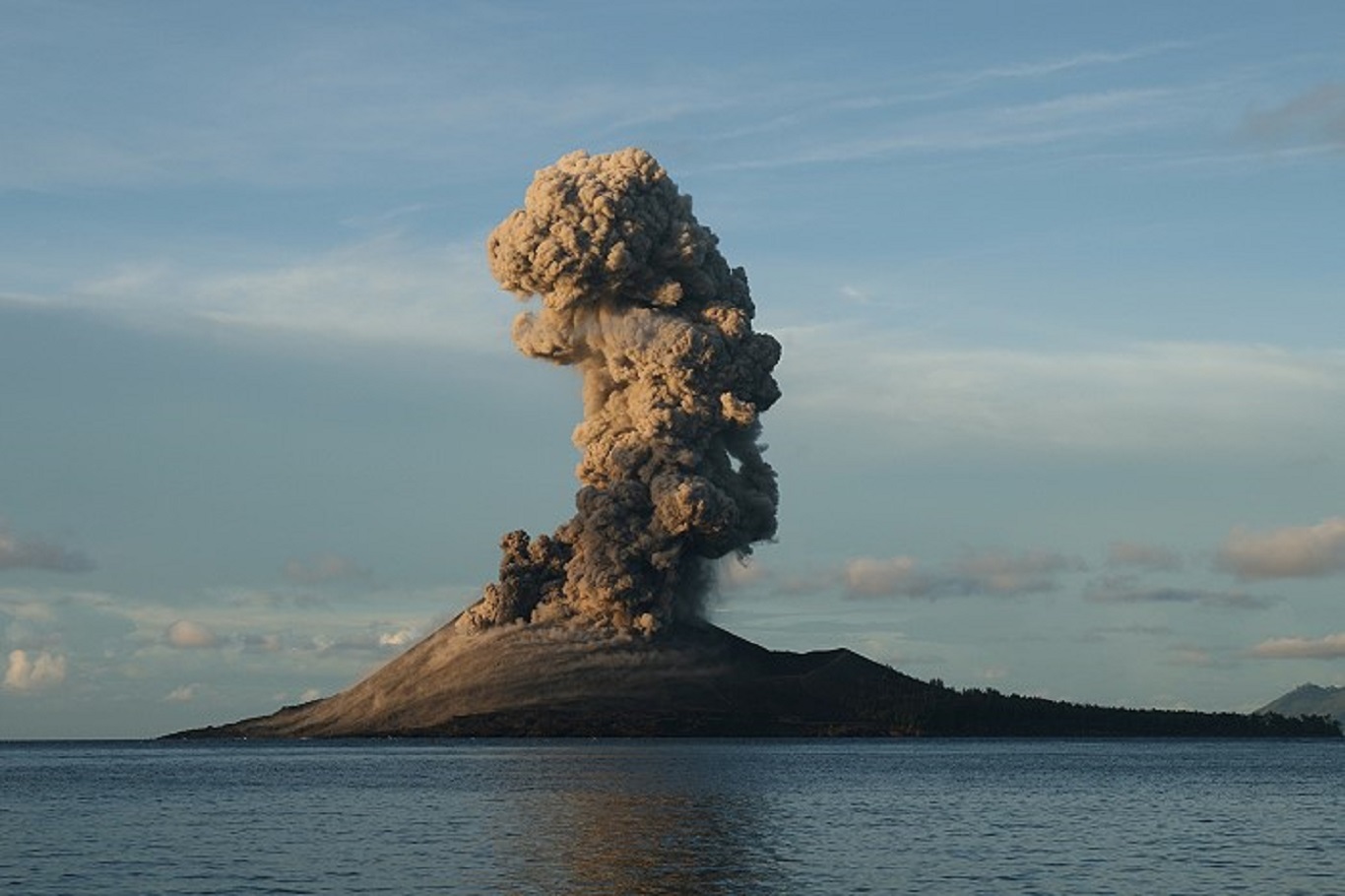
A volcanic eruption in Indonesia has disrupted hundreds of flights at the country's main international airport, leaving tens of thousands of passengers stranded as volcanic ash spread through airspace near Jakarta.
Authorities said 209 flights were suspended on Sunday after ash from Anak Krakatau was detected near Soekarno-Hatta International Airport, Indonesia's busiest aviation hub.
More than 22,000 passengers and other travelers were affected by the disruption, with the suspension of flights extended until 1:30 p.m. local time, according to transportation authorities.
The disruption primarily affected flights to and from Singapore, while several other international routes, including services to Doha, Sydney and Kuala Lumpur, were also impacted.
Anak Krakatau began erupting late Friday night, producing continuous seismic activity, lava fountains and loud explosions that were heard across surrounding areas.
Authorities reported two additional eruptions early Sunday, raising concerns about continued volcanic activity and the spread of ash into populated areas and major air corridors.
Despite the eruption, authorities said there was no tsunami warning associated with the latest activity. The volcano is located in the Sunda Strait, between the Indonesian islands of Java and Sumatra.
Indonesia's health authorities have urged residents in areas affected by volcanic ash to remain indoors and wear protective face masks. Officials warned that exposure to ash could cause respiratory problems as well as irritation to the eyes and skin.
Several schools reportedly canceled activities after students and residents complained of eye irritation caused by volcanic ash. Some fishermen also suspended trips at sea after reporting similar symptoms.
The latest eruption has revived memories of Anak Krakatau's deadly collapse in December 2018, when a large section of the volcano slid into the Sunda Strait and triggered a devastating tsunami.
The tsunami struck coastal communities on Java and Sumatra, killing more than 400 people, injuring thousands and displacing many others.
Scientists later determined that some of the rock masses that collapsed into the sea were estimated to have reached 70 to 90 meters in height, illustrating the enormous scale of the landslide that generated the tsunami.
Authorities have nevertheless emphasized that there is currently no tsunami warning linked to the latest volcanic activity.
Indonesia is among the world's most volcanically and seismically active countries. It lies along the Pacific Ring of Fire, a vast zone surrounding much of the Pacific Ocean characterized by frequent earthquakes and volcanic eruptions.
The country's location at the meeting point of several major tectonic plates has produced dozens of active volcanoes and makes volcanic eruptions a recurring threat to communities, transportation networks and aviation.
Authorities continue to monitor Anak Krakatau closely and have urged residents and travelers in affected areas to follow official safety instructions as volcanic activity persists. (ILKHA)
LEGAL WARNING: All rights of the published news, photos and videos are reserved by İlke Haber Ajansı Basın Yayın San. Trade A.Ş. Under no circumstances can all or part of the news, photos and videos be used without a written contract or subscription.

Istanbul will host the 40th General Assembly of the European Seismological Commission (ESC2026) from Sept. 6 to 11, bringing together hundreds of seismologists, researchers and experts from more than 60 countries to discuss the latest developments in earthquake science.

The Islamic Emirate of Afghanistan says nearly 2 million Afghan migrants have returned to the country from abroad over the past year, highlighting what officials describe as a major return of Afghan families and a renewed effort to support vulnerable communities.
Iran’s Islamic Revolutionary Guard Corps (IRGC) said Sunday that its forces targeted a U.S. aircraft carrier and a destroyer with multiple ballistic missiles, forcing the warships to withdraw from the conflict zone after sustaining damage.