Ishaq Pasha Palace attracts visitors every season
 13 oC
13 oC 
Güneşli

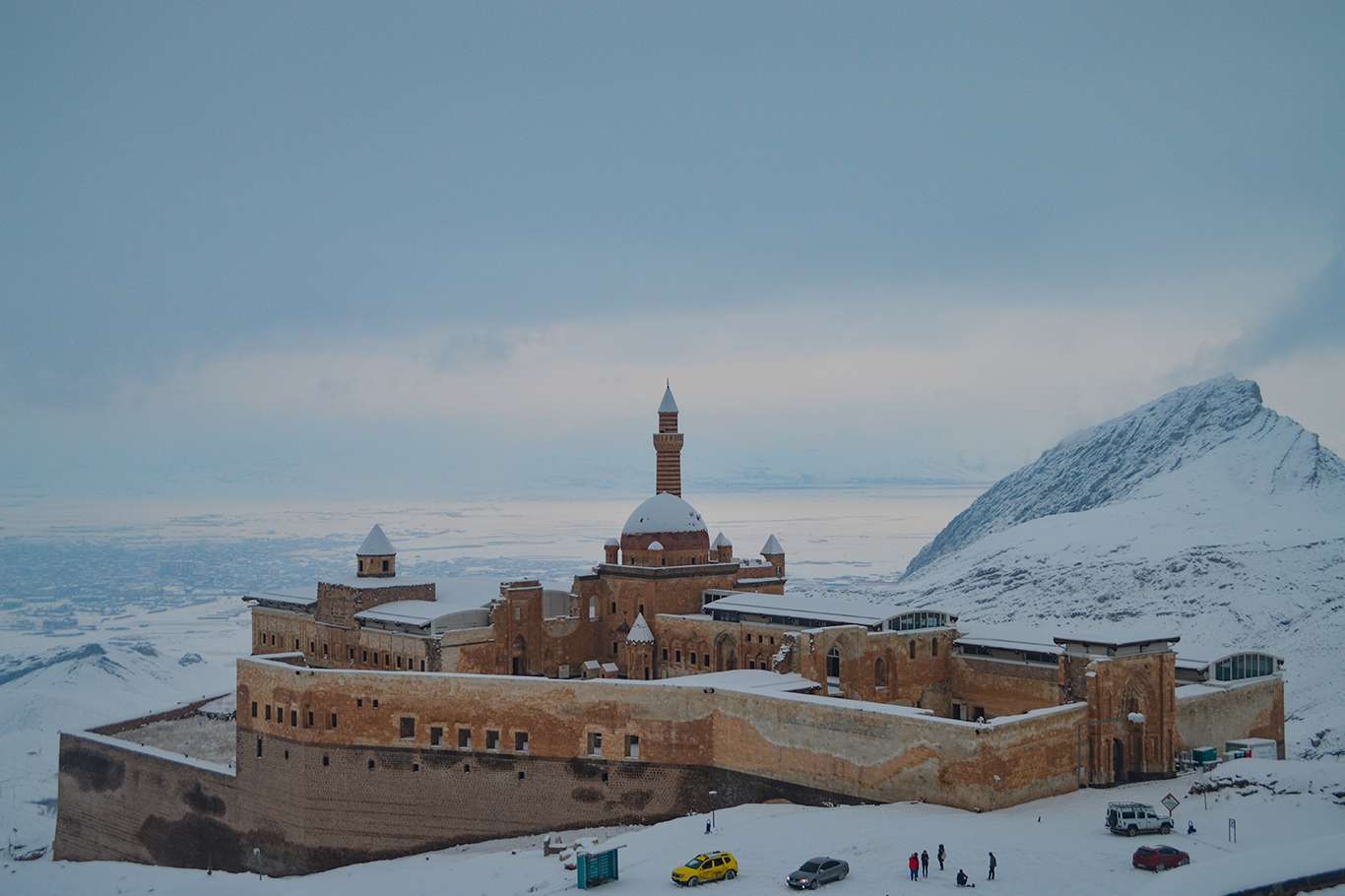
The Ishaq Pasha palace, which is a prominent Ottoman-period palace, is attracting the visitor all year round, including winter season.
Ishaq Pasha Palace is more of a complex than a mere palace. It is our second administrative campus after the Topkapı Palace in İstanbul and the most famous of the palaces built at recent decades.
The palace, which was built on a hill at the side of a mountain 5 km. east of Doğubeyazıt District, is the last large monumental structure of the Ottoman Empire in the "Lale Devri" Period.
It is one of the most distinguished and magnificent examples of the 18th century Ottoman architecture and is very valuable in terms of art history.
According to the top of the door inscription at the Harem Section it was constructed in 1784 (1199 H.) according to the Islamic calendar.
As the ground building sits on is a valley slope, it is rocky and hard. Despite the fact that it is at the center of the Old Beyazıt city its three sides (north, west and south) are steep and sloped. There is a suitable flat area only to the east. The entrance of the palace is on that side. It is also its narrowest façade.
Today we have very few examples of the historical Turkish palaces still surviving. One of these is the İshaq Pasha Palace and complex. (ILKHA)
LEGAL WARNING: All rights of the published news, photos and videos are reserved by İlke Haber Ajansı Basın Yayın San. Trade A.Ş. Under no circumstances can all or part of the news, photos and videos be used without a written contract or subscription.

Two children have died from measles in England this year amid continuing outbreaks across the country, health officials have confirmed.

Endangered yellow-spotted salamanders, an endemic species native to Türkiye and considered vulnerable to various environmental threats, have been spotted on Mount Mereto in the Sason district of Batman province.
Young children are disproportionately affected by unsafe food, with new World Health Organization (WHO) estimates revealing that contaminated food causes approximately 866 million illnesses and 1.5 million deaths worldwide each year.

Health experts are warning that the ongoing Ebola outbreak in the Democratic Republic of Congo (DRC) and Uganda could become one of the largest Ebola epidemics in modern history unless urgent international intervention is expanded.