Nepal flash flood death toll rises to 1,386 as search operations continue
 13 oC
13 oC 
Güneşli

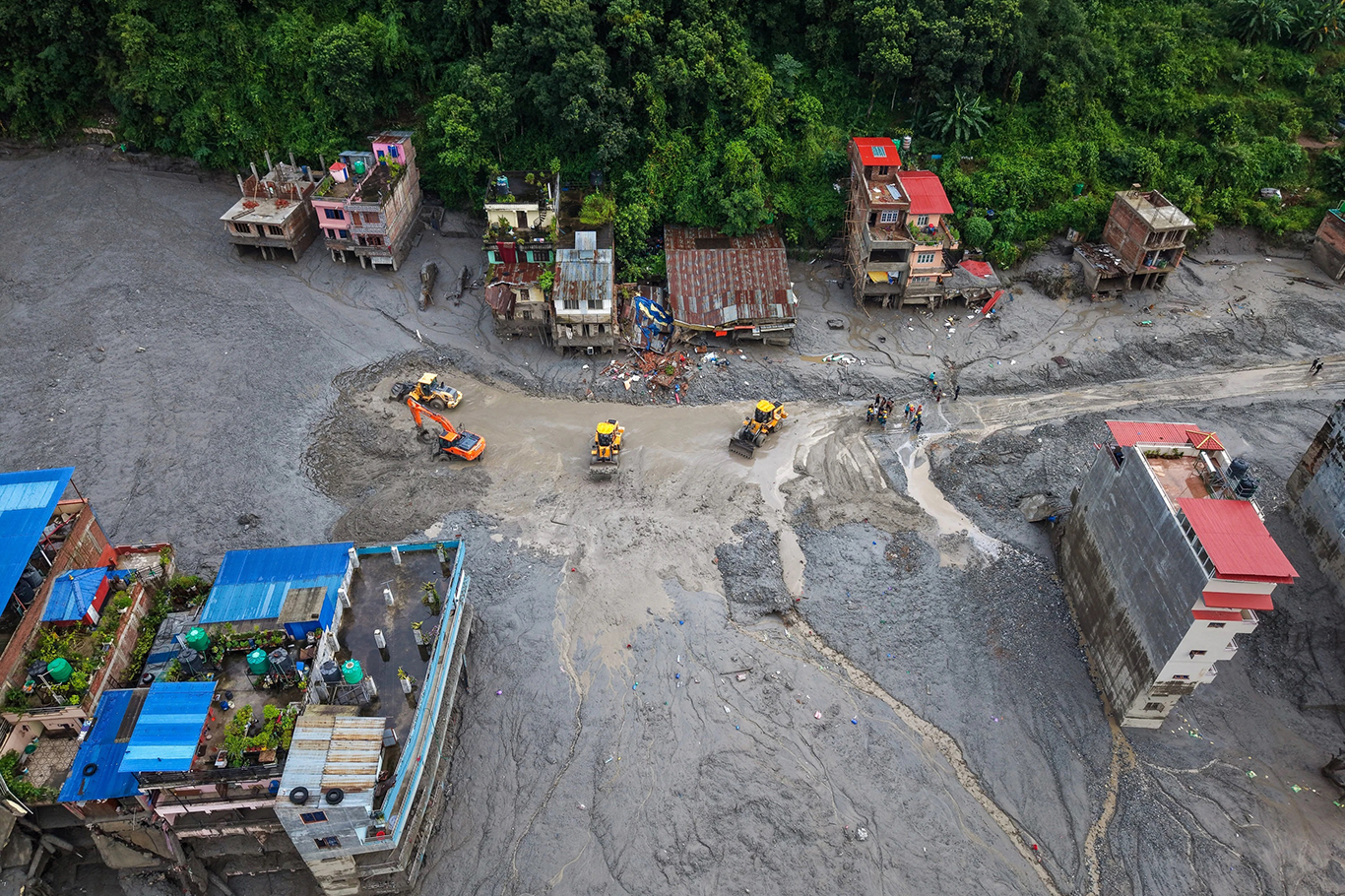
The death toll from devastating flash floods in Nepal rose to 1,386 on Saturday, as rescue and recovery teams continued searching for bodies in areas ravaged by a massive surge of water, ice and rock, authorities said.
The disaster struck on Aug. 26 after an ice-and-rock avalanche near the Nepal-Tibet border triggered a sudden surge into the Bhote Koshi River system. The flood swept downstream through the Bhote Koshi, Trishuli and Narayani river corridors, devastating communities across northern and central Nepal.
According to the latest figures from Nepal's National Disaster Risk Reduction and Management Authority (NDRRMA), hundreds of bodies have been recovered across the eight affected districts. The latest tally includes 185 bodies in Rasuwa, 199 in Nuwakot, 70 in Dhading, 77 in Gorkha and 38 in Tanahun.
The death toll has risen steadily as rescue teams gain access to areas that were cut off by destroyed roads, bridges and landslides.
The latest disaster has become one of Nepal's most devastating natural catastrophes in years.
Earlier assessments reported more than 5,000 people missing in Nepal and Tibet, including hundreds of workers at hydropower projects in the affected region. Reuters reported that around 900 hydropower workers were initially unaccounted for, with authorities fearing that some could be trapped inside tunnels.
Rescue teams have already carried out dramatic operations in the region, including the recovery of workers from damaged hydropower facilities. A 64-year-old woman was also rescued alive after being trapped beneath mud and debris for 11 days, while a Chinese hydropower worker was pulled from a tunnel.
The floods destroyed homes, roads, bridges, markets, border facilities and hydropower infrastructure.
The World Health Organization said the disaster affected communities along the Bhote Koshi and Trishuli river corridors, with Rasuwa, Nuwakot, Dhading, Gorkha and Tanahun among the hardest-hit districts. Nepal's government declared 15 municipalities disaster crisis areas for three months.
Around 10,000 households were reported to require immediate humanitarian assistance. Several health facilities were damaged or became difficult to access, raising concerns about injuries, unsafe water, sanitation problems and the potential spread of infectious diseases.
The destruction has also severely affected Nepal's energy infrastructure. Several hydropower projects were damaged, while roads and bridges connecting remote communities were swept away or buried under mud and debris.
Nepal has received assistance from neighboring countries and other international partners as authorities struggle to reach isolated communities.
More than 20,000 security personnel have been involved in search-and-rescue operations, while helicopters have been used to evacuate stranded people and transport emergency supplies. Earlier government figures showed that thousands of people had been rescued from flood- and landslide-affected areas.
International rescue teams from countries including China, India, South Korea and the United States have also contributed to the effort.
The scale of the destruction has placed enormous pressure on Nepal's limited emergency and reconstruction resources.
The government has appealed for international assistance, including specialized rescue equipment, drones, temporary bridges, DNA kits and supplies to prevent disease outbreaks.
Nepal has also sought international climate financing, arguing that the Himalayan country contributes very little to global greenhouse-gas emissions while facing increasingly severe climate-related disasters. The government has sought $20 million from the UN's loss-and-damage mechanism to help address the consequences of the disaster.
Scientists and climate experts have warned that rapidly warming Himalayan conditions are increasing the risks associated with glacier instability, extreme rainfall and sudden flooding.
As recovery operations continue, authorities are still working to identify recovered bodies and establish the whereabouts of thousands of people reported missing. The full human and economic cost of the Aug. 26 disaster is expected to become clearer only after search operations are completed. (ILKHA)
LEGAL WARNING: All rights of the published news, photos and videos are reserved by İlke Haber Ajansı Basın Yayın San. Trade A.Ş. Under no circumstances can all or part of the news, photos and videos be used without a written contract or subscription.

Territorial disputes remain the most difficult issue in efforts to negotiate an end to the Russia-Ukraine war, U.S. presidential envoy Jared Kushner said, stressing that the positions of Moscow and Kyiv continue to diverge sharply.

Iranian Foreign Minister Abbas Araghchi and his Omani counterpart, Badr al-Busaidi, discussed the latest regional developments and issues of mutual interest during a telephone conversation on Saturday, Iran’s Foreign Ministry said.

BRICS leaders have reaffirmed their support for the Palestinian people's right to self-determination and return, calling for an end to the occupation and rejecting any attempt to forcibly displace Palestinians from Gaza.