Saudi firm signs major oil and gas deal with Afghanistan
 13 oC
13 oC 
Güneşli

Saudi Arabia’s Delta Energy International has signed a 25-year contract with Afghanistan’s Ministry of Mines and Petroleum to explore and extract oil and natural gas from the Kushk–Tirpul field in western Herat province.
The agreement includes an initial investment of $200 million and covers exploration and extraction activities in the strategically important oil and gas basin, according to the company.
Delta Energy International said it is also considering an ambitious investment program of nearly $60 billion over 10 years to support the development of Afghanistan’s wider energy sector. The proposed investment, however, remains subject to the results of exploration, technical and economic assessments, financing arrangements, regulatory approvals and a final investment decision.
“This is what genuine partnership between partners looks like,” Delta International CEO Shaher Al-Taqi said, thanking those involved in bringing the project forward and reaffirming the company’s commitment to a “win-win” policy.
The Kushk–Tirpul oil and gas basin covers approximately 22,000 square kilometers and comprises seven blocks of the Tirpul petroleum basin spanning parts of Herat and neighboring Badghis province.
Afghanistan’s Ministry of Mines and Petroleum described the agreement as an important development in the country’s efforts to strengthen domestic energy production and move toward greater self-sufficiency, particularly in the natural gas sector.
Minister of Mines and Petroleum Hedayatullah Badri expressed optimism that exploration and eventual extraction could enable Afghanistan to meet a greater share of its domestic gas requirements.
“With exploration and extraction, there is hope that Afghanistan will be able to meet its gas needs,” Badri said, while highlighting the reputation of the Saudi company involved in the project.
The agreement comes as the Islamic Emirate seeks to expand economic ties with regional countries and attract foreign capital into Afghanistan’s mining and energy industries.
Delta Energy’s proposed investment program could represent one of the most ambitious foreign investment plans in Afghanistan’s energy sector if fully realized.
The company said the potential $60 billion investment over a decade would depend on several factors, including the outcome of geological exploration, technical and economic feasibility studies, financing and the acquisition of required permits.
The final scale of investment will ultimately depend on whether the projects are commercially viable and whether Delta Energy proceeds with a final investment decision.
Former U.S. Special Representative for Afghanistan Reconciliation Zalmay Khalilzad described the agreement as an indication that Afghanistan is positioning itself to attract major international investment in its natural resources.
Khalilzad said Afghanistan could serve not only as a geographical bridge between regions but also as a significant source of natural resources for international markets, particularly those in South Asia.
As part of its broader energy ambitions, Delta Energy International is also examining plans for a 700-kilometer gas pipeline stretching from Herat toward the vicinity of Spin Boldak in Kandahar province.
The proposed pipeline could require an estimated $10 billion in investment and would potentially connect gas-producing areas in western Afghanistan with markets and energy infrastructure in the country's south.
If developed, such infrastructure could play an important role in expanding Afghanistan’s domestic gas network and improving the country's ability to transport energy resources across provinces.
Afghanistan possesses significant untapped mineral and energy resources, but decades of conflict, inadequate infrastructure and limited investment have prevented the country from fully developing them.
The new agreement with Delta Energy comes amid efforts by Afghanistan’s authorities to turn the country’s natural resources into a source of economic growth, employment and greater energy security.
For Kabul, increased domestic oil and gas production could reduce dependence on imported energy while generating new government revenues and supporting industrial development.
For Saudi investors, meanwhile, Afghanistan offers potentially significant opportunities in a resource-rich but largely underdeveloped market.
The success of the Kushk–Tirpul project will ultimately depend on the quantity and quality of commercially recoverable reserves, the development of supporting infrastructure, financing and the ability to implement large-scale energy projects.
If the proposed investments materialize, the project could mark a major expansion of Saudi economic engagement in Afghanistan and potentially transform the country’s energy landscape over the coming decade. (ILKHA)
LEGAL WARNING: All rights of the published news, photos and videos are reserved by İlke Haber Ajansı Basın Yayın San. Trade A.Ş. Under no circumstances can all or part of the news, photos and videos be used without a written contract or subscription.
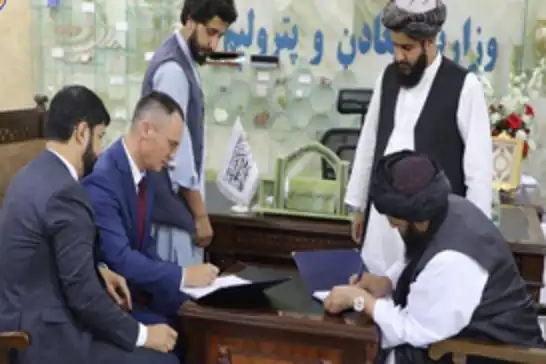
Afghanistan’s Ministry of Mines and Petroleum has signed a one-year contract worth $2.8 million with TNG, a company based in Russia’s Tatarstan region, to provide supervisory and consulting services at the Amu Darya oil field.
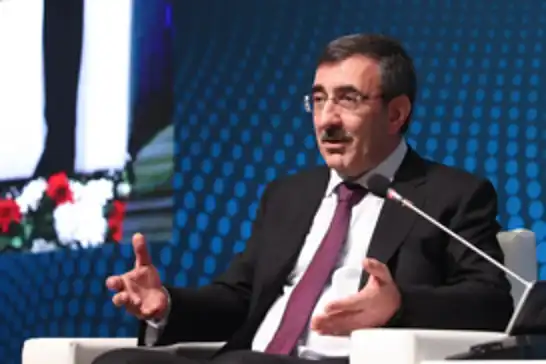
Türkiye is targeting a gradual acceleration in economic growth to 5% by 2029 while seeking to bring inflation down to single digits, Vice President Cevdet Yılmaz said Sunday as the government unveiled its new three-year Medium-Term Program (MTP).
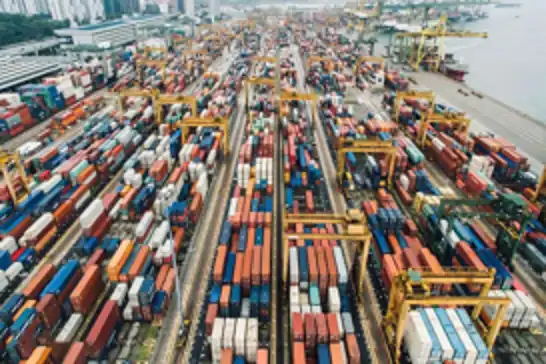
Türkiye’s service exports rose 6.5 percent year-on-year to $124.9 billion in 2025, while service imports increased 9.6 percent to $61.9 billion, the Turkish Statistical Institute (TÜİK) said in a statement on Friday.